Dashboard Lights Flicker When Turning On Headlights: What It Means and How to Fix It
Dashboard lights that flicker when the headlights are switched on almost always indicate a voltage drop in the electrical system caused by a corroded or loose battery terminal, a weak battery that cannot handle the headlight current load, or a failing alternator that is already operating at marginal output before the headlights add their current […]
Engine Sputtering When Pressing the Gas Pedal at Highway Speed: Causes and How to Diagnose Each One
Engine sputtering under acceleration at highway speed is most commonly caused by insufficient fuel delivery, either from a weakening fuel pump that cannot maintain pressure at high flow demand or from clogged fuel injectors that restrict flow under high throttle, though ignition failures under compression load and air metering faults are also frequent culprits that […]
Gas Pedal Hard to Press Down on Cold Morning: Causes, Diagnosis, and Fixes
A gas pedal that is unusually stiff or hard to press on cold mornings points to thermal effects on the throttle system: a dry or corroded throttle cable stiffening in the cold on older vehicles, a corroded pedal pivot or return spring on any vehicle, or a sticking electronic throttle pedal assembly on modern drive-by-wire […]
Grinding Noise When Turning Steering Wheel Left at Low Speed: Causes and How to Diagnose Each One
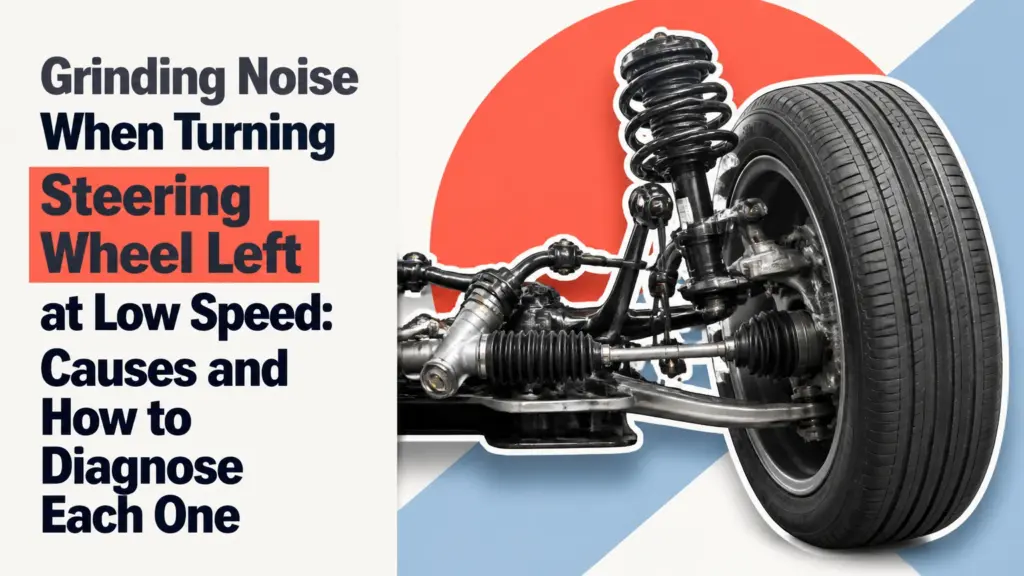
A grinding noise specifically when turning the steering wheel left at low speed can come from the right front wheel bearing (which is loaded during a left turn), the left outer CV joint (which reaches maximum angle during a left turn), the power steering system under maximum demand, or a binding strut bearing plate, and […]
Humming Noise From Rear Tire Getting Louder With Speed: Diagnosis and What It Means
A humming noise from the rear of the vehicle that increases directly with vehicle speed and does not change with engine RPM is almost certainly a failing rear wheel bearing, and the distinction between speed-dependent and RPM-dependent noise is the single most reliable diagnostic filter available without any tools. A bearing humming will increase as […]
How Long Can an Engine Run Without Coolant Before Damage: The Real Timeline
An engine running at operating temperature with no coolant will begin sustaining irreversible damage within 15 seconds to 2 minutes under load, and within 3 to 5 minutes at idle with no airflow through the radiator. The exact window depends on engine material, operating load, ambient temperature, and whether any residual coolant remains in the […]
Metallic Clunk When Shifting From Park to Reverse: Every Cause and How to Diagnose It
A metallic clunk when shifting from Park to Reverse is most commonly caused by slack being taken up in a worn driveshaft U-joint or a loose inner CV joint on FWD vehicles, but it can also come from a collapsed transmission mount, a cracked flex plate, loose torque converter bolts, or worn differential backlash, all […]
P0138 Oxygen Sensor High Voltage Bank 1 Sensor 2 on the Honda Civic: What It Means and How to Fix It
A P0138 code on the Honda Civic indicates the downstream oxygen sensor (Bank 1, Sensor 2, located after the catalytic converter) is producing a voltage reading that remains continuously above 0.9 volts, and the most common cause on the Civic is a failed sensor whose internal element has degraded and is biased toward the rich-indicating […]
P0172 Code Fix: System Too Rich Bank 1 on the Ram 1500
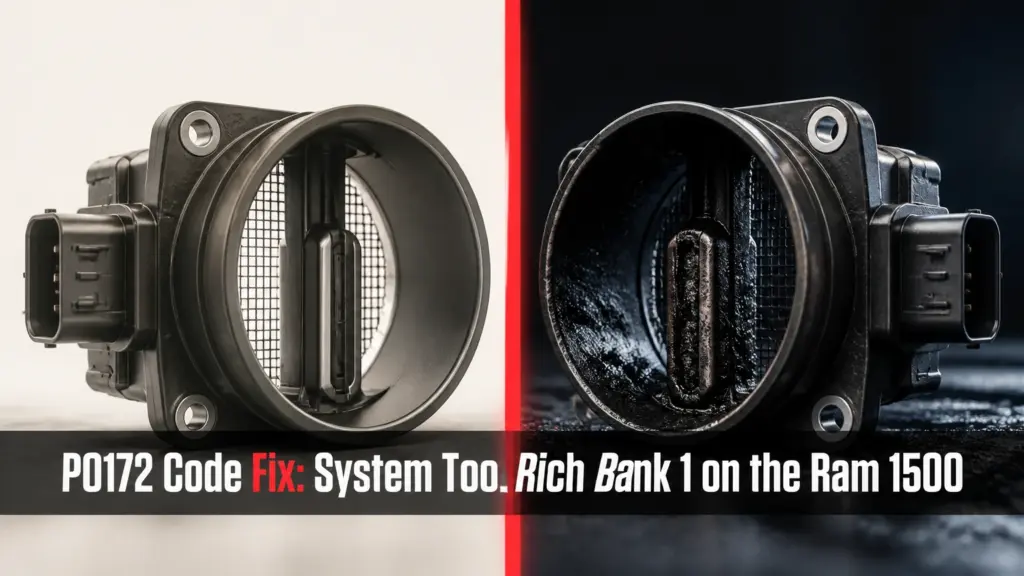
A P0172 code on a Ram 1500 indicates the ECM has detected a long-term rich fuel condition on Bank 1 (the driver-side bank on V-engines), and on the Ram 1500 specifically the most common causes are a stuck-open EVAP purge valve continuously drawing fuel vapor into the intake, a contaminated or failing mass airflow sensor […]
P0304 Cylinder 4 Misfire: Symptoms and Fixes for the Ford F-150 EcoBoost
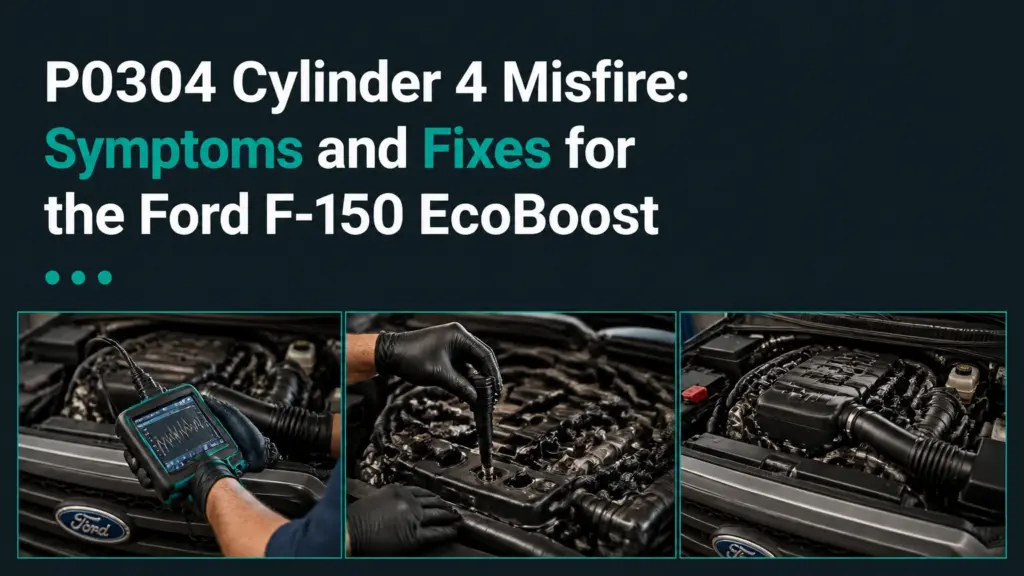
A P0304 code on the Ford F-150 EcoBoost indicates a confirmed misfire in cylinder 4, and on the 2.7L EcoBoost specifically this code has a well-documented platform-specific cause: water or coolant intrusion into cylinder 4 from a head gasket failure pattern that Ford addressed in technical service bulletins, while on the 3.5L EcoBoost cylinder 4 […]