P0016 Crankshaft Position Camshaft Correlation Jeep Wrangler: Causes, Diagnosis, and Repair for the 3.6L Pentastar
P0016 on a Jeep Wrangler means the ECM has detected that the camshaft position on Bank 1 Intake does not correlate with the crankshaft position signal: most commonly caused by a failing cam phaser (variable valve timing actuator), low oil pressure that is preventing the phaser from operating correctly, a stretched timing chain on higher-mileage […]
P0022 Intake Camshaft Timing Over Retarded Bank 2 Toyota Camry: Complete Diagnosis and Fix Guide
P0022 on a Toyota Camry means the ECM has detected that the intake camshaft on Bank 2 is over-retarded relative to its commanded position: most commonly caused by oil sludge or low oil pressure preventing the variable valve timing (VVT-i) system from advancing the cam to its target position, a failed oil control valve (OCV) […]
P0073 Ambient Air Temperature Sensor Circuit High Input Nissan Sentra: What It Means and How to Fix It
P0073 on a Nissan Sentra means the ECM has detected that the ambient air temperature (AAT) sensor’s circuit voltage is above the expected operating range: which almost always means the sensor itself has failed open (producing no signal or a false high-voltage signal), the wiring to the sensor has been damaged, or in rare cases […]
P0087 Fuel System Too Lean Rail Pressure Too Low Subaru Outback: Diagnosis, Causes, and Repair
P0087 on a Subaru Outback means the ECM has detected that actual fuel rail pressure is significantly below the pressure the engine demands: most commonly because the in-tank fuel pump has lost its ability to maintain volume output on a high-mileage Outback, a clogged fuel filter is restricting flow, or the fuel pressure regulator is […]
P0089 Fuel Pressure Regulator Performance Toyota Tundra: Complete Diagnosis and Repair Guide
P0089 on a Toyota Tundra means the ECM has detected that actual fuel rail pressure is significantly different from the commanded fuel pressure: most commonly because the fuel pressure regulator inside the in-tank fuel pump module is failing, the fuel pump itself is losing volume output, or a fuel pressure sensor is providing inaccurate data […]
P0174 System Too Lean Bank 2 Ford Explorer: Vacuum Leak Diagnosis and Complete Fix Guide
P0174 on a Ford Explorer means the ECM has detected that the air-fuel mixture on Bank 2 (the passenger side of the engine) is running lean: there is too much air or too little fuel: and the most common cause on Explorer trucks is a cracked or disconnected PCV hose, an intake manifold gasket leak, […]
P0191 Fuel Rail Pressure Range Performance Ford Powerstroke 6.0: Diagnosis and What Actually Fails
P0191 on a Ford 6.0L Powerstroke diesel means the PCM has detected that actual fuel rail pressure does not match the expected pressure: fluctuating outside the acceptable range relative to engine demand: and on the 6.0L specifically, this code has a distinct set of causes that differ from other diesel platforms because the 6.0L uses […]
P0193 Fuel Rail Pressure Sensor Circuit High Input Ford F-250: Diagnosis, Causes, and Repair
P0193 on a Ford F-250 means the PCM has detected that the fuel rail pressure sensor’s voltage output is above the expected range: which almost always indicates either a failed fuel rail pressure sensor sending a falsely high voltage, a wiring short to a voltage source in the sensor circuit, or in rarer cases a […]
P0304 and P0300 Random Misfire Toyota 4Runner Coil Pack Failure: Exact Diagnosis and Fix
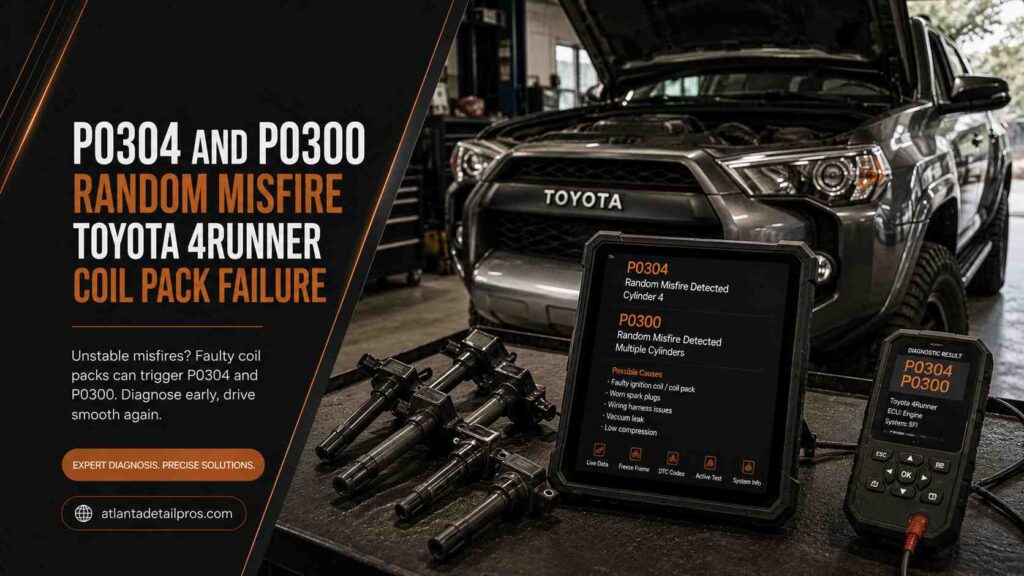
When a Toyota 4Runner shows both P0304 (cylinder 4 misfire) and P0300 (random multiple misfire) simultaneously, the combination almost always points to a failed ignition coil on cylinder 4 that is severe enough to cause both a cylinder-specific misfire and overflow into the PCM’s random misfire detection threshold: and on the 4.0L 1GR-FE V6 4Runner, […]
P0304 Cylinder 4 Misfire Hyundai Elantra: Coil or Spark Plug: How to Diagnose and Fix It Correctly
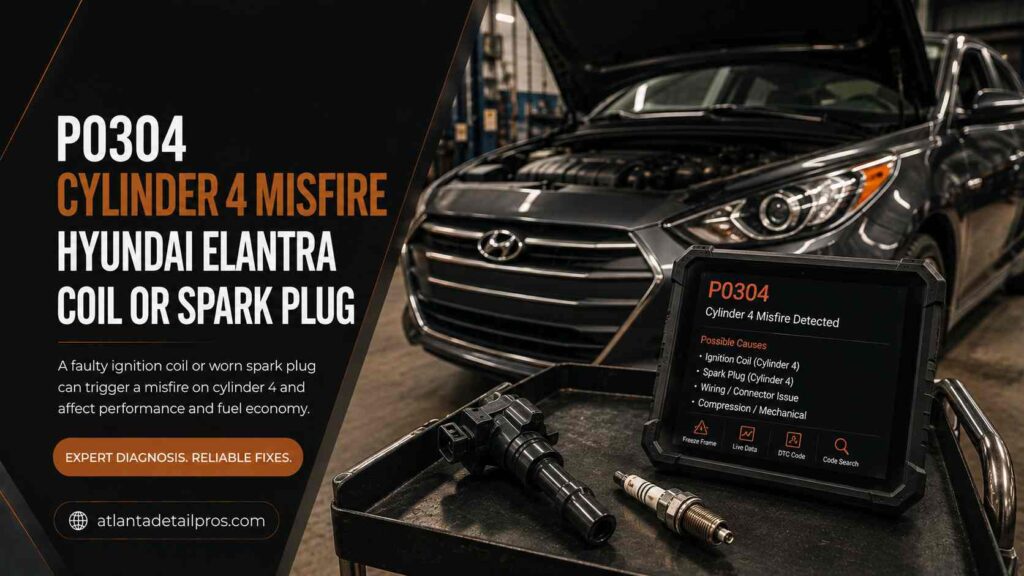
P0304 on a Hyundai Elantra means the ECM has detected a misfire specifically in cylinder 4, which is most commonly caused by a failed ignition coil (coil-on-plug), a worn or fouled spark plug, or on direct-injection Elantra models, carbon buildup on the intake valve of cylinder 4 disrupting the air-fuel mixture. The coil-swap test: moving […]