P0351 Ignition Coil A Primary Secondary Circuit Ford Mustang: Diagnosis, Causes, and Repair
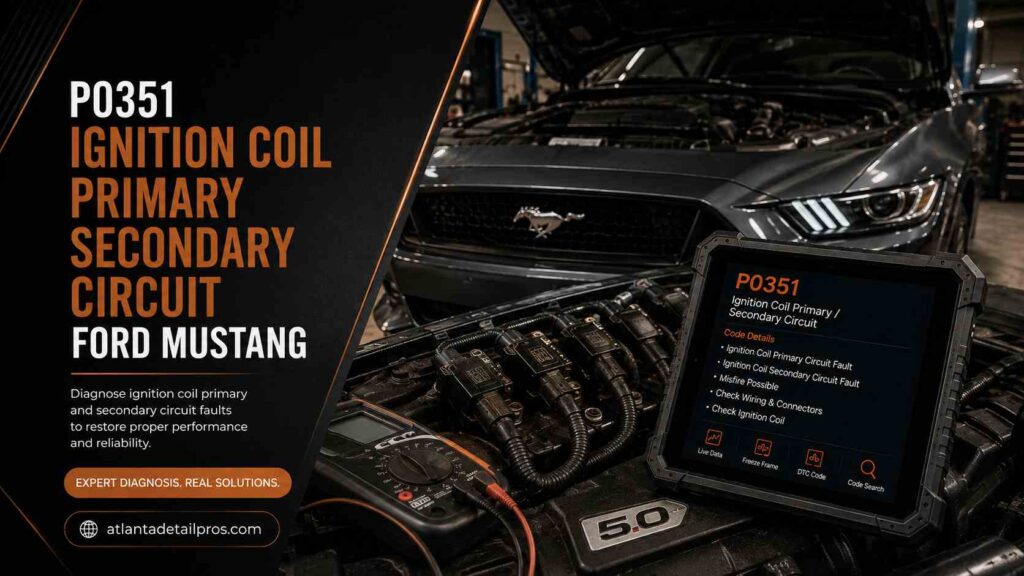
P0351 on a Ford Mustang means the PCM has detected a fault in the primary or secondary circuit of the ignition coil assigned to cylinder 1 (Coil A): the most common cause is a failed coil-on-plug assembly on cylinder 1, which can be confirmed in under 20 minutes using the coil swap test, but the […]
P0480 Cooling Fan Relay 1 Control Circuit Dodge Charger Overheating: Complete Diagnosis and Fix Guide
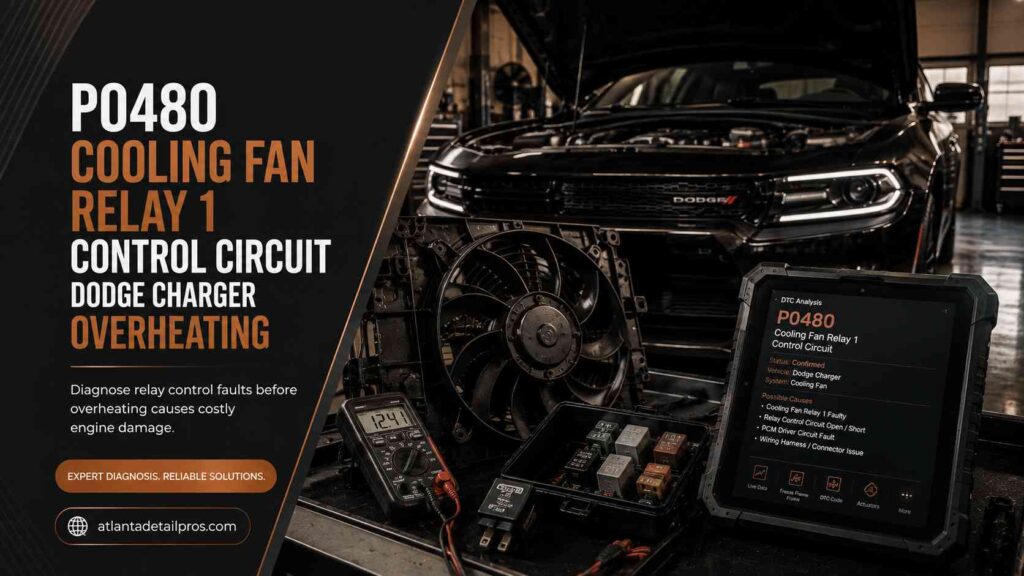
P0480 on a Dodge Charger means the PCM has detected a malfunction in the control circuit for cooling fan relay 1: which controls the primary electric cooling fan: and on Charger models this most commonly results from a failed fan control module, a burned-out cooling fan motor, a blown fuse in the fan circuit, or […]
P0562 System Voltage Low GMC Sierra: Alternator or Battery: Complete Diagnosis Guide
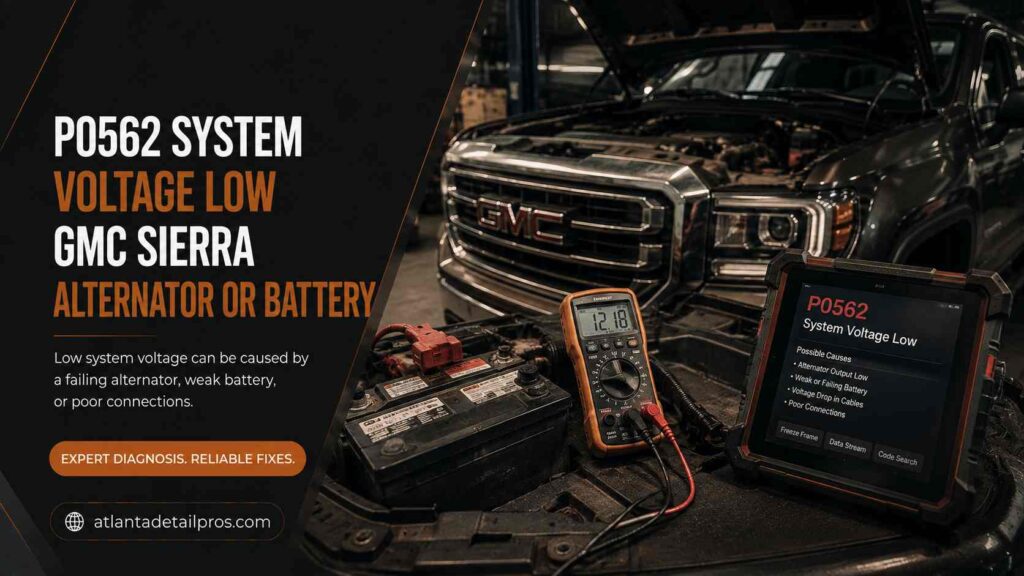
P0562 on a GMC Sierra means the ECM has detected battery or system voltage below approximately 10.0 volts for longer than 30 consecutive seconds: and on Sierra trucks this is most commonly caused by a failing alternator that can no longer maintain charging voltage, a battery that has lost capacity and cannot hold charge, or […]
P0597 Thermostat Heater Control Circuit Ford Focus: What It Means, Why It Happens, and How to Fix It
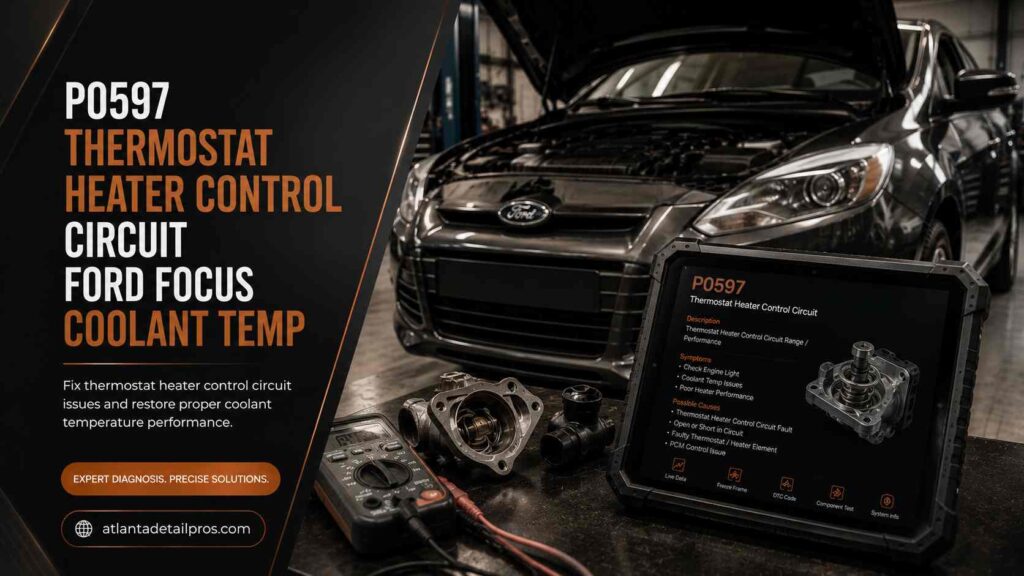
P0597 on a Ford Focus means the PCM has detected an open circuit in the thermostat heater control circuit: a unique fault that most drivers have never heard of because Ford uses an electrically heated thermostat that most other manufacturers do not, and when the heater element in the thermostat fails or loses its circuit […]
P1101 Intake Airflow System Performance Chevy Malibu Rough Idle: Causes, Diagnosis, and Fix
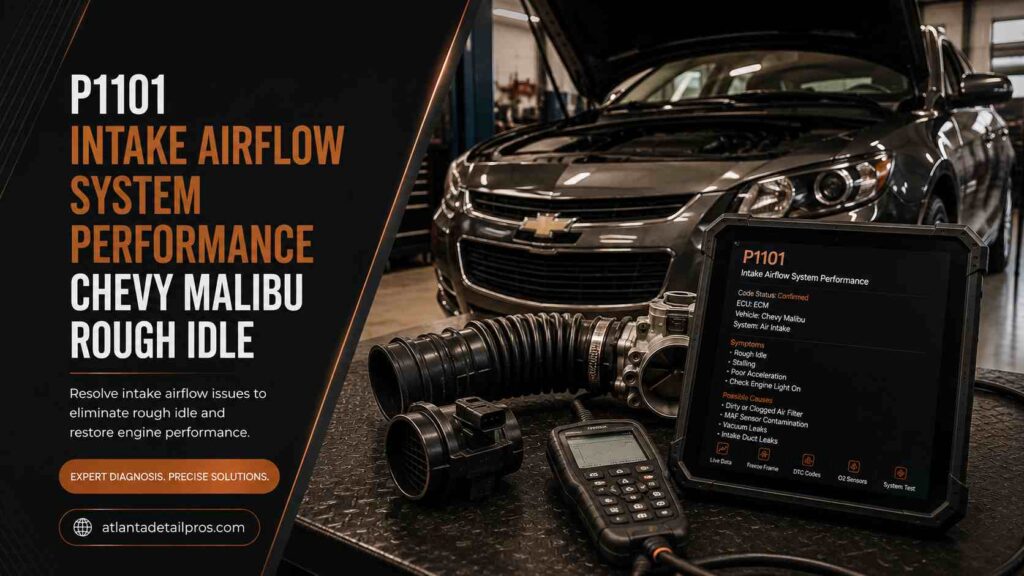
P1101 on a Chevy Malibu means the PCM has detected a discrepancy between what the mass airflow (MAF) sensor is reporting and what the PCM expects to see based on throttle position, engine speed, and manifold pressure: most commonly caused by a contaminated MAF sensor, a dirty air filter restricting airflow, a cracked or disconnected […]
P1320 Ignition Signal Primary Nissan Maxima Multiple Misfire: Complete Diagnosis and Fix Guide
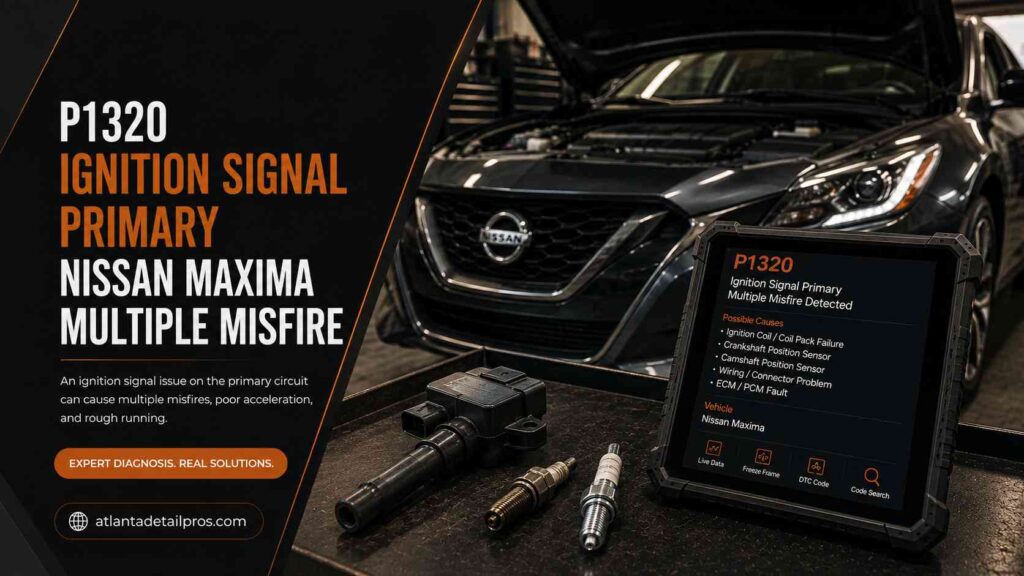
P1320 on a Nissan Maxima is a manufacturer-specific code that means the ECM is not receiving the ignition confirmation signal from one or more of the power transistors integrated into the coil-on-plug assemblies: and on the VQ35DE and VQ35HR engines, this code almost always appears alongside random misfire codes P0300 through P0306 because the same […]
Average Cost to Replace Power Steering Rack and Pinion: Labor and Parts Breakdown

Power steering rack and pinion replacement costs $400 to $1,200 total at an independent shop for most front-wheel-drive and rear-wheel-drive passenger vehicles, with parts accounting for $180 to $600 of that total and labor accounting for $200 to $500, plus a mandatory wheel alignment that adds $80 to $150. Electric power steering (EPS) racks on […]
P2097 Post Catalyst Fuel Trim Too Rich Bank 1 Honda Accord: Diagnosis, Causes, and What It Tells You About Your Catalytic Converter
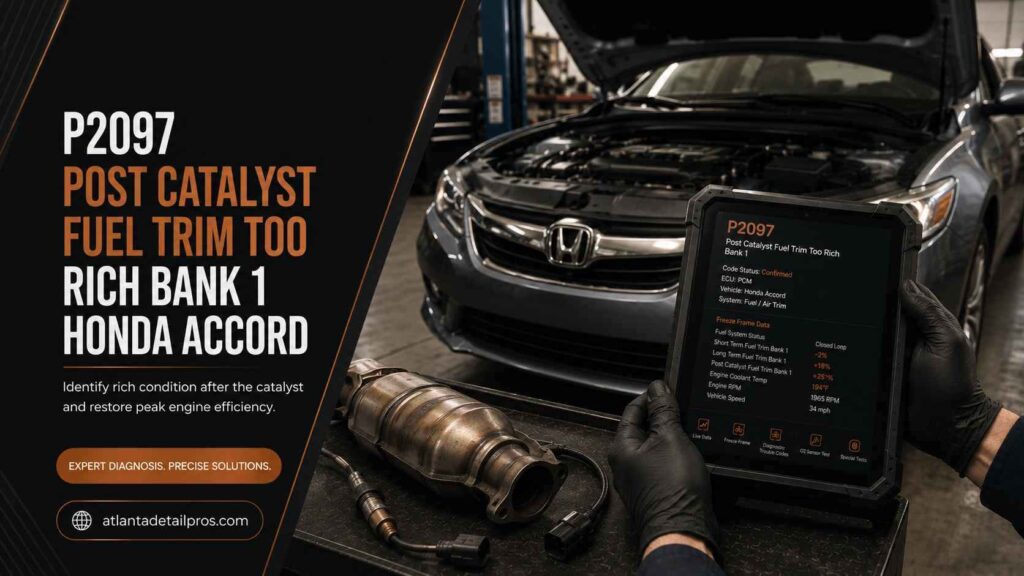
P2097 on a Honda Accord means the ECM has detected that the post-catalyst oxygen sensor on Bank 1 is consistently reading a rich exhaust mixture downstream of the catalytic converter: a condition that either means the catalytic converter is no longer efficiently processing the exhaust (allowing rich gases to pass through), or that the engine […]
Blue Green Fluid Leaking From Radiator Hose Connection Area: Causes, Risks, and Immediate Steps
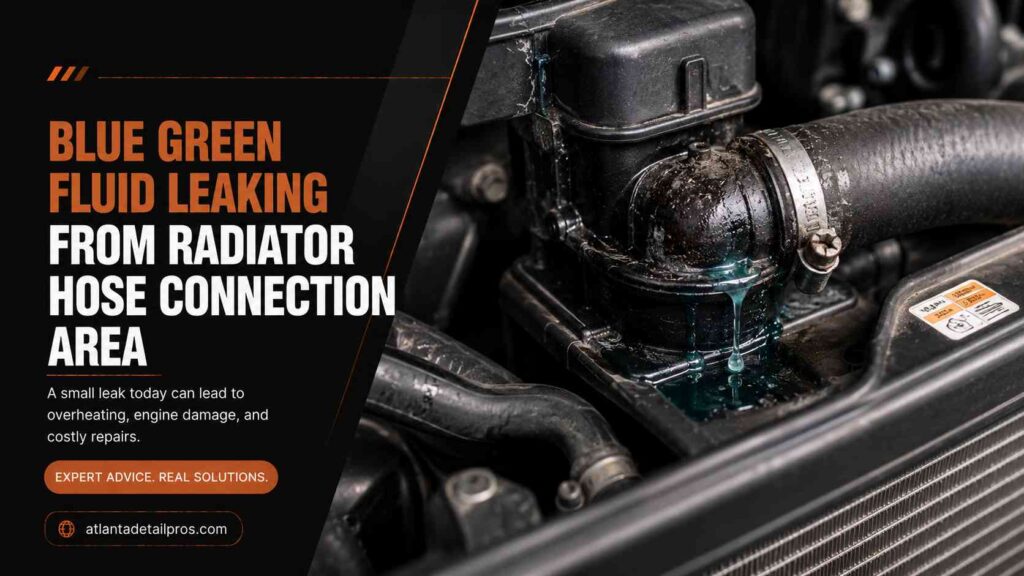
Blue-green fluid leaking from the radiator hose connection area is engine coolant (antifreeze), and the most common cause is a deteriorated hose, a corroded or loose hose clamp, or a cracked plastic radiator neck where the hose attaches. Coolant comes in multiple colors depending on the formulation: the blue-green you are seeing is typically OAT […]
Brake Fluid Leaking Near Wheel After Brake Caliper Replacement: Causes and Immediate Steps
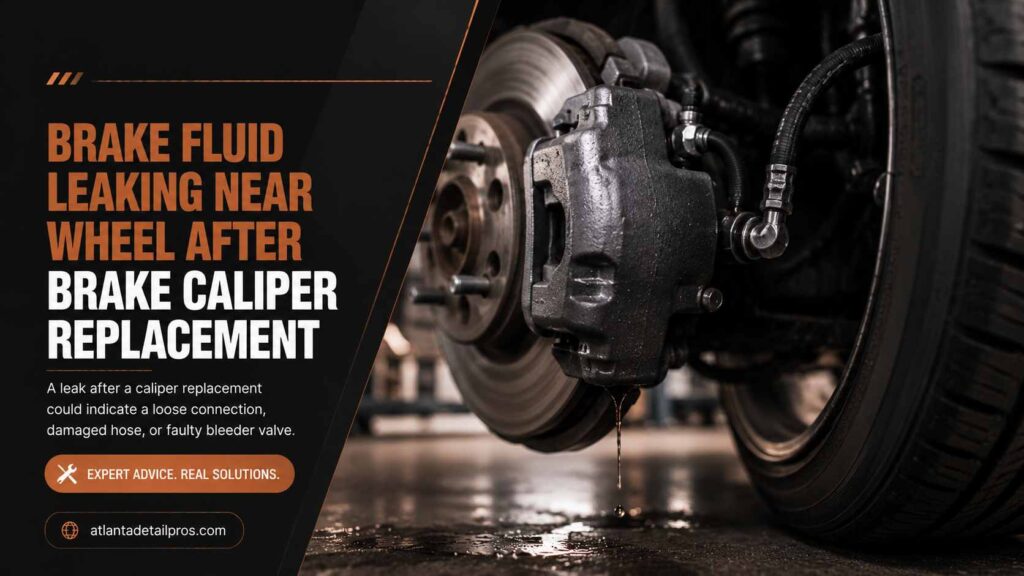
Brake fluid leaking near the wheel after a caliper replacement almost always means a fitting was not fully tightened, a copper banjo washer was reused or improperly seated, or the bleeder screw was left open or cracked during the bleeding process. This is not a situation that gets better on its own, and it is […]