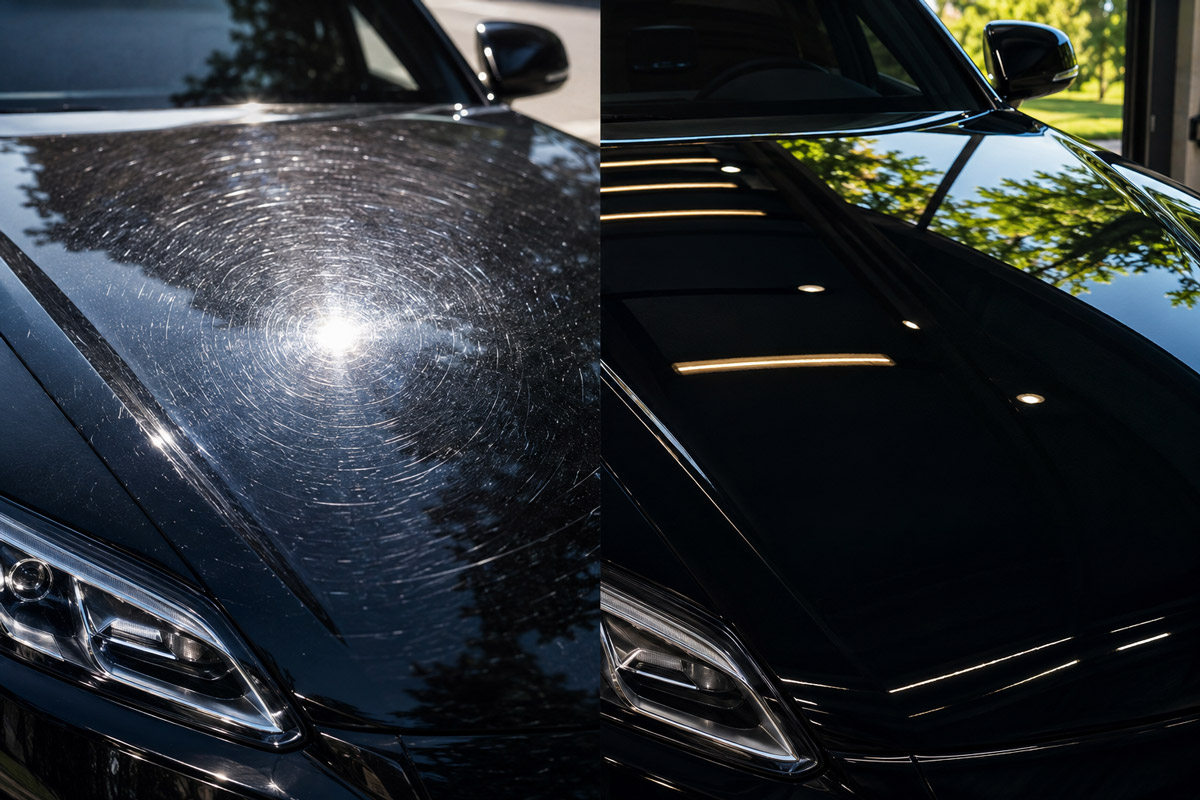
Nothing beats the look of a freshly detailed black car when it is sitting in the shade or under garage lights. It looks deep, ominous, and perfectly glossy. The moment you pull it out into the direct afternoon sun, that flawless finish disappears. Instead, you are greeted by an unsightly web of circular lines, spiderwebs, and fine scratches that seem to dance right across the hood.
If you are wondering why your black car looks scratched in the sunlight, you are not alone. This is one of the most common frustrations for dark vehicle owners. The truth is, the sun is not actually creating these scratches on the spot; it is simply acting as a giant spotlight that exposes microscopic imperfections built up over time.
Understanding the unique science behind dark paint systems, identifying the root causes of these marks, and learning how to properly eliminate them will help you restore that deep, mirror-like finish your vehicle deserves.
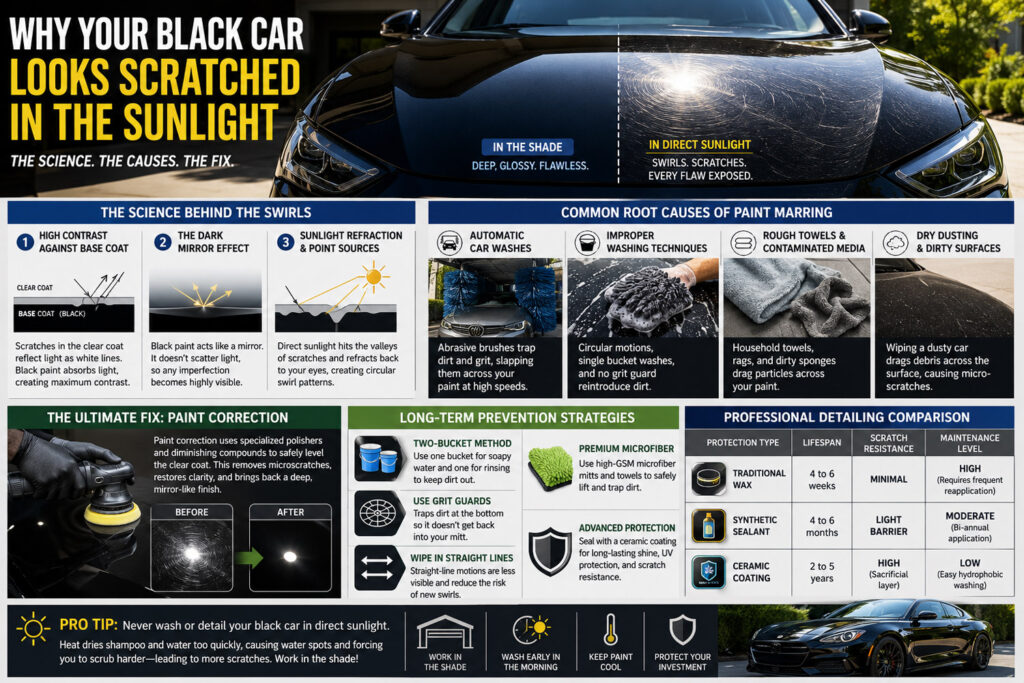
The Science Behind the Swirls
To understand why direct sunlight makes your black car look like a optical hologram of fine scratches, you have to look at how modern automotive paint interacts with light.
1. High Contrast Against the Base Coat
Modern factory paint layouts consist of a colored base coat covered by a protective, transparent layer called the clear coat. When your clear coat receives minor abrasions, the sharp edges of these tiny valleys reflect light back as white or gray lines. Because a deep black base coat absorbs almost all visible light, this pale, light-colored reflection creates a massive contrast. A scratch that remains completely invisible on a silver or white car will stand out instantly against a dark background.
2. The Dark Mirror Effect
Smooth, unmarred black paint acts like a dark mirror. While lighter paint colors diffuse light and scatter it in multiple directions to hide imperfections, black paint acts as a passive backdrop. Because the dark surface does not bounce scattered light back to your eyes, any irregular, scattered reflection caused by a scratch becomes the focal point of the panel.
3. Sunlight Refraction and Point Sources
Direct sunlight functions as a single, incredibly concentrated point source of light. When the sun rays strike the deep V-shaped valleys of these microscratches, the light refracts and bounces back toward your eyes at sharp, irregular angles. This creates the illusion that the scratches form a perfectly circular pattern around the reflection of the sun, even if the scratches are running in various linear directions across the panel.
Common Root Causes of Paint Marring
Micro-scratches and swirl marks do not happen randomly. They are almost always the result of mechanical friction during routine maintenance. The most common culprits include:
- Automatic Car Washes: The heavy, rapidly spinning nylon or cloth brushes used in commercial automatic washes are highly abrasive. They collect accumulated dirt, grit, and mud from the previous dirty trucks and off-road vehicles that passed through, essentially slapping that trapped debris across your delicate clear coat at high speeds.
- Improper Washing Techniques: Washing your car in aggressive circular motions acts like sandpaper on the paint. Furthermore, using a single bucket without a grit guard means you are constantly dipping your wash mitt back into dirty water, picking up the same abrasive contaminants you just removed, and rubbing them back over the body panels. Wiping down a dusty car while it is dry will also drag hard particles across the paint layer.
- Rough Towels and Contaminated Media: Using household bath towels, old cotton rags, or cheap, dirty sponges to dry your car is a guaranteed way to cause micro-marring. These fabrics do not have the deep pile needed to safely absorb and trap microscopic particles away from the surface.
How to Fix and Prevent Sunlight Scratches
If your dark vehicle is covered in a web of swirl marks, regular washing or adding a standard layer of wax will not solve the issue. You need to level the surface to restore clarity.
The Ultimate Fix: Professional Paint Correction
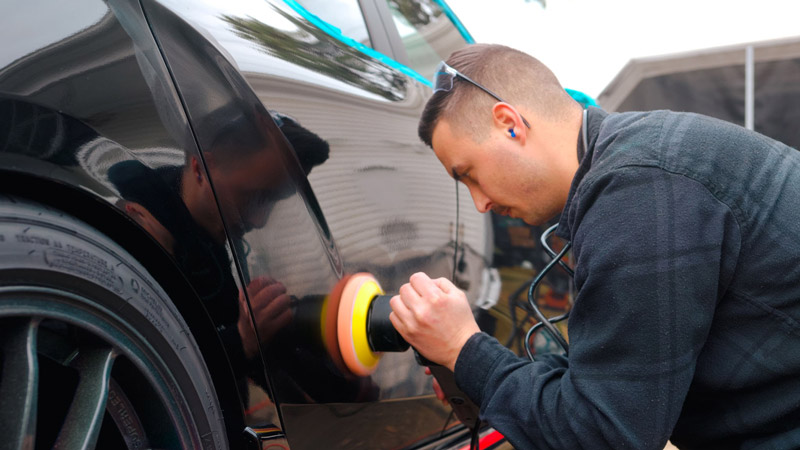
The only permanent way to eliminate swirl marks is through a process called paint correction. This method uses a specialized dual-action orbital polisher combined with diminishing abrasive compounds to gently polish away a microscopic fraction of the damaged clear coat. By flattening the clear coat down to the absolute depth of the deepest micro-scratch, the irregular light refraction disappears, leaving a perfectly flat, highly reflective mirror surface.
For car owners located in the Georgia area, utilizing professional regional services like the specialists at Atlanta Detail Pros ensures this delicate process is executed safely without burning through the clear coat. Their dedicated paint correction services are tailored specifically to handle the unforgiving nature of dark paint systems, leveling out defects to restore maximum color depth.
Long-Term Prevention Strategies
Once your paint is corrected, you must modify your maintenance habits to keep the swirl marks from returning:
- Implement the Two-Bucket Method: Always wash your car using two separate buckets. Fill one bucket with clean, soapy water for washing and the second bucket with pure water exclusively for rinsing your wash mitt.
- Install Grit Guards: Place a plastic grit guard at the bottom of both buckets. These grids trap heavy dirt particles at the very bottom, preventing them from floating back up into your wash mitt.
- Wipe in Straight Lines: Never move your hand in circles when washing or drying. Always glide a premium, high-GSM (grams per square meter) microfiber mitt in straight, linear paths along the body panels. If a rogue piece of dirt does cause a microscopic scratch, a straight line is significantly less visible to the human eye under direct sunlight than a circular loop.
- Apply Advanced Paint Protection: Seal your pristine finish immediately after correction. While traditional carnauba waxes offer short-term gloss, upgrading to a professional ceramic coating creates an incredibly hard, durable, hydrophobic sacrificial barrier. This crystalline shell actively resists fine scratches, repels road debris, and shields the delicate clear coat from daily wear.
Professional Detailing Comparison
| Protection Type | Lifespan | Scratch Resistance | Maintenance Level |
| Traditional Wax | 4 to 6 weeks | Minimal | High (Requires frequent reapplication) |
| Synthetic Sealant | 4 to 6 months | Light barrier | Moderate (Bi-annual application) |
| Ceramic Coating | 2 to 5 years | High (Sacrificial layer) | Low (Easy hydrophobic washing) |
Pro Tip: Never wash or detail a black vehicle in direct afternoon sunlight. The extreme heat dries car shampoo and water rapidly on the panels, creating stubborn water spots and forcing you to scrub harder, which inevitably introduces new micro-marring to the clear coat. Always work in a shaded garage or early in the morning.
If you are ready to remove that frustrating web of scratches and bring back a deep, flawless reflection, evaluating your current garage setup is the best first step. Let me know if you plan to tackle these imperfections yourself or hire a professional team, and what detailing tools you currently have on hand. I can guide you through the exact step-by-step restoration routine.