Bringing a brand new car home is an exciting experience. The odometer shows single digits, the interior has that unmistakable new car smell, and the exterior looks glossy and pristine. Naturally, your first instinct is to preserve that showroom shine by investing in Paint Protection Film, commonly known as PPF.
However, there is a massive misconception in the automotive world that a new car features flawless paint straight from the factory. The reality is quite different. Between the assembly line, the transport trucks, the train yards, and the dealership lot, a vehicle’s exterior undergoes significant stress.
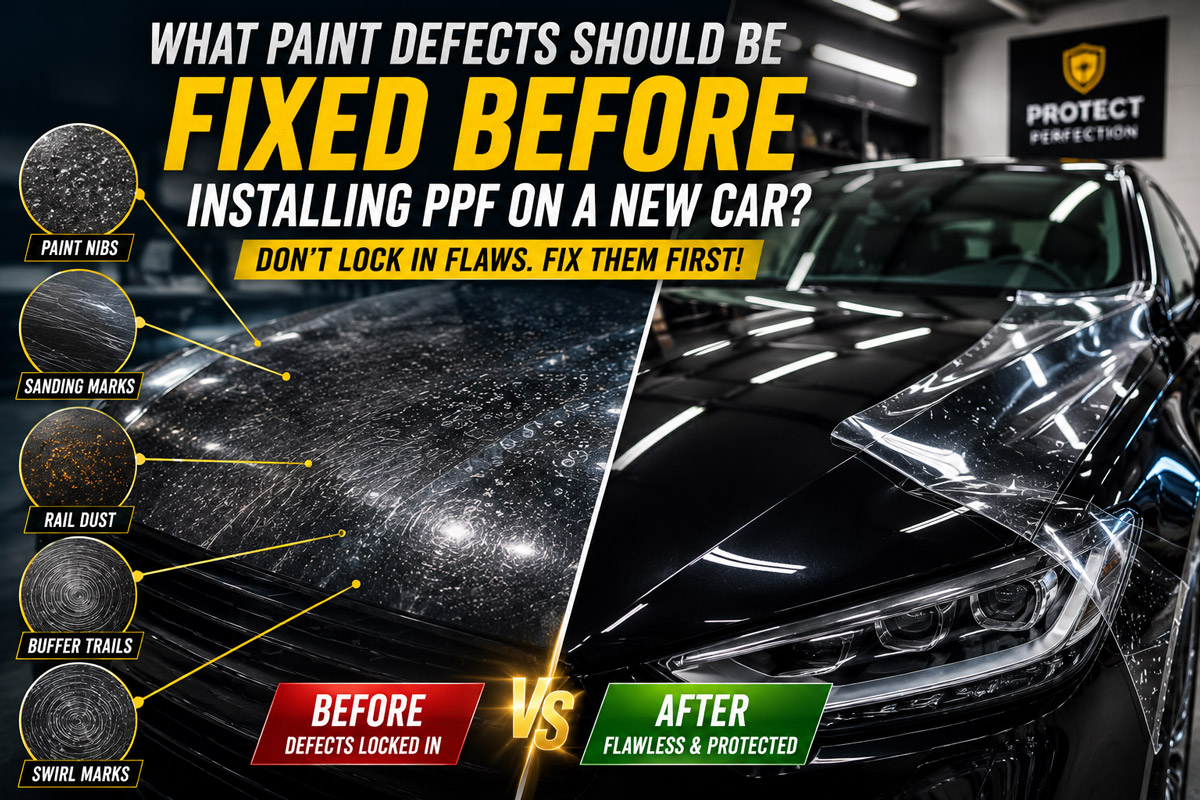
Before installing paint protection film on your new vehicle, the paint must be as close to absolute perfection as possible. Think of PPF as a powerful magnifying glass. Once this clear polyurethane film is applied, it locks in whatever is underneath, highlighting and amplifying even the smallest blemishes. If you try to cover up paint flaws with film, you will only make them more visible.
Let us dive deep into the specific new car paint defects you must identify and fix before a single square inch of film touches your vehicle.
The Reality of Factory and Shipping Defects
It surprises many new car owners to learn that vehicles roll off the assembly line with pre-existing imperfections. Even high-end luxury and sports cars suffer from factory or transport-related issues. Here are the most common defects that originate before the car even arrives at the dealership.
1. Paint Nibs (Trapped Dirt and Dust)
During the manufacturing process, vehicles are painted in highly controlled, clean environments. Despite this, microscopic airborne dust or dirt particles occasionally escape the filtration systems and land on the wet clear coat. As the paint cures, these particles form tiny, raised bumps known as paint nibs.
If you run your hand gently over a freshly washed panel and feel small, isolated pimples in the finish, you are likely feeling paint nibs. Leaving these bumps uncorrected creates a critical issue for PPF installation. The film cannot lay completely flat over a raised point, which leads to tiny air pockets, visual distortion, and future lifting. Professional detailers must carefully wet-sand these specific areas flat before continuing.
2. Factory Sanding Marks
When factory quality control inspectors notice a paint nib or a small run during production, they often try to fix it right there on the line. Workers will use fine-grit sandpaper to level the defect. Unfortunately, in the fast-paced environment of a mass-production assembly line, they often fail to completely polish out the rough, hazy scratches left behind by the sandpaper.
These factory sanding marks look like dull, isolated patches that ruin the clarity of the clear coat. If covered by PPF, the texture remains trapped forever, leaving a permanently foggy spot on your car’s exterior.
3. Rail Dust and Industrial Fallout
Most new vehicles travel long distances from the manufacturing plant to the dealership by train. During rail transport, the friction between the train’s metal wheels and the iron tracks creates a massive cloud of microscopic, hot iron particles. This metal debris, known as rail dust, floats through the air and embeds itself deeply into the clear coat of the new cars sitting on the transport cars.
Once these iron particles settle, exposure to moisture causes them to rust and expand. On white or light-colored vehicles, rail dust shows up as tiny orange or brown specks. On dark cars, it feels like rough sandpaper. These particles must be chemically dissolved using an iron decontaminator and completely removed with a clay bar before film installation.
4. Buffer Trails and Holograms
If a factory worker or a dealership prep technician notices scratches on a new car, they will often use a high-speed rotary buffer to clear them up quickly. If the technician uses improper technique, a pad that is too aggressive, or the wrong compound, they will create buffer trails, which are also called holograms.
Holograms look like beautiful, wavy, iridescent patterns that dance across the paint when viewed under direct sunlight. They give the finish a strange, greasy appearance. While they are shallow micro-scratches, they severely dull the paint’s natural depth and reflectivity, a flaw that PPF will lock into place.
Dealership Lot and Handling Damage
Once a vehicle safely survives the journey from the factory, it faces its next major hurdle: the dealership delivery prep process. Dealership wash bays are notorious in the professional detailing world for causing immediate, preventable damage to brand-new paint.
1. Swirl Marks
Swirl marks are web-like networks of microscopic scratches that cover the clear coat. They are almost always caused by improper washing techniques, such as using cheap, automated car washes, dirty wash mitts, or rough drying towels that drag dirt across the panels.
Dealership lot attendants frequently wipe down dusty cars with dry cloths to make them look presentable for buyers, which inflicts thousands of fine scratches. Under the sun, these scratches create a spiderweb pattern that scatters light, making the vehicle look older and less vibrant than it should.
2. Hard Water Spots
New cars often sit outside on dealership lots for weeks or months, exposed to the elements. When the lot’s automated sprinkler systems turn on, or when it rains followed by intense sun, water droplets pool on the hot body panels. As the water evaporates, it leaves behind highly concentrated mineral deposits like calcium and magnesium.
If these hard water spots are left sitting under the hot sun, the minerals will slowly etch deep into the clear coat, creating small, crater-like rings. Simply washing the car will not remove etched water spots. They require chemical water spot removers or multi-stage machine polishing to level the clear coat surface completely.
3. Clear Coat Marring
Marring is a milder form of scratching that looks like dull, cloudy streaks across the paint. It typically occurs when someone handles the vehicle roughly during transit, or when an inexperienced person uses a clay bar without enough lubrication. Because marring strips away the paint’s optical clarity, laying a clear film over it results in a hazy, uninspiring finish.
4. Deep Transport Scratches
During the physical loading and unloading of vehicles from transport trucks, accidents happen. Loose transport chains, keys, rings, or zippers from workers can create deep, physical gouges in the paint.
Unlike fine swirl marks, deep scratches penetrate through the clear coat and sometimes down to the primer or bare metal. If a scratch is deep enough to catch your fingernail, it requires intensive compounding, professional wet-sanding, or specialized factory touch-up paint before the film can be installed safely.
Why You Absolutely Cannot Skip Paint Correction
Skipping the paint correction phase to save a bit of time or money before a PPF installation is a critical mistake. The prep work is the most important part of the entire process. Here is why skipping this step will ruin your investment.
- Total Permanence: Paint protection film is designed to last anywhere from five to ten years. Once that expensive adhesive bonds to your clear coat, whatever lies underneath is trapped. If you want to fix a single swirl mark or water spot later on, you will have to peel off and destroy a costly section of the film, wasting your hard-earned money.
- Adhesion Failure and Bubbling: PPF requires a perfectly flat, chemically clean surface to achieve a permanent bond. If the film is laid over raised defects like embedded iron particles, paint nibs, or heavy contamination, the adhesive cannot touch the paint uniformly. This creates tiny air gaps, which expand into noticeable bubbles and lead to premature peeling at the edges.
- Visual Distortion and Haze: High-quality PPF is engineered to enhance the natural gloss of your vehicle. However, if the film is applied over thousands of micro-scratches and swirl marks, light will bounce off those hidden flaws and scatter erratically beneath the urethane layer. The final result will look hazy, washed out, and flat, completely defeating the purpose of buying a new car.
The Professional Prep Workflow
To achieve a seamless, invisible install, professional detailers follow a meticulous multi-step preparation process to ensure the paint is flawless before laying down the film.
Thorough Wash
Chemical Decontamination
Clay Bar Treatment
Paint Correction
Panel Wipe Polish Removal
First, the vehicle receives an intensive foam wash to strip away loose dirt and grime. Next, a specialized iron remover is sprayed over the panels to dissolve hidden rail dust, followed by a thorough clay bar treatment to lift out any remaining rough contaminants.
Once the surface is physically clean, the installer performs at least a single-stage machine paint correction using a dual-action polisher and fine finishing compounds. This step removes the swirl marks, holograms, and light scratches inflicted by the dealership. Finally, the panels are wiped down with an isopropyl alcohol blend to remove any polishing oils, leaving a perfectly clean clear coat ready to accept the film.
What is Your Vehicle Strategy?
Every vehicle requires a custom approach based on its unique factory history and current condition. To help tailor the ultimate paint protection strategy for your ride, consider the following details:
- Vehicle Details: What is the specific make, model, and paint color of your car? (Darker colors like deep black or metallic blue show defects far more intensely than silver or white, requiring more precise correction).
- Installation Method: Are you planning a brave DIY project at home, or are you looking to partner with a dedicated, professional detailing shop?
- Current Visual State: Have you already noticed any specific blemishes, such as annoying water spots, transport scratches, or rough spots on the hoods and fenders?
If you are located in the greater Atlanta area, safeguarding your investment starts with proper preparation. Discover how proper surface preparation transforms the look of your vehicle by exploring our specialized Paint Protection Film Services at Atlanta Detail Pros, where we make sure your new car’s paint is completely perfected before it is protected.