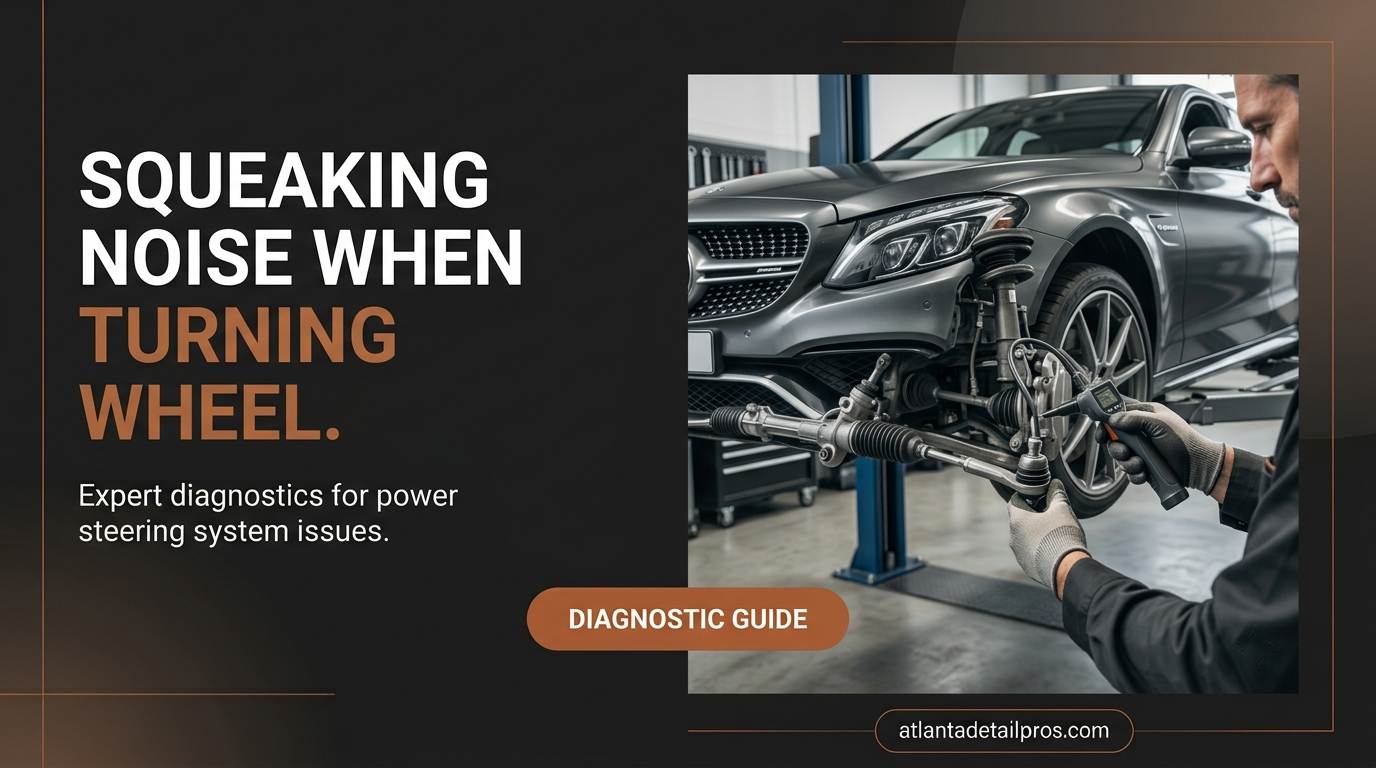
A squeak when turning the steering wheel at low speed is one of the more misleading sounds a car makes, because the same symptom can come from half a dozen different components and the fix ranges from free to hundreds of dollars. The fastest way to narrow it down is to locate where the sound originates before touching anything. A squeak from inside the cabin is different from one coming from the engine bay, which is different from one originating at the wheel.
This guide separates every realistic cause by where the sound comes from, which conditions trigger it most, and what each sound character tells you. By the end, you will have identified the most likely source for your specific situation.
Why Low Speed Turning Produces More Steering Noise Than Highway Driving
Steering system noise at low speed or during parking lot maneuvers is the most common presentation because several conditions peak at this operating point. Hydraulic power steering systems are under maximum demand when the wheel is near full lock at low speed because the power assist is carrying nearly the full load with minimum vehicle momentum to help. Suspension and steering components are loaded at the extremes of their travel range. And at low speed, engine and road noise are minimized, making subtle squeaks clearly audible that are masked at highway speeds.
One crucial first check: if your vehicle has electric power steering, it has no hydraulic pump and no power steering fluid reservoir. Any cause related to fluid level, pump condition, or belt slippage does not apply to your car. Electric power steering systems can still squeak from suspension and steering column components, but the fluid-based causes are eliminated. Check your owner manual or look for a power steering reservoir under the hood if you are unsure which type you have.
If the Squeak Comes From Inside the Cabin or Near the Steering Column
A squeak that seems to originate at or near the steering wheel itself, particularly one you can feel slightly through your hands on the wheel, points to components inside or just below the steering column. These are distinct from suspension noises and are often confused because the sound travels up the column to the driver position.
Dry or Worn Steering Column Intermediate Shaft
The intermediate shaft, also called the steering shaft or rag joint assembly, connects the steering wheel to the steering rack or box. It contains one or two universal joints and in many vehicles a telescoping slip joint. These joints require periodic lubrication. When the grease inside the u-joint or the slip section dries out or the joint wears, turning the steering wheel produces a squeak, a creak, or a notchy feeling, particularly at low speed. Cold weather worsens this because thickened grease loses its lubricating film. Applying lithium grease or white grease to the accessible joint and slip section often resolves the noise temporarily, but a worn u-joint requires replacement.
Steering Column Bearing or Bushing
The steering column itself rotates on bearings or bushings at its mounting points inside the dash. These wear or dry out over time. A squeak from this source tends to be a light, high-pitched sound that occurs during any steering wheel movement, not just at full lock. It may sound like plastic rubbing on plastic. The column trim cover contacting the steering wheel housing during rotation can produce an identical sound and is worth checking first by applying a small amount of silicone spray to the steering column trim gap.
If the Squeak Comes From the Engine Bay During Turns
A squeak or whine that comes from under the hood and changes based on steering wheel position points to the hydraulic power steering system on vehicles equipped with one. This is the most common presentation for a steering squeak that appears at slow speeds and near full lock.
Low or Contaminated Power Steering Fluid
When power steering fluid drops below the minimum level, the pump draws air along with the reduced fluid. The resulting cavitation inside the pump produces a whining or squealing sound that peaks at full steering lock when demand is highest. Check the power steering reservoir with the engine off. If the level is below the MIN marking, top it up with the manufacturer-specified fluid. If the fluid is dark brown or milky rather than clear or amber, it is degraded or contaminated and needs a system flush, not just a top-off. Many power steering systems also have a filter screen in the reservoir that becomes restricted over time.
Slipping or Worn Power Steering Belt
On vehicles where the power steering pump is driven by a dedicated belt or by the serpentine belt, a belt that has worn smooth, glazed, or lost tension can squeal specifically under the high-load demand of slow-speed turning at full lock. The sound is similar to other belt squeals but is specifically triggered by steering input. A simple water spray test confirms this: mist the belt lightly while the squeak is occurring. If the noise changes or stops, the belt is slipping.
Steering Rack Seal or Boot
The inner seals of a rack-and-pinion steering rack can dry out or stiffen, producing a squeak during slow turns as the inner rack seal moves along the pinion. The rubber steering rack boots, which protect the inner tie rod ends, can also make a squealing sound when they contact other components or when the inner seal beneath them lacks lubrication. This type of squeak is often more pronounced in cold weather and may diminish once the system reaches operating temperature.
If the Squeak Comes From the Wheel Area or Front Suspension
A squeak or creaking sound that clearly originates at one or both front wheel areas during low-speed turning points to suspension components that are loaded differently during cornering than during straight-line driving. These are typically rubber-based failures: components that are dry, cracked, or degraded.
Dry or Worn Ball Joints
Ball joints connect the steering knuckle to the lower control arm and allow the wheel to both steer and move vertically with the suspension. They require grease lubrication to run silently. Older vehicles had grease fittings (zerk fittings) that allowed periodic regreasing. Most modern vehicles have sealed lifetime-lubricated ball joints that cannot be regreased. When a sealed ball joint loses its grease from boot wear or age, it produces a squeaking or squealing sound during low-speed turns and over bumps. Combine the squeak with a vertical wheel shake test on jack stands to confirm: any perceptible play in the 12-and-6 o clock position indicates a worn ball joint that needs replacement.
Upper Strut Mount Bearing
The upper strut mount sits at the top of the front strut assembly and allows the strut to rotate as the wheels turn. It contains a bearing that dries out or corrodes over time. A failed strut mount bearing produces a grinding, squeaking, or clunking sound during steering wheel movement that seems to come from the top of the wheel well or the dash corner above the wheel. It is often most audible at full lock or near full lock during parking maneuvers. The body rock test (rocking the front of the car side to side by hand) often reproduces this noise.
Control Arm Bushings and Tie Rod Ends
Worn or dry control arm bushings produce a creaking or squeaking sound during cornering and over bumps. Tie rod ends, which transfer steering rack motion to the wheel, can develop a squeak when their internal ball joint runs dry. Tie rod end wear is more often felt as slight slop in the steering rather than a squeak alone, but on some vehicles the squeak from a dry tie rod end is the first symptom. The horizontal wheel shake test on jack stands (hands at 9 and 3 o clock, rock side to side) reveals tie rod play.
Sound Location | Most Likely Cause | Confirming Sign | DIY or Shop |
|---|---|---|---|
Inside cabin, at steering wheel | Dry intermediate shaft u-joint or column bearing | Sound when wheel moves regardless of vehicle speed | DIY grease |
Under hood, worsens at full lock | Low PS fluid or slipping PS belt | Reservoir below MIN; belt surface glazed | DIY top-off |
Under hood, persistent whine | Failing power steering pump | Noise persists after fluid topped; steering heavy | Shop |
Wheel well area, near full lock | Upper strut mount bearing | Body rock reproduces the sound | Shop |
Wheel area, any turning | Dry or worn ball joint | Vertical play on jack stands; squeaks over bumps too | Shop urgently |
Frequently Asked Questions
Why does my steering wheel squeak when turning at low speed?
The most common causes are low power steering fluid (on hydraulic systems), a dry intermediate shaft universal joint inside the steering column, a worn upper strut mount bearing, or dry ball joints. The sound location is the fastest separator: under the hood points to the hydraulic system, near the steering wheel points to the column, and at the wheel area points to suspension components.
Is a squeaking steering wheel dangerous?
It depends on the cause. A dry intermediate shaft or low power steering fluid is a maintenance issue. A worn ball joint or tie rod end that is also producing a squeak is a safety concern because these components can fail and cause loss of vehicle control. If the squeak is accompanied by any looseness in the steering, vibration, pulling to one side, or a clunking sound, have the front suspension inspected before driving further.
Why does my steering squeak in cold weather?
Cold temperatures cause rubber components to contract and harden, increasing friction at bushing and seal surfaces. Power steering fluid also thickens in the cold, making the pump work harder. Steering shaft grease loses viscosity and film strength at low temperatures. A squeak that is most pronounced on cold mornings and fades once the car warms up is frequently a dry intermediate shaft, a stiff steering rack seal, or a marginally low power steering fluid level that the pump can barely manage until operating temperature is reached.
The Bottom Line
The squeak when turning the steering wheel at low speed is almost always identifiable by where the sound is coming from. Locate it first. Under the hood on a hydraulic system: start with fluid level and belt condition. Inside the cabin at the steering wheel: check the intermediate shaft. At the wheel well area: check the strut mount bearing and ball joints. The safety priority goes to ball joints and tie rod ends first because they can fail suddenly, and to everything else second.