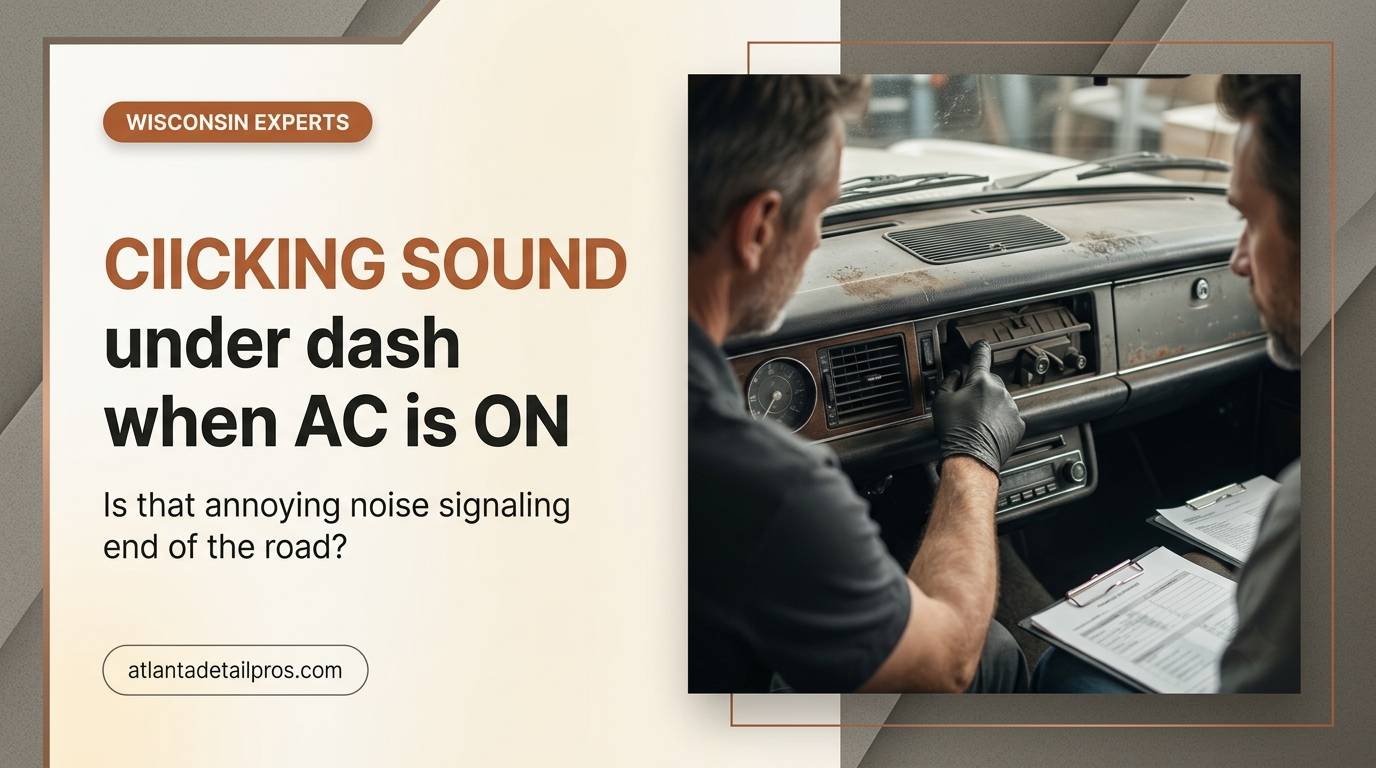
A clicking or tapping sound under the dashboard when the air conditioning comes on can mean several things, and most of them are not serious. One is completely normal. Two others are inexpensive electrical motor failures that cause annoying noise but do not affect safety. One is a refrigerant issue that affects AC cooling performance. And one, the rarest, indicates a deeper HVAC system problem. Knowing which one you have takes about two minutes of listening.
This guide separates each cause by when the clicking occurs, where it comes from (under the dash, behind the glovebox, or under the hood), and whether it is accompanied by any AC performance change.
The Most Important First Observation: Where Is the Click Coming From?
The location of the clicking determines which system is responsible, and that single observation eliminates most of the diagnostic uncertainty before you open a door or touch anything. A clicking under or behind the dashboard is almost always an HVAC system component, specifically one of the actuator motors that control the air doors inside the ventilation system. A single click from under the hood when the AC first turns on is the AC compressor clutch engaging, which is a normal mechanical sound. A rapid clicking from near the fuse box or dashboard switch cluster is an electrical relay.
Before reading further, identify where the sound originates. Sit with the windows down, engine idling, AC off. Turn the AC on and immediately locate the sound. Behind the center console or glovebox: actuator. Single click under the hood: compressor clutch (normal). Rapid electrical ticking from the dash cluster area: relay.
Normal AC Compressor Clutch Engagement: When Clicking Is Not a Problem
When the AC is switched on, the electromagnetic compressor clutch engages with a single audible click from the engine bay. This is the clutch plate snapping against the rotating compressor pulley. Every AC system makes this sound and it is not a fault. After the initial engagement click, the compressor clutch may cycle on and off multiple times during a drive as the system pressure and temperature vary, each cycle producing another click.
The way to confirm this is a normal engagement click: the sound comes from under the hood, not from inside the cabin, it is a single clean click rather than a repetitive tapping, and it is accompanied by normal cold air from the vents within 30 to 60 seconds. If your clicking fits this description exactly, no action is required.
Blend Door Actuator Failure: The Most Common Dashboard Click
The HVAC system inside the cabin uses electrically powered actuator motors to position a series of doors that control airflow temperature, direction, and source. When you adjust the temperature or switch from heating to cooling, these actuator motors turn to move the doors to the new position. A failed actuator whose internal plastic gears have stripped, cracked, or slipped will attempt to move and then skip over its damaged teeth, producing a repetitive clicking or tapping sound under the dashboard.
The Three Types of Actuators and Which Click Each Produces
The blend door actuator controls temperature by mixing heated and cooled air. When this fails, clicking occurs when you adjust the temperature dial or when the system first initializes. The accompanying symptom is often temperature inconsistency: the air may be stuck at full hot or full cold regardless of the temperature setting.
The mode door actuator controls airflow direction: dash vents, floor vents, or defrost. A failed mode actuator clicks when you change the vent direction selector. The air may be stuck blowing from only one set of vents regardless of which mode you select.
The recirculation door actuator controls whether the system draws fresh outside air or recirculates cabin air. A failed recirculation actuator clicks when the recirculation button is pressed. The distinguishing detail: on many vehicles, pressing the recirculation button briefly stops the clicking because the system no longer tries to move the door.
The clicking from a failed actuator typically begins when the AC or HVAC system is first initialized (the system runs a self-check on startup and commands all actuators to their reference positions), continues when you make any adjustment that requires that actuator to move, and may stop when the setting is left unchanged.
How to Identify Which Actuator Is Causing the Click
Identifying the specific failed actuator saves money by allowing you to replace only the failed unit rather than all of them. Most vehicles have two to five actuators located in different positions inside the HVAC housing behind the dashboard, and each can be tested independently.
1. Turn the AC and fan on with the car running. Listen for the clicking.
2. Adjust the temperature dial slowly from cold to hot. If the clicking changes, stops, or starts during this movement, the blend door actuator is the source.
3. Change the vent mode (dash to floor to defrost). If clicking changes during this adjustment, the mode door actuator is the source.
4. Press the recirculation button. If clicking starts or stops with this button, the recirculation actuator is the source.
5. If clicking occurs regardless of any control adjustment and is present from startup, have the HVAC module scanned for B-codes (body system codes) that identify which actuator has reported a fault.
Low Refrigerant and AC Short Cycling: The Under-Hood Clicking
When refrigerant charge is low, the AC high-pressure or low-pressure switches may cut the compressor off rapidly to protect it from damage. The system turns the compressor on, pressure drops too quickly below the cutoff threshold, the pressure switch cuts power to the clutch, pressure recovers slightly, the clutch re-engages, and the cycle repeats. This produces a rapid repetitive clicking from under the hood (the clutch engaging and disengaging) alongside noticeably reduced or absent cooling from the vents.
The distinction from normal clutch engagement: the sound is rapid and repetitive rather than a single click, it continues throughout the drive rather than being a one-time startup click, and the AC performance is poor or absent. Low refrigerant from a slow leak requires finding and sealing the leak before recharging. Simply adding refrigerant to a leaking system is a temporary fix.
AC Relay Clicking: Rapid Electrical Ticking Near the Fuse Box
Some vehicles route the AC compressor control through a relay mounted in the fuse box under the hood or in the dashboard relay cluster. A failing AC relay can click or chatter rapidly as its internal contacts open and close without fully committing to either state. This produces a rapid electrical ticking sound from the area of the fuse box rather than from deep inside the dashboard. The sound may prevent the AC from cooling because the relay is not consistently supplying power to the compressor clutch circuit.
AC relays are typically $10 to $25 and are the same form factor as other relays in the fuse box on most vehicles. Swapping the AC relay with an identical spare from a non-critical circuit is a fast diagnostic test. If the clicking moves to the new location and the AC works, the original relay is confirmed failed.
Sound | Location | When It Occurs | Cause | Urgency |
|---|---|---|---|---|
Single clean click | Under hood | AC first turns on; may repeat periodically | Normal compressor clutch engagement | None |
Repetitive tapping or clicking | Behind center dash or glovebox | On startup or when adjusting temp/mode/recirc | Failed blend/mode/recirc door actuator | Replace actuator |
Rapid repetitive clutch clicks | Under hood | Continuous while AC is on; AC blowing warm | Low refrigerant causing short cycling | Find leak; recharge |
Rapid electrical ticking | Fuse box or dashboard switch area | When AC is switched on | Failing AC relay | Replace relay ($10-$25) |
Frequently Asked Questions
Why does my car make a clicking noise under the dash when I turn on the AC?
The most common cause is a failed blend door actuator, mode door actuator, or recirculation actuator. These small electric motors control the air doors inside the HVAC system and contain plastic gears that strip over time. When the gears fail, the motor keeps trying to move and the stripped teeth produce a repetitive clicking sound. Identify which actuator is responsible by testing whether the clicking changes when you adjust the temperature (blend door), change the vent mode (mode door), or press the recirculation button.
Is the clicking from the AC dangerous or can I ignore it?
A clicking from a failed door actuator is an inconvenience, not a safety issue. The actuator is not performing its job correctly (which may cause the temperature or airflow direction to be stuck), but it does not affect engine operation, braking, or vehicle safety. A rapid clicking from under the hood accompanied by warm air from the vents is a low-refrigerant condition that should be addressed within a few weeks because continued short cycling stresses the compressor.
How much does a blend door actuator replacement cost?
The actuator part itself costs $30 to $80 depending on the vehicle. Labor is where the cost varies significantly: actuators mounted in accessible positions (some are visible behind the glovebox without any removal) cost $60 to $150 in labor. Actuators deep inside the HVAC housing that require significant dashboard disassembly can run $200 to $600 in labor. The specific actuator location on your vehicle determines the total cost more than the part itself.
Why does the clicking stop when I press the recirculation button?
Pressing the recirculation button commands the recirculation door actuator to move to the closed position and stay there. If the recirculation actuator is the one with stripped gears, stopping the click by pressing recirculation is a temporary workaround that keeps the actuator from trying to move again. The actuator is no longer commanded to find a different position, so it stops attempting to move. This confirms the recirculation actuator as the source of the clicking noise.
The Bottom Line
Clicking under the dashboard when the AC turns on is almost always a blend door, mode door, or recirculation door actuator with worn plastic gears. It sounds alarming because it is unexpected, but it is not a safety issue and it is one of the more replaceable components in the HVAC system. Identify which actuator by testing each control and noting which adjustment changes the clicking. Single-click from the engine bay on AC startup is normal compressor clutch engagement. Rapid under-hood clicking with poor cooling is low refrigerant causing short cycling, which needs refrigerant system service.