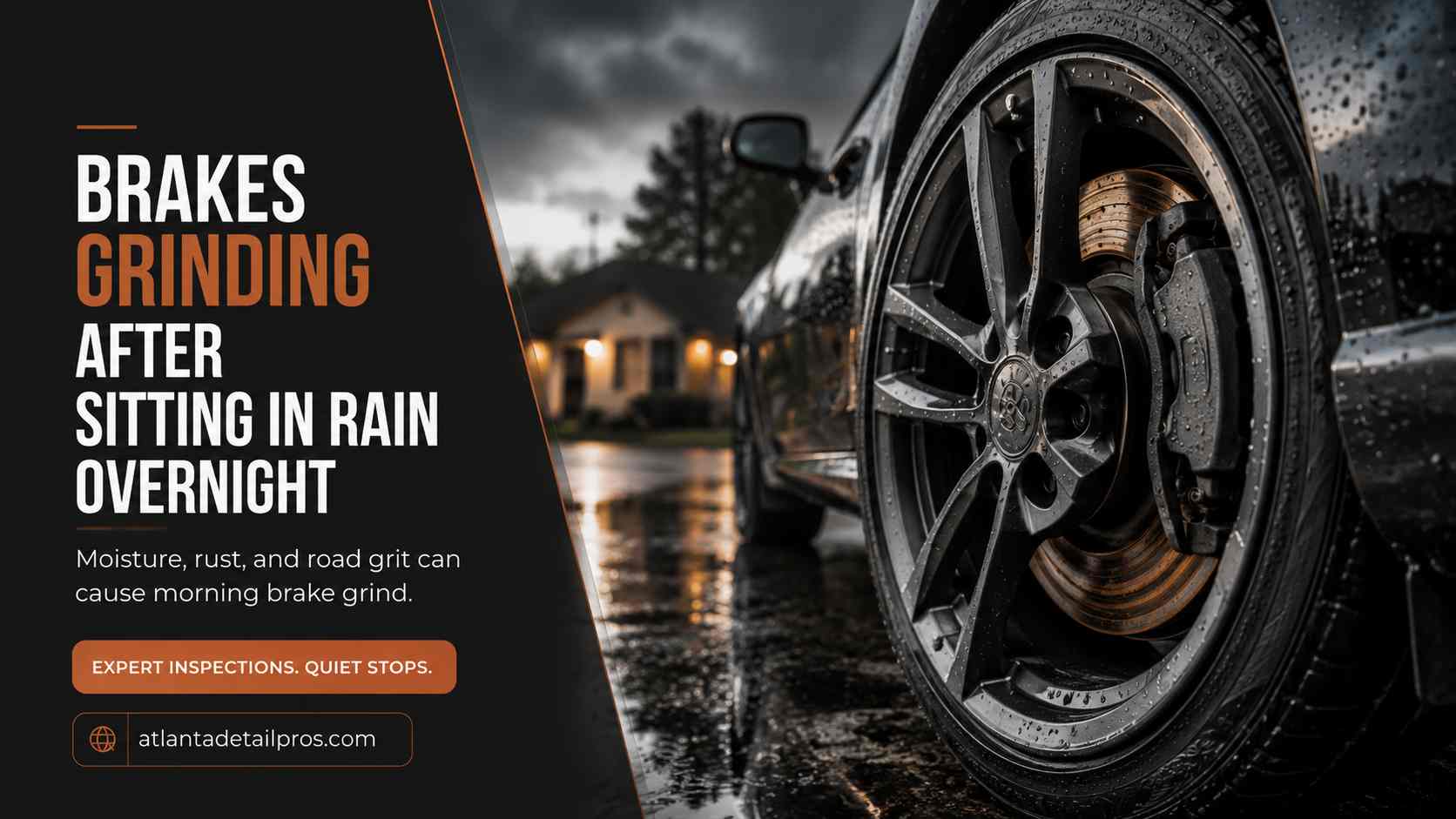
You walk out to the car after a rainy night, back out of the driveway, and hear a grinding or scraping sound the moment you touch the brakes. Three stops later it is gone. Or maybe it is not gone. That difference, whether the grinding clears after a few stops or persists, is the entire diagnostic question for this symptom.
Brake grinding after rain has two completely different explanations. One requires no repair at all. The other is a brake system problem that rain happened to reveal. This guide tells you exactly which one you are dealing with and what to do about it.
Why Brakes Grind After Rain: The Science in Plain Terms
Brake rotors are made from cast iron. Cast iron rusts quickly when exposed to moisture because the braking surface cannot be painted or coated. After a rainy night, a thin orange film of iron oxide forms on the rotor face within hours. When you apply the brakes, the pads scrub against this film and the sound of metal cleaning metal produces a grinding or scraping noise that is entirely normal.
That rust layer is typically just a few microns thick. The first two to five brake applications remove it completely and the noise disappears. Your braking performance is not affected during those stops.
The Three-Stop Rule: How to Tell Normal from Not Normal
This is the fastest and most reliable way to diagnose brake grinding after rain:
1. Find an empty road or parking lot. Slow from 20 mph using moderate brake pressure. Listen: is it a scraping or grinding sound, or a deeper metal-on-metal grinding?
2. Accelerate back to 20 mph and brake again. Note whether the noise is getting quieter.
3. Make a third moderate stop from 25 mph. Normal surface rust grinding should be 80 percent quieter or completely gone by now.
If the noise is gone or nearly gone after three to five stops: surface rust. Normal. Drive normally.
If the grinding is unchanged after five stops, is present during non-braking moments, or is accompanied by any of the warning signs below: not surface rust. Inspect or have inspected before driving further.
When the Grinding Is NOT Normal Surface Rust
Worn Brake Pads
If the pads have worn to their minimum thickness, the metal backing plate or the built-in wear indicator tab contacts the rotor directly. This produces a grinding noise that rain may make louder but does not cause. The distinction is that worn-pad grinding does not clear after a few stops. It continues every time you brake for the life of the pads. Rain reveals it more dramatically because moisture amplifies the sound of metal contact.
Debris Between Pad and Rotor
Rain washes grit, small stones, and road debris into the brake assembly. A small piece of gravel trapped between the pad and rotor produces a harsh grinding or scraping that sounds alarming but usually clears within one or two firm stops when the debris is expelled or crushed. If the noise clears very quickly (one stop) but was louder than usual, debris is the most likely explanation.
Seized Caliper Slide Pins
Caliper slide pins are metal rods inside rubber boots that allow the caliper to float and apply even pressure to both pads. When moisture gets past worn or cracked boots and causes the pins to seize with rust, the caliper cannot release fully after braking. One pad stays pressed against the rotor continuously, producing a grinding that is present even when you are not braking. You may also notice the car pulling to one side under braking, or one wheel running noticeably hotter than the other.
A seized caliper causes uneven braking. One front wheel braking harder than the other can cause the vehicle to pull unexpectedly during hard stops. Have seized slide pins inspected and repaired promptly.
Deep Rotor Pitting or Severe Corrosion
Vehicles that sit for extended periods, especially in wet climates or near the coast, can develop rust that goes beyond a surface film. Deep pitting creates an uneven braking surface. As the pads pass over the pits and ridges, the friction varies around the rotor and produces a grinding or shuddering sensation through the brake pedal. This type of corrosion does not clear with a few stops.
The table below is your quick-reference decision guide.
What You Observe | Likely Cause | Action Required | Urgency |
|---|---|---|---|
Grinding clears after 3-5 stops, pedal feels normal | Normal surface rust | None. Drive normally. | None |
Very loud 1 stop, then completely gone | Rain-washed debris under pad | None if cleared completely. | None |
Grinding present when NOT braking, or while reversing | Seized caliper slide pins | Inspect and service calipers. | This week |
Grinding does NOT clear after 10+ stops | Worn brake pads or deep rotor damage | Measure pad thickness; inspect rotor surface. | Do not delay |
Pedal pulsation or steering pull under braking | Rotor surface damage or seized caliper | Professional inspection before next long drive. | Urgent |
Burning smell after driving | Seized caliper dragging | Stop driving and have towed or inspected. | Immediate |
When Rear Brakes Grind Longer Than Front
Rear brakes typically see less pad pressure and therefore less scrubbing action. On a vehicle with gentle daily driving, the rear rotors may retain surface rust for longer than the fronts. A grinding that clears quickly on initial forward movement but appears briefly again when reversing is almost always surface rust on the inner rotor face, the side that dries slowest. This is completely normal.
Frequently Asked Questions
Is it normal for brakes to grind after rain?
Yes, for the first few stops. Cast iron rotors form a thin layer of surface rust overnight in wet conditions. The pads scrub this off within three to five brake applications and the noise disappears. Normal braking performance is not affected. If the grinding continues beyond five stops or is present when not braking, it is not surface rust.
Why do my brakes sound like metal on metal after rain?
The sound is the brake pads scrubbing a thin layer of iron oxide off the rotor surface. Cast iron rusts almost immediately when exposed to humidity. The grinding sound of the first few stops is the rust being removed by normal pad contact. Once the surface is clean, the noise stops.
How do I know if my grinding brakes need replacing?
If the grinding clears after a few stops and braking feels normal, the pads are fine. If the grinding persists for more than five to ten stops, is present when not braking, comes with a burning smell, a pulling sensation, or pedal pulsation, the pads may be worn through or there is a mechanical issue like a seized caliper. Look through the wheel spokes and inspect the visible edge of the brake pad. Less than 3mm of friction material means replacement is due.
Can seized brake caliper slide pins cause grinding after rain?
Yes. Seized slide pins prevent the caliper from fully releasing after a stop. This keeps constant pad pressure on the rotor, causing grinding even when you are not braking. Rain accelerates slide pin corrosion by entering through cracked rubber boots. Signs of seized pins include grinding that does not stop, steering pull during braking, and a burnt smell or excessively hot wheel after driving.
The Bottom Line
Brake grinding after rain is one of the most common causes of unnecessary brake inspections because surface rust is universally mistaken for a real problem. Use the three-stop test. If the noise is gone or nearly gone after five stops and everything feels normal, your brakes are fine. If the noise persists, the pedal pulses, the car pulls under braking, or the grinding continues between stops, that is the version worth getting inspected before your next long trip.