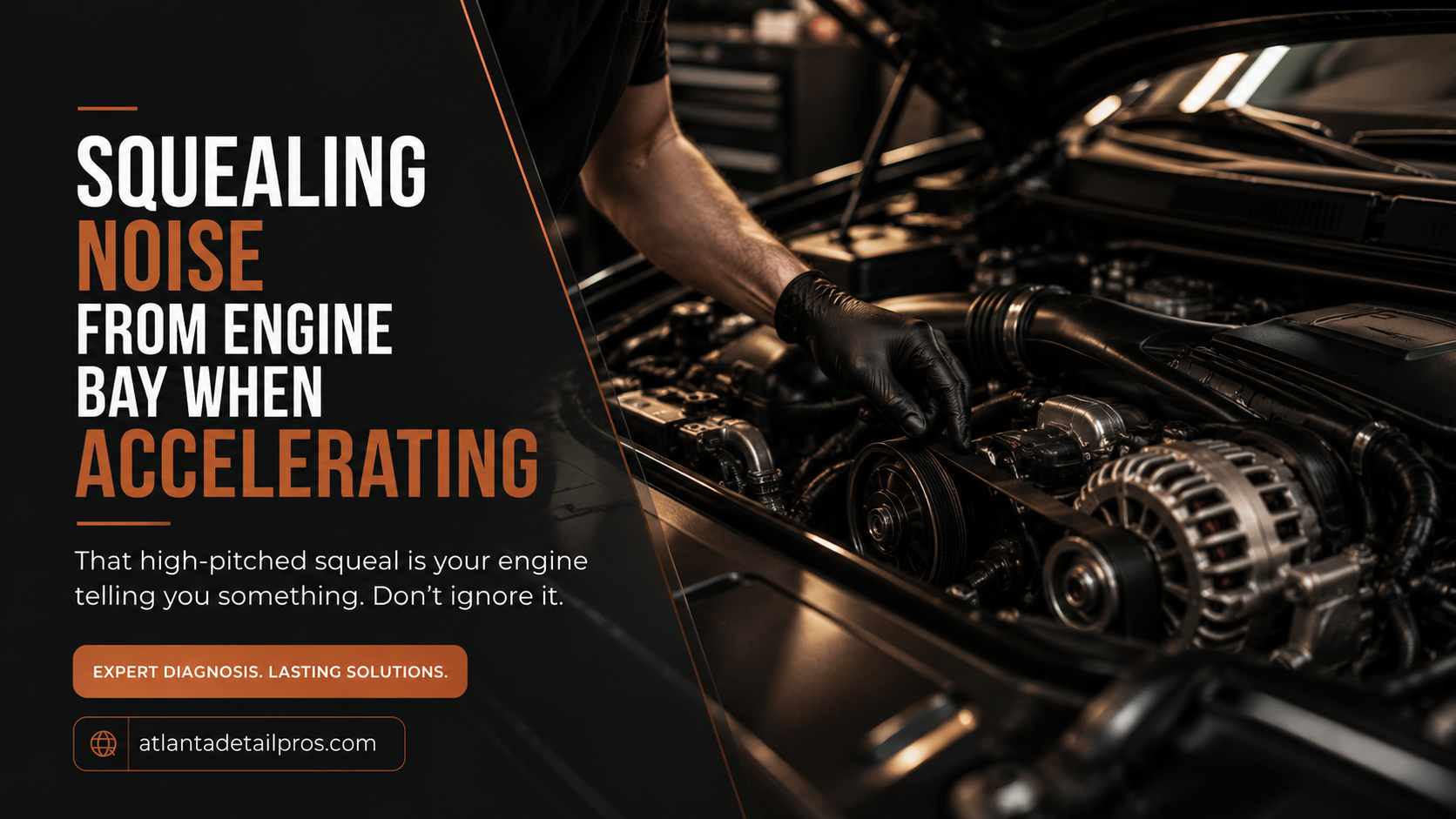
The squeal appears the moment you press the accelerator, rises as the engine revs climb, and drops when you let off. It can sound like a brief chirp at low speed, a continuous screech during hard acceleration, or a sharp belt-like sound that appears only when the engine is cold. Each pattern points to a different source.
Squealing from the engine bay during acceleration almost always originates from the belt drive system: the serpentine belt, the pulleys it rides on, or one of the accessories it drives. The tests to isolate it take under 10 minutes with basic tools.
Why Acceleration Makes the Noise Worse
The serpentine belt drives accessories like the alternator, power steering pump, and AC compressor. When you accelerate, engine RPM rises and the belt speeds up along with every pulley it contacts. Any component that is slipping, misaligned, or failing produces more noise as rotational speed increases. Belt tension also changes slightly under different engine loads, which can cause an intermittent squeal to become continuous during harder acceleration.
The Most Common Causes For Squealing Noise From the Engine Bay
1. Slipping Serpentine Belt
The most common cause of engine bay squealing. The belt rides on ribbed pulleys and depends on friction contact to transfer power. When the belt is worn, glazed, slightly loose, or contaminated with oil or coolant, it can slip against one or more pulleys under load. The squeal produced is a high-pitched, sharp sound that is most prominent during hard acceleration when accessory load increases suddenly.
A belt that is cracked, frayed, glazed shiny on the ribbed surface, or missing ribs needs immediate replacement before it breaks. A broken serpentine belt disables the alternator, power steering, and on many vehicles the water pump in one event.
2. Worn or Seized Idler Pulley or Tensioner Bearing
As covered in the whistling article, idler pulleys and the tensioner pulley contain sealed bearings. A bearing that is losing its grease can squeal rather than groan as it spins at elevated speed. The squeal from a bearing tends to be continuous at a given RPM rather than intermittent, and it persists whether or not you are accelerating once the engine is at that speed.
3. AC Compressor Clutch Slipping
The AC compressor connects to the belt drive through an electromagnetic clutch. When the AC is on, the clutch engages the compressor. A worn or glazed clutch surface can slip under the load of compressor engagement and produce a sharp squeal or chirp, often most noticeable when the AC first turns on or when the compressor cycles on under heavy acceleration. Turn the AC off and accelerate again. If the squeal disappears with the AC off, the compressor clutch is the likely source.
4. Alternator Bearing
The alternator contains a bearing that allows the rotor to spin inside the stator housing. A failing alternator bearing squeals or whines, rising in pitch with RPM. Unlike a belt squeal, it does not respond to spraying water on the belt. It persists whether or not accessories are loaded and can be isolated with the screwdriver stethoscope method.
5. Glazed or Contaminated Belt
Oil or coolant contamination on the belt contact surface reduces friction dramatically. Even a new belt can squeal if it has been exposed to a power steering fluid leak or a coolant leak near the belt path. The squeal will be accompanied by a slick or shiny appearance on the belt face and may leave a residue on the pulleys. Fix the source of contamination before replacing the belt, or the new belt will develop the same problem.
The table below shows how to distinguish each cause before running any tests.
Cause | When Squeal Happens | Key Distinguishing Test | Urgency |
|---|---|---|---|
Slipping serpentine belt | Under acceleration; worst when cold | Water spray on belt changes or stops noise immediately | Replace belt soon |
Worn idler or tensioner bearing | Continuous at given RPM, not load-dependent | Screwdriver stethoscope finds harsh bearing | Replace before seizure |
AC compressor clutch | When AC is on; disappears with AC off | Turn AC off and accelerate; squeal stops | Service or replace clutch |
Alternator bearing | Continuous, rises precisely with RPM | Stethoscope on alternator shows harsh vibration | Replace alternator |
Contaminated belt | Squeal plus belt looks oily or shiny | Visual belt inspection; find fluid source first | Fix leak; replace belt |
Diagnostic Tests
Test 1: The Water Spray Test
Keep hands clear of all spinning belts and pulleys. Stand to the side of the engine, not in front.
Start the engine and let it idle. Using a spray bottle, mist a small amount of water onto the ribbed surface of the spinning serpentine belt while an assistant gently revs the engine.
- Squeal changes, reduces, or stops when belt gets wet: the belt is slipping against a pulley. The belt, tensioner, or a pulley is the source.
- Squeal does not change: the belt is not slipping. Move to the screwdriver stethoscope test.
Test 2: The AC Isolation Test
With the engine running and the squeal present, turn the AC off completely. Accelerate gently and listen. If the squeal disappears with the AC off, the compressor clutch or the additional load of the compressor cycling is the source.
Test 3: Visual Belt Inspection (Engine Off)
Inspect the full length of the belt. A healthy belt shows dark, even ribbing with no cracks, fraying, or shiny glazed areas. Replace any belt showing cracks along the ribbed surface, missing ribs, fraying at the edges, or a polished, slick appearance on the contact face.
Test 4: Screwdriver Stethoscope for Bearings
Touch the metal tip of a long screwdriver to the non-spinning metal center bolt of the alternator, each idler pulley bracket, and the tensioner bracket while the engine idles. Press your ear to the handle. A healthy bearing produces a quiet, smooth hum. A failing bearing transmits a harsh, rough vibration or grinding through the handle.
Frequently Asked Questions
Why does my engine squeal when I accelerate?
The most common cause is a slipping serpentine belt. As engine RPM rises during acceleration, a worn, glazed, or slightly loose belt slips against the pulleys under increased load and produces a high-pitched squeal. Spray a small mist of water on the belt while the engine runs. If the squeal changes or stops, belt slip is confirmed. Other causes include a worn idler bearing, slipping AC compressor clutch, or alternator bearing failure.
Can I drive with a squealing engine belt?
Short distances, yes. Indefinitely, no. A squealing belt is slipping, which means it is wearing faster than normal. A belt that breaks suddenly disables the alternator, power steering, and water pump simultaneously. If the squeal is loud, constant, or the belt shows visible damage, address it before your next long drive.
How much does serpentine belt replacement cost?
A serpentine belt replacement typically costs $80 to $200 at an independent shop. The belt itself is $20 to $50. Many shops recommend replacing the tensioner and idler pulleys at the same time since they are accessible and the labor is already done. An idler pulley or tensioner adds $60 to $150 to the job.
The Bottom Line
A squealing engine bay during acceleration is almost always a belt drive problem, and the water spray test separates a slipping belt from a bearing noise in under a minute. Inspect the belt visually for cracking, glazing, or contamination. Replace a belt that shows damage before it breaks, because a broken serpentine belt is an immediate roadside event, not a gradual failure.