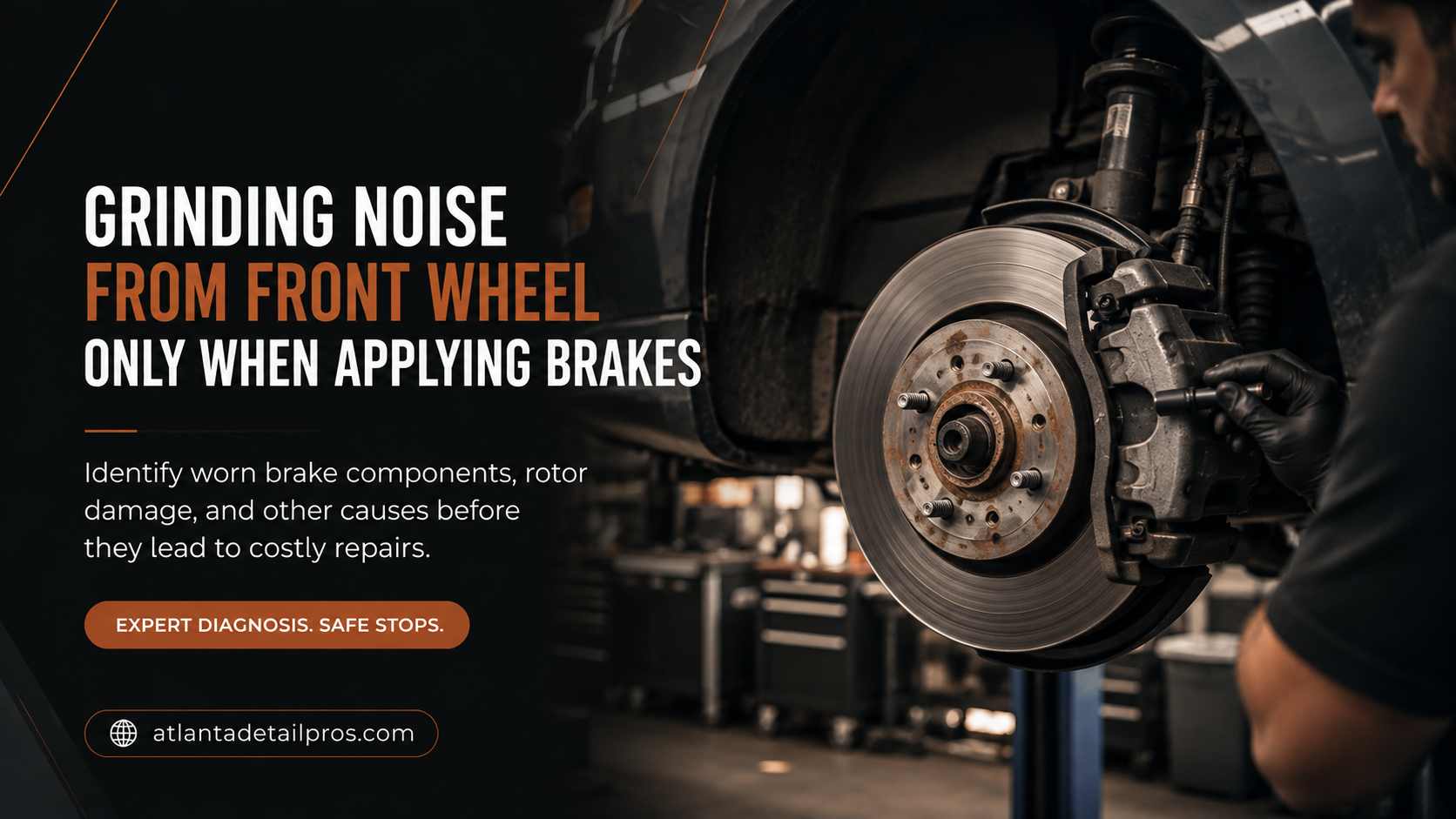
A grinding noise from one front wheel that occurs specifically when you apply the brakes and stops when you release them is a brake system problem that requires attention within days, not weeks. The sound of metal grinding against metal in your brake system means that one of the protective layers between your brake pad and rotor has worn through, and each application of the brakes from this point is causing damage to components that were not meant to contact each other.
The most common cause of a front brake grind on only one side is brake pads worn beyond the minimum thickness, where the steel backing plate of the pad is making direct contact with the brake rotor. This is a progressive failure: the grinding noise itself indicates that the brake pad has already worn through its friction material and its built-in wear indicator, meaning the braking system is already operating at reduced effectiveness on that wheel.
This guide covers every cause of a single-front-wheel brake grind, how serious each is, what a shop will need to replace, and the specific situations where this noise can wait briefly versus where it requires immediate attention.
How Brake Pads Wear to the Point of Grinding
A new brake pad has approximately 10 to 12 millimeters of friction material. A small metal tab called a wear indicator is embedded in the pad at approximately 2 to 3 millimeters remaining. When the pad wears to that point, the wear indicator contacts the rotor and produces a high-pitched squealing noise as a warning. That squeal is the warning that grinding is coming if the pads are not replaced.
When the pad wears past the wear indicator and approaches zero friction material, the steel backing plate of the pad begins contacting the rotor surface. The steel-on-steel contact produces the grinding noise and scores the rotor surface with each brake application. By the time grinding is audible, the rotor has typically sustained damage that requires resurfacing or replacement in addition to the pad replacement.
The one-side-only characteristic is important. Brakes on both front wheels should wear at approximately the same rate. When one side grinds and the other does not, the grinding side is either more worn (suggesting an alignment or caliper issue that has caused uneven wear) or the non-grinding side has retained some friction material while the other has not.
Seized or Dragging Brake Caliper
A brake caliper that is not fully releasing after brake pressure is removed causes the brake pad to maintain contact with the rotor even when you are not pressing the pedal. This constant contact accelerates pad wear on one side significantly, which is why a single-side grind often indicates a caliper problem rather than simply end-of-life pads.
A seized caliper may also cause the vehicle to pull toward that side under braking, the wheel to feel warm or hot to the touch after driving (significantly warmer than the opposite front wheel), and in some cases a burning smell from that corner after normal driving. If the grind is on one side and the wheel feels noticeably hotter than the opposite side after a test drive, the caliper is the primary suspect.
Repair for a seized caliper: the caliper typically needs to be replaced rather than rebuilt in most cases, and the brake pads and rotor on that side are replaced at the same time because both will have sustained wear damage from the constant contact. Cost for a single-side brake job with a new caliper: $300 to $600 at an independent shop.
Debris Between the Pad and Rotor
Occasionally, a small stone, piece of gravel, or road debris becomes lodged between the brake pad and the rotor surface. This debris causes a grinding or scraping noise specifically when braking because the brake pad pressure traps the object against the rotor. Unlike pad-on-rotor grinding, debris-induced grinding may resolve on its own as the debris is ejected or crushed during brake applications.
How to distinguish debris from pad wear: debris grinding often appears suddenly after driving on gravel or rough road conditions. It may be intermittent at first rather than consistent on every brake application. If the grinding appeared suddenly and was not preceded by squealing, debris is a plausible cause. If the grinding followed weeks or months of occasional squealing that was ignored, pad wear is the more likely cause.
If debris is suspected, allow several normal brake applications and check whether the grinding stops. If it persists unchanged for a full day of driving, debris is unlikely to be the sole cause and pad wear warrants inspection.
Overnight Rotor Corrosion That Resolves
Brake rotors develop a thin layer of surface rust overnight when exposed to humidity. This rust layer produces a scraping or light grinding noise on the first few brake applications of the day, which then clears as the brake pads scrape the rust off the rotor surface during normal braking. This is a normal and expected characteristic of iron rotors.
Distinguishing overnight rust from pad wear: the overnight rust grind occurs only on the first one to five brake applications of the morning and then disappears completely for the rest of the day. A pad-wear grind occurs on every brake application regardless of how long the car has been driven. If the grinding is consistent throughout all driving after the first minute of operation, it is not overnight rust.
Urgency: How Long Can You Wait?
Situation | Urgency Level | Action |
|---|---|---|
Grinding on every brake application; braking feels normal | High urgency | Schedule repair within 3 to 5 days; avoid hard braking and highway speeds |
Grinding plus vehicle pulling to one side when braking | Very high urgency | Repair immediately or within 24 to 48 hours; caliper likely seized |
Grinding plus brake pedal feels soft or goes low | Emergency | Do not drive; have vehicle towed. Brake hydraulic system may be compromised |
Grinding only on first 1 to 5 applications of the day, then stops | Low urgency | Monitor; likely overnight rotor rust which is normal |
Intermittent grinding that started suddenly after driving on gravel | Low urgency | May be debris; monitor for two to three days |
The braking system is safety-critical, and deterioration from the grinding stage tends to accelerate rapidly. Once the pad backing plate is scoring the rotor, rotor damage increases with every mile driven. Waiting to address brake grinding for more than a week or two typically converts a pad-and-rotor replacement job into a more expensive brake system service.
What Gets Replaced and What It Costs
By the time brake pads have worn to the grinding stage, the rotor on the affected side has almost certainly sustained scoring damage. Most shops will recommend replacement of both pads and rotor on the affected side as a minimum, and many will recommend doing both front wheels together to maintain balanced braking.
Typical costs at an independent shop: brake pads and rotor replacement on both front wheels (most common recommendation): $250 to $500. If the caliper is also seized: add $150 to $300 per side. If brake fluid flush is recommended due to age or contamination: add $80 to $150.
Dealer pricing for the same service is typically 30 to 50 percent higher than independent shops. Using quality aftermarket pads and rotors rather than OEM components at an independent shop typically saves $100 to $200 without meaningful sacrifice in brake performance for normal driving.
Frequently Asked Questions
What causes a grinding noise when braking from one front wheel?
The most common cause is brake pads worn through their friction material to the steel backing plate, which then grinds against the brake rotor. One-sided grinding often indicates a caliper that has caused uneven pad wear through sticking or dragging. Debris lodged between the pad and rotor can also cause grinding that may resolve on its own.
Is it safe to drive with a grinding brake?
Driving with a grinding brake is not safe beyond a very limited period. The grinding indicates the brake on that wheel is operating with reduced effectiveness, and the damage to the rotor is increasing with every brake application. The vehicle should be repaired within a few days. If the grinding is accompanied by pulling when braking, a low or soft pedal, or excessive heat from that wheel, do not drive and have the vehicle towed.
Can I drive to the shop if my brakes are grinding?
For a short local trip of a few miles with moderate traffic and no highway driving, driving to the shop is generally acceptable when the grind is the only symptom and the pedal feels normal. Avoid hard braking, maintain increased following distance, and go directly to the repair destination. If the pedal feels soft, goes to the floor, or if the car pulls significantly when braking, the vehicle should not be driven.
How much does it cost to fix a grinding brake noise?
Front brake pad and rotor replacement at an independent shop typically costs $250 to $500 for both front wheels, which is the most common recommendation when grinding has occurred. If a caliper is seized and must be replaced, add $150 to $300 per caliper. A shop inspection to diagnose the cause before repair typically adds $50 to $100.
Why is only one front brake grinding and not the other?
One-sided brake grinding commonly indicates a caliper that is not fully releasing, causing that pad to wear faster than the opposite side. It can also reflect a manufacturing variation in pad sets where one pad wore slightly faster, reaching the end of its life before the other. An alignment issue that causes one wheel to track at a slight angle can also accelerate uneven front pad wear.
What is the brake wear indicator and when does it squeal?
The brake wear indicator is a small metal tab embedded in the brake pad at approximately 2 to 3 mm of remaining friction material. When the pad wears to this level, the tab contacts the brake rotor and produces a high-pitched squealing noise as a warning that pad replacement is needed soon. Grinding occurs when the pad wears past even the indicator, meaning the warning was either not heard or was ignored.
Will the grinding damage my rotors?
Yes. Once the pad backing plate contacts the rotor, each brake application scores the rotor surface. Rotors that have been damaged by grinding typically cannot be resurfaced safely because they are already below minimum thickness, requiring replacement. Addressing brake grinding promptly avoids this additional cost.
Can debris cause a grinding brake noise?
Yes. A small stone or piece of road debris can become lodged between the brake pad and rotor, causing a grinding or scraping noise when braking. Debris-caused grinding often appears suddenly after driving on gravel or rough surfaces and may be intermittent. It can sometimes resolve as the debris is ejected or crushed during braking. If the grinding appeared suddenly and stops within a day or two, debris is plausible. Persistent grinding warrants inspection regardless of cause.
The Bottom Line
A grinding noise from one front wheel when braking is a brake pad that has worn through its friction material, and the repair is urgent rather than optional. Every mile driven from the point grinding begins adds more damage to the rotor and reduces the effectiveness of the braking system on that corner.
The one-side-only nature of the grind is a useful diagnostic clue: it often indicates a caliper that is not fully releasing, causing asymmetric pad wear. A mechanic inspection that finds a seized caliper will recommend replacing the caliper as well as the pad and rotor, which adds cost but addresses the underlying cause rather than just the symptom.
The repair is straightforward and the cost is predictable. What is not predictable is the cost of driving on a failing brake until additional components fail. Pad and rotor replacement is the minimum intervention. A caliper, rotor, and pad service on a brake that has been grinding for months is a more expensive outcome from the same original problem.