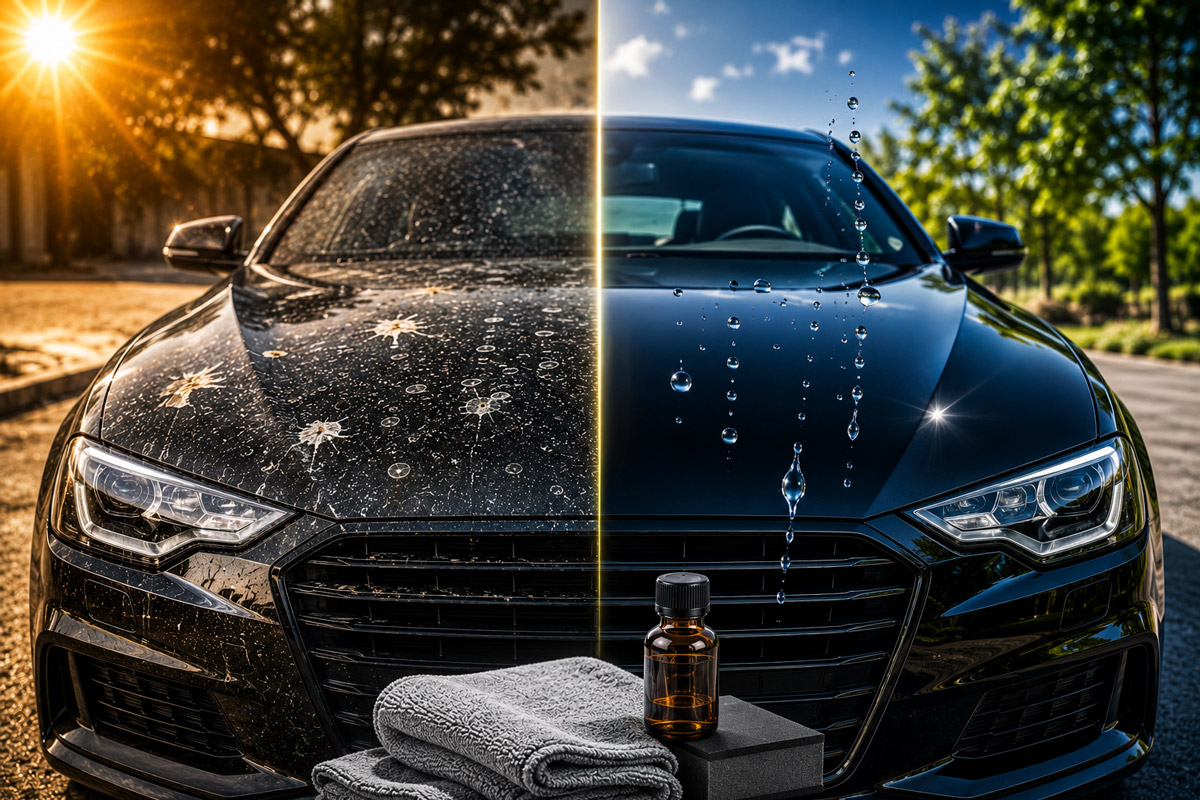
Parking your car outside exposes it to a daily onslaught of harsh environmental elements. From intense sun exposure to unpredictable weather patterns, a vehicle left outdoors 24/7 takes a serious beating. If you do not have the luxury of a covered garage, you have likely wondered how to protect your investment. Traditional waxes and sealants only last a few weeks before breaking down, leading many car owners to look into more durable paint protection solutions.
This brings up a common question: Is ceramic coating worth it for a car that is parked outdoors?
The short answer is yes. Professional ceramic coating is highly worth it for outdoor-parked cars because it acts as a sacrificial barrier against harsh environmental elements. It seals the paint work at a microscopic level, creating a durable layer of protection that stands up to things like UV rays, bird droppings, acid rain, and tree sap. However, if you are relying purely on basic do-it-yourself (DIY) consumer sprays, they may not provide enough long-term protection to combat constant outdoor exposure without frequent reapplication.
To help you make the best choice for your vehicle, here is a complete guide analyzing how ceramic coatings perform in outdoor conditions, their real-world limitations, and a comparison of the best application options.
How Ceramic Coating Protects Outdoor Vehicles
When a vehicle sits outside, its clear coat is the only thing standing between environmental contaminants and raw paint. Over time, these contaminants degrade the clear coat, causing the paint to look dull, faded, or even begin peeling.
Ceramic coating introduces a semi-permanent layer of silicon dioxide (SiO2) or graphene that chemically bonds with your factory paint. Think of it as a harder, secondary clear coat that takes the brunt of the damage so your actual paint does not have to.
A ceramic coating offers four primary forms of protection for outdoor vehicles:
1. Advanced UV Protection
The sun is one of the biggest enemies of automotive paint. Constant exposure to ultraviolet rays breaks down the chemical bonds in automotive clear coats. This leads to paint oxidation, which shows up as a hazy, white appearance, and eventually causes fading and peeling. Ceramic coatings contain powerful UV inhibitors that block intense sunlight, keeping your paint looking vibrant and glossy even if it sits under the sun all day.
2. High Chemical Resistance
Nature can be incredibly acidic. When birds leave droppings on your car or trees drip sap onto the hood, these substances bake under the sun’s heat. As they heat up, they expand and contract, etching deep into the clear coat and causing permanent damage. Ceramic coatings offer high chemical resistance. They create an inert layer that stops these acidic compounds from making direct contact with the clear coat, giving you a wider window of time to wash the contaminants away safely.
3. Hydrophobic Shield
One of the most noticeable features of a ceramic coating is its hydrophobic (water-repelling) nature. Instead of pooling on the flat surfaces of your vehicle, rainwater beads up tightly and rolls off, carrying loose mud, surface dirt, and road grime along with it. This self-cleaning effect ensures that your car stays cleaner for longer periods between washes and makes the overall maintenance wash process significantly easier.
4. Heavy Contaminant Barrier
Vehicles parked outdoors constantly collect invisible airborne particles. This includes industrial fallout, brake dust from passing traffic, and metallic pollution. When these microscopic particles land on bare paint, they become embedded over time, creating a rough texture that ruins your paint’s gloss. A ceramic coating smooths out the microscopic valleys of your vehicle’s paint, preventing these contaminants from grabbing hold and anchoring themselves.
Key Limitations of Ceramic Coating for Outdoor Cars
While ceramic coatings are highly effective, they are not magical armor plating. Misleading marketing can sometimes give car owners unrealistic expectations. To get the most value out of your investment, it is critical to understand what a ceramic coating cannot do, especially when a vehicle faces constant outdoor exposure.
- No Scratch or Impact Protection: A ceramic coating will not stop rock chips, door dings, or deep swirl marks caused by improper washing or automatic car washes. It is incredibly thin and designed for environmental protection, not structural impact resistance.
- Water Spots Still Happen: Although the coating repels bulk water, standing rainwater or lawn sprinkler overspray can still leave mineral deposits as the water evaporates. The heat from the sun bakes these minerals (calcium and magnesium) onto the surface, creating visible water spots.
- Requires Regular Maintenance: You cannot apply a coating and completely forget about washing your vehicle. To prevent dirt from clogging the coating’s hydrophobic properties, you must still wash the car regularly using ceramic-safe shampoos that are free from heavy waxes or high-pH cleaners.
- Shortened Lifespan Under Constant Exposure: Environmental stress impacts longevity. A professional coating rated for 5 years on a garaged vehicle may only last 2 to 3 years when subjected to 24/7 outdoor exposure, heavy rain, changing seasons, and constant UV radiation.
Ceramic Coating Options Compared
If you decide to protect your outdoor vehicle with a ceramic coating, you have two primary routes: hiring a professional detailing shop or using a consumer-grade product at home. Both paths have distinct differences in terms of durability, chemical concentration, installation difficulty, and overall cost.
| Feature | Professional Coating | Consumer Ceramic Spray |
| Best For | Maximum outdoor protection | Budget-conscious DIYers |
| Durability | 2 to 5+ years | 3 to 6 months |
| Chemical Content | High-concentrate SiO2 / Graphene | Diluted SiO2 polymers |
| Application | Requires professional paint correction | Easy spray-on, wipe-off |
| Cost | High initial investment | Very affordable |
Professional Coatings
For an outdoor parker, a professional installation offers the highest level of security. Professional detailers use heavy duty formulas with high concentrations of SiO2 or graphene that require careful application.
Crucially, professional shops perform extensive paint correction (machine polishing to remove swirls and oxidation) before applying the coating. This step ensures the coating bonds perfectly to the bare clear coat, maximizing its lifespan against harsh outdoor conditions. While the upfront investment is higher, it delivers years of worry-free defense.
Consumer Ceramic Sprays
If a professional installation does not fit your budget, consumer ceramic sprays offer an accessible alternative. These products use diluted SiO2 polymers that allow for a quick spray-on, wipe-off application process. They are incredibly forgiving to work with and very affordable, making them a popular choice for DIY enthusiasts. The trade-off is durability. Because the formula is diluted, you will need to reapply the spray every few months to maintain a consistent layer of protection against the elements.
Recommended Products for Outdoor Vehicles
If you have the time, patience, and a shaded workspace to apply a coating yourself, choosing the right product is essential. For vehicles left outside, you want high-grade consumer products known specifically for heavy duty environmental resistance. Three highly regarded options on the market include:
CarPro CQuartz UK 3.0
This is a true consumer-grade nano-coating that behaves exactly like a professional formula. It features a high concentration of SiO2, offering excellent resistance to road salt, harsh winter weather, and chemical etching from bird droppings. It creates a deep gloss and a hard barrier, making it one of the absolute best choices for vehicles facing non-stop outdoor exposure.
Gtechniq Crystal Serum Light
Crystal Serum Light provides professional-level swirl resistance and incredible gloss, but its formula is tuned to be highly forgiving during DIY application. It creates an ultra-durable chemical bond that is resilient against environmental fallout and industrial pollution. If you want excellent longevity from a true ceramic bond without the risk of leaving permanent high spots during application, this is a top tier choice.
Turtle Wax Hybrid Solutions Ceramic Spray Coating
For those who prefer a fast, budget-friendly spray option, this product stands out. It requires application every few months to keep up its strength against outdoor conditions, but it provides excellent hydrophobic properties. Water sheets off rapidly, preventing dirt from settling on the paint. It is an ideal entry-level option for maintaining a basic level of protection without a complex application workflow.
The Verdict: Protecting Your Outdoor Investment
Leaving your car exposed to the elements day in and day out accelerates the aging process of your vehicle’s exterior. Investing in a ceramic coating provides an excellent defensive layer that preserves your paint, maintains your car’s resale value, and makes cleaning off outdoor grime an absolute breeze.
Choosing the right path depends on your budget and how much time you want to spend on maintenance. A professional installation provides heavy duty, multi-year durability that handles the worst outdoor conditions with ease. On the other hand, the DIY path saves money upfront but requires you to put in the manual labor for paint preparation and regular reapplication.
If you want to safeguard your outdoor vehicle, professional detailers can handle the tedious prep work and installation for you. Alternatively, picking up the right dual-action polishers, iron removers, and prep sprays will set you up for a successful DIY application at home. Consider your budget and your schedule to decide which path makes the most sense for keeping your car protected in the open air.