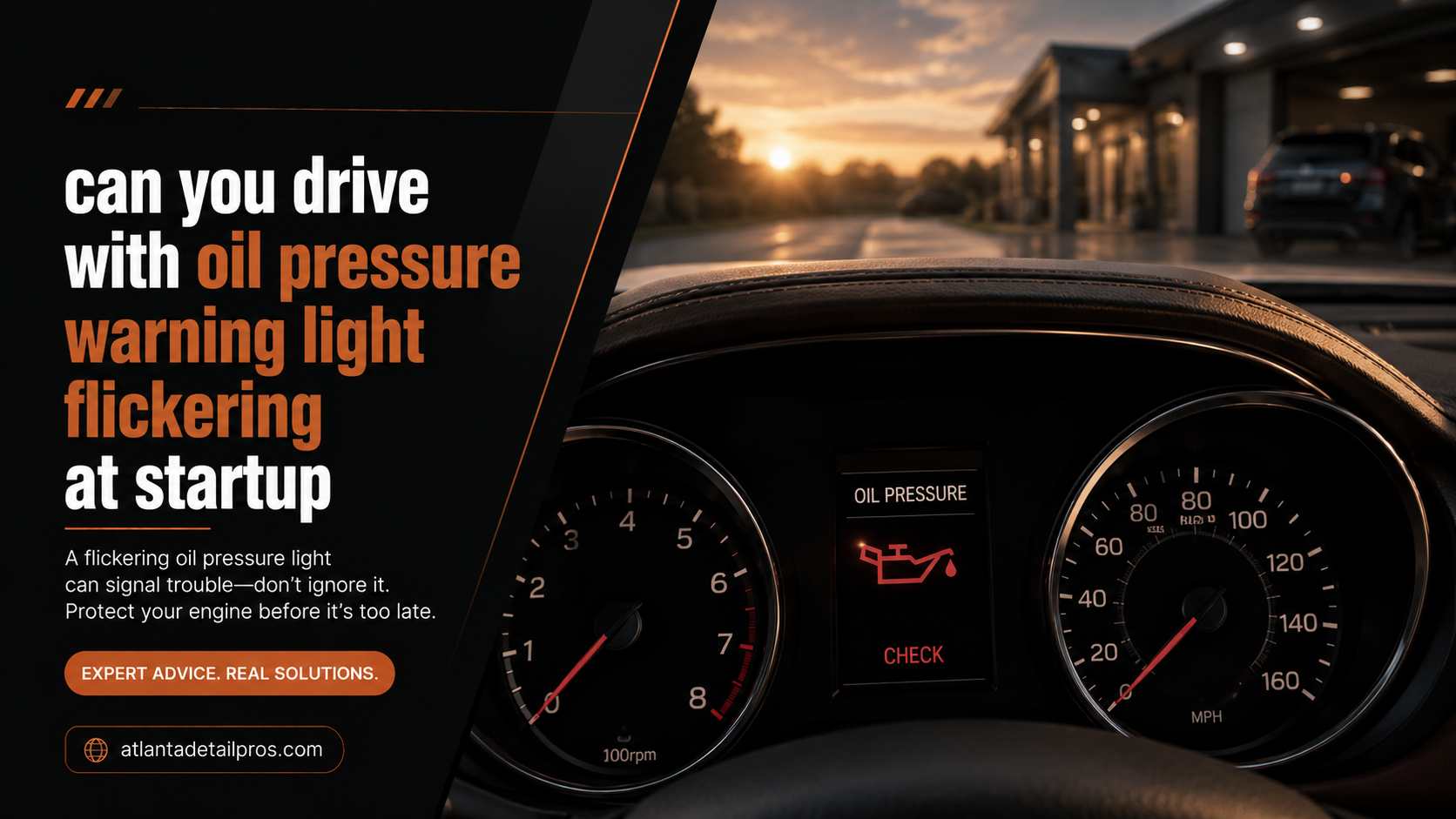
An oil pressure warning light that flickers briefly at cold startup and extinguishes within 3 to 5 seconds is most commonly caused by a slow-responding or failing oil pressure sensor and is often not an immediate driving emergency: a light that persists beyond 10 seconds, returns at warm idle, or appears during normal driving at cruising RPM is an entirely different situation that requires immediate engine shutdown.
The distinction between a faulty sensor and genuine low oil pressure is critical because the consequences of getting it wrong are catastrophic bearing damage in one case and an unnecessary tow in the other.
The oil pressure warning light is the most serious indicator on your dashboard. Engineers design it to be unmissably red because the consequences of ignoring it are faster and more total than almost any other automotive failure. A check engine light gives you days or weeks of decision time. Genuine low oil pressure at operating conditions can destroy main bearings in under 30 seconds of continued driving at load.
This guide walks through every cause of startup oil pressure flickering in order of likelihood, the specific field tests that separate a sensor failure from a real pressure problem, and the exact driving decisions that are appropriate to each cause.
Why the Oil Pressure Light May Flicker at Startup
The Normal Cold-Start Pressure Sequence
When a gasoline engine starts cold, there is a brief interval before oil pressure builds to normal operating levels. The oil pump must first build pressure throughout the main oil gallery before the system pressurizes adequately. On a vehicle with oil at the correct level and correct viscosity, this typically takes 1 to 3 seconds after ignition. The oil pressure warning light illuminates during this pre-pressure window by design, which is why it lights up every time you turn the key to “on” before cranking. It should extinguish within 3 to 5 seconds of a successful start.
A flicker during the first 2 to 3 seconds of startup, followed by steady extinguishing and no return throughout any subsequent driving, often reflects normal cold-start behavior. This is particularly common in cold weather when oil is thicker and flows more slowly to the pump inlet.
Cause 1: Failing Oil Pressure Sensor (Most Common)
The oil pressure sensor (also called the oil pressure sending unit) is a threaded sensor in the main oil gallery that reads hydraulic pressure and sends an electrical signal to the gauge or warning light circuit. These sensors have a higher failure rate than most engine sensors, particularly after 80,000 to 120,000 miles of exposure to heat and vibration cycles.
A failing sensor produces an intermittent signal that reads low pressure and triggers the light when actual oil pressure is perfectly normal. The sensor may clear and read correctly once the oil warms and the resistance element stabilizes, or after the engine settles at a steady idle. This is the most common cause of a startup-only oil pressure flicker in engines running correctly with proper oil level and clean oil.
Vehicle platforms with documented oil pressure sensor failure rates include the GM LS family (particularly the 5.3L L99 and 6.0L L96 in pickups and SUVs), the Dodge Hemi 5.7L and 6.4L, the Ford 5.4L Triton V8, and high-mileage Honda J35 V6 engines.
Cause 2: Low Oil Level
Low oil level is the simplest and most immediately verifiable cause. If the oil level is below the add mark on the dipstick, the oil pump may momentarily fail to draw an adequate supply at startup, particularly when cold oil is thick and slow to flow. The fix is topping off to the correct level with the manufacturer-specified viscosity. If the light does not recur after topping off, monitor oil level closely over the following 7 to 10 days for ongoing consumption that would indicate a separate leak or consumption problem.
Cause 3: Oil Viscosity Mismatch
Using an oil that is thinner than specified can reduce pressure at warm idle to the borderline of triggering the warning light. Using an oil that is thicker than specified in cold-climate conditions causes delayed pressure buildup at cold startup as thick oil flows more slowly through the pump inlet and gallery passages. Always verify the exact viscosity grade specified on the oil filler cap or in the owner’s manual. Common mismatches occur when someone uses 5W-30 in an engine specifying 0W-20, or conversely uses a thin summer-weight oil in winter temperatures.
Cause 4: VVT System Sludge
Modern engines with variable valve timing use oil pressure to actuate the cam phaser or VVT sprocket at startup. The oil passages leading to these actuators are narrow, typically 2 to 4 mm in diameter, and are vulnerable to sludge buildup in engines with extended oil change intervals or predominantly short-trip city driving patterns.
Sludge in the VVT passages causes the system to draw oil from the main gallery at startup before the gallery is fully pressurized, momentarily dropping main gallery pressure below the warning threshold. This produces a startup oil pressure flicker that is specifically associated with VVT actuation and is often accompanied by a rattle or ticking sound on cold start that disappears within 10 to 30 seconds as the VVT system hydraulically adjusts and the sludge partially clears.
Platforms known for VVT-related oil pressure sensitivity when oil changes have been extended include the Toyota 3.5L 2GR-FE and 2GR-FSE, the Ford 5.4L 3-valve Triton, the GM 3.6L LFX and LGX, the BMW N52 and N54, and the Subaru FB20 and FB25 with direct injection.
Cause 5: Oil Pump Wear
The oil pump is a positive-displacement pump driven directly from the crankshaft or camshaft timing components. Its internal clearances increase with wear over high mileage. Worn pump clearances reduce the pump’s capacity to generate maximum pressure, particularly at low RPM such as cold idle and warm idle. A worn pump may maintain adequate pressure at driving RPM (where it spins fast and compensates through volume) but fail to build pressure quickly enough at cold startup.
Oil pump wear is a concern on high-mileage engines (typically above 180,000 miles) and on engines with a history of extended oil change intervals, which allows the oil to carry abrasive metal particles and combustion byproducts that accelerate pump clearance wear over time.
Cause 6: Worn Main or Rod Bearings (Most Serious)
Worn crankshaft main bearings or connecting rod bearings increase the clearance between the bearing surface and the crankshaft journal. The oil pump must work harder to maintain gallery pressure because the enlarged bearing clearances allow oil to escape the film faster. A worn-bearing engine may show normal or borderline pressure at highway RPM where the pump is spinning fast, but drop below the warning threshold at warm idle where pump speed is lower.
This cause is the most dangerous on the list. An engine with worn main bearings driven under sustained load is at risk of bearing seizure, where the bearing surface contacts the crankshaft journal directly, stopping crankshaft rotation in the block. This is an engine-destroying event that typically requires complete replacement.
Cause Hierarchy Table
| Cause | Startup Flicker Pattern | Secondary Symptoms | Repair Urgency | Cost Range |
|---|---|---|---|---|
| Failing oil pressure sensor | Cold start flicker under 5 seconds, never returns | None | Low: repair within 2 weeks | $60 to $150 |
| Low oil level | Startup flicker, may persist at warm idle if very low | Low dipstick reading | Medium: top off immediately | $15 to $40 (oil) |
| Viscosity mismatch | Cold start flicker in cold weather only | None | Low: correct at next oil change | $40 to $80 |
| VVT sludge | Cold start flicker, timing rattle on cold start | Cold-start tick that clears | Medium: flush and service within 1 month | $150 to $500 |
| Oil pump wear | Flicker at startup and at warm idle | Low mechanical gauge reading at idle | High: repair within 1 week | $400 to $950 |
| Worn main or rod bearings | Flicker at startup AND at warm idle or cruising speed | Knocking or tapping noise at any RPM | Critical: do not drive | $2,000 to $7,000 |
How to Distinguish a Sensor Problem From Genuine Low Pressure
Test 1: Check Oil Level and Condition First
Pull the dipstick before any other diagnosis step. If the oil level is correct and within the current service interval (clean, amber to dark amber, no milky appearance), a sensor failure is more likely than a genuine pressure problem. If the oil is low, dirty, or milky, address those findings before proceeding to other diagnosis.
Test 2: Install a Mechanical Oil Pressure Gauge
This is the definitive test and every shop can perform it for $50 to $100. A mechanical oil pressure gauge threads directly into the oil pressure sensor port and reads true hydraulic pressure independently of the electrical sensor or warning light circuit.
Reference values for most gasoline engines:
Cold idle pressure: 25 to 65 PSI. Warm idle pressure: 10 to 25 PSI minimum (manufacturer specifications vary: 10 PSI is the floor for most engines). Driving RPM pressure (2,000 to 3,000 RPM): 35 to 75 PSI.
Any reading below these values at the corresponding condition confirms genuine low pressure rather than a sensor fault. If the mechanical gauge reads normal throughout all test conditions, the oil pressure sensor is the problem and can be replaced safely while continuing to drive carefully.
“The oil pressure light started blinking at startup on cold mornings. Everything I read pointed to the sensor being a common failure on the 5.3L. I had the shop do a mechanical gauge test first before ordering any parts. Warm idle pressure was reading 8 PSI when 15 to 25 is normal. It was not the sensor at all: the oil pump was failing. If I had swapped the sensor and kept driving I probably would have spun a bearing within three weeks. The test cost $75 and saved the engine.”: Fiona Chu, 2011 Chevrolet Silverado 1500 5.3L
Test 3: Monitor the Light at Warm Idle
After the engine fully warms (10 to 15 minutes of driving or idling), come to a complete stop and idle in drive for 60 seconds. If the oil pressure light returns at warm idle, this is a serious indicator. Oil pressure should be at its most stable at a fully warm, steady idle. A light that only appears at cold start and never returns at any other time and condition is consistent with a sensor or cold-viscosity issue. A light that reappears at warm idle requires immediate attention regardless of how brief the startup flicker was.
Test 4: Note Any Accompanying Noises
A rhythmic knocking or tapping at idle that increases with RPM is the sound of bearing clearances allowing metal contact at the journal surfaces. This is the most urgent possible symptom in combination with an oil pressure light and means do not restart and do not drive.
Driving Decisions Based on Flicker Pattern
Cold Start Flicker Under 5 Seconds, Never Returns During Driving
Check oil level. If correct, drive carefully to a shop within 1 to 2 weeks for a mechanical pressure test and sensor evaluation. This is the most common and benign pattern.
Cold Start Flicker That Takes 5 to 15 Seconds to Extinguish
Drive conservatively to a shop within the same day for a mechanical pressure test. This pattern indicates slower pressure buildup than normal, consistent with low oil level, incorrect viscosity, early pump wear, or VVT sludge. Avoid highway driving or sustained load until confirmed.
Light Returns at Warm Idle or Appears During Normal Driving
Pull over immediately and shut off the engine. Call a tow. This pattern reflects genuine low oil pressure at conditions where pressure should be most stable. Do not attempt to drive to the shop under any circumstances.
Light Plus Engine Knocking or Tapping at Any RPM
This is a bearing failure emergency. The knocking is the acoustic signature of metal-to-metal contact on undersupplied bearing surfaces. Pull over immediately, engine off, do not restart, call a tow.
Frequently Asked Questions
Is it safe to drive with the oil pressure light on for just a few seconds at startup?
A 2 to 3 second flicker on a cold start, followed by immediate extinguishing and no return throughout the drive, is generally low risk and most often reflects a marginal sensor or normal cold-start oil behavior. Confirming oil level is the mandatory first step. Have the vehicle inspected within 1 to 2 weeks with a mechanical pressure test to definitively confirm or rule out a genuine pressure issue rather than assuming.
How much does an oil pressure sensor cost to replace?
The sensor itself typically costs $15 to $60 for the part on most domestic and Asian vehicles. Labor is 0.5 to 1.0 hours because the sensor is threaded into an accessible location in most engine designs. Total repair cost is typically $60 to $150 at an independent shop. On some European vehicles where the sensor is recessed behind other components, total cost can reach $200 to $350.
Can I damage my engine by starting it when the oil pressure light is on?
If the light reflects a faulty sensor and actual pressure is normal, starting and running the engine causes no harm. If the light reflects genuine low pressure, every second of operation under load causes wear to the bearing surfaces because the protective oil film is not present at sufficient thickness. The problem is that you cannot distinguish these two scenarios from the dashboard alone without a mechanical pressure test. This is why the mechanical test is always worth the $75 to $100 cost before drawing conclusions.
Does the type of oil affect the oil pressure warning light behavior?
Yes. An oil that is thinner than specified reduces oil film thickness at operating temperature and can produce borderline pressure readings at warm idle. An oil that is thicker than specified in cold conditions causes delayed pressure buildup at cold startup. Always use the exact viscosity grade on the oil filler cap. If the oil was changed recently and the startup flicker started immediately after, an incorrect viscosity is the first thing to verify.
Can I use a thicker oil to fix low oil pressure?
Moving one viscosity grade thicker than specified (for example, from 0W-20 to 5W-30) is sometimes used as a short-term measure on high-mileage engines with slightly worn bearings to restore borderline pressure. However, it does not fix the underlying bearing clearance problem, can affect fuel economy and cold-start behavior, and is not a substitute for proper diagnosis. Use the manufacturer-specified viscosity unless a mechanic with a verified low-pressure diagnosis specifically recommends a viscosity adjustment.
The Bottom Line
The oil pressure warning light deserves more immediate respect than virtually any other dashboard indicator. A cold-start flicker that clears within 5 seconds on a vehicle with correct oil level and clean oil is most often a failing sensor, not an engine emergency. But that conclusion must be confirmed by a mechanical pressure test rather than assumed based on the pattern alone.
Never dismiss an oil pressure light that appears at warm idle, persists beyond 10 seconds at startup, or accompanies any knocking or tapping noise. Those patterns reflect genuine lubrication failure conditions that destroy bearing surfaces within minutes of sustained operation at load.
The mechanical oil pressure test costs $75 to $100 and is the most valuable diagnostic investment available when an oil pressure warning light is present. It definitively separates the sensor problem from the imminent bearing failure with zero guesswork.