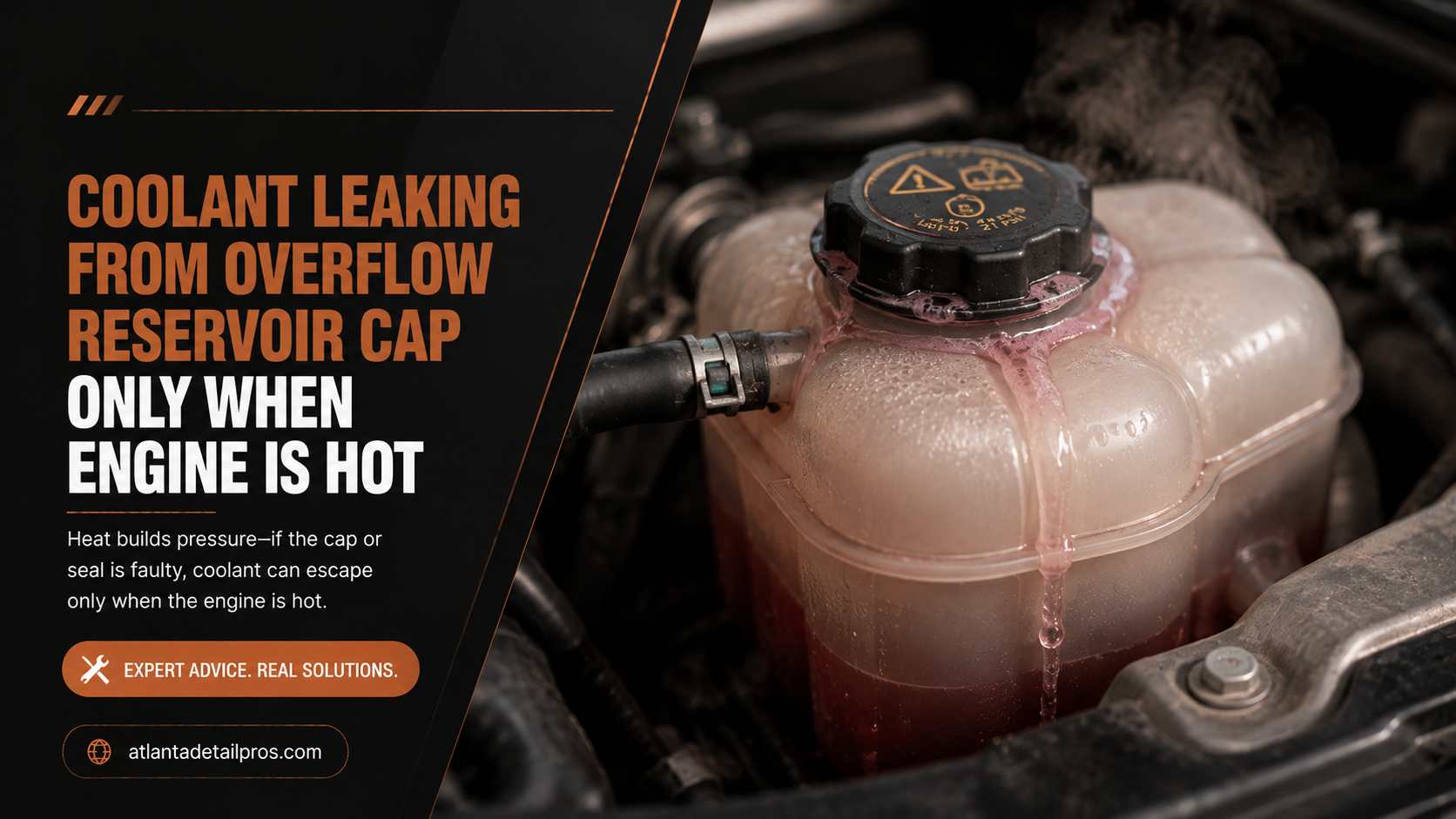
Coolant leaking specifically from the overflow reservoir cap when the engine is hot almost always means the radiator pressure cap is failing to hold system pressure and is venting coolant into the reservoir faster than the reservoir can contain it, or the reservoir cap itself has a damaged seal that releases fluid under the pressure of thermal expansion.
Either way, the system is telling you that pressure management has failed somewhere in the cap assembly. A cooling system at correct pressure raises the boiling point of coolant and maintains proper circulation: when caps fail, pressure drops, the coolant boils at a lower temperature, and fluid escapes through the path of least resistance.
This symptom is specific and diagnostic: if coolant only escapes when the engine is fully hot and only from the reservoir cap area, the caps are the first thing to address. A complete cooling system failure from a head gasket or cracked head typically presents with much more dramatic fluid loss from multiple points and is accompanied by white exhaust smoke or overheating in a much shorter drive window.
Most drivers who see this symptom can resolve it with a $12 to $25 cap replacement. A small number will find the cap is revealing a deeper pressure issue: a failing head gasket introducing combustion gases into the cooling system and artificially elevating pressure beyond what the cap can control.
How the Cooling System Pressure Circuit Works
The cooling system on a modern vehicle is a sealed, pressurized circuit. The radiator cap (or the cap on a pressurized overflow reservoir, depending on the system design) is the pressure relief valve for the entire circuit. It is rated to hold pressure up to a specific threshold, typically 13 to 16 PSI, before opening and routing excess coolant into the overflow reservoir. As the engine cools, that coolant is drawn back into the system through the same cap.
When coolant leaks from the reservoir cap only when hot, the system is exceeding what the cap can contain. The causes are:
- The cap’s pressure rating has dropped due to a weak spring or degraded seal.
- System pressure is abnormally high from combustion gases entering the coolant circuit.
- The reservoir is overfilled and normal thermal expansion pushes coolant past the cap.
- The cap seat on the reservoir neck is damaged or corroded and cannot seal correctly.
Most Common Causes
Degraded Radiator Pressure Cap
The radiator cap has two seals and a spring-loaded pressure valve. The lower seat valve opens at rated pressure to release coolant to the reservoir and closes under vacuum to draw it back. As the cap ages, the spring weakens, the rubber seals harden, and the rated opening pressure drops. A cap rated for 15 PSI that now opens at 8 PSI vents coolant to the reservoir far earlier and more frequently than designed, producing exactly the symptom you are seeing.
Overfilled Coolant Reservoir
The overflow reservoir has MIN and MAX markings for cold fill level. Filling to MAX or above when cold leaves no room for thermal expansion. When the engine reaches operating temperature, the expanded coolant volume fills the reservoir and pushes past the cap seal. This is a simple fix: drain the reservoir to the correct cold level.
Damaged Reservoir Cap Seal
On systems where the pressurized cap sits on top of the overflow reservoir (common on many European vehicles and some GM platforms), the cap seal can crack, harden, or distort. The cap appears intact but cannot hold pressure at the seat. The fix is a new cap.
Elevated System Pressure from Combustion Gas Intrusion
A head gasket that is failing at the fire ring allows combustion gases to enter the coolant circuit during power strokes. These gases add pressure to the cooling system above and beyond normal thermal expansion. The radiator cap vents this extra pressure into the reservoir continuously, producing the overflow symptom. This is the worst-case cause and requires a combustion gas test to confirm.
Cause Identification Table
Cause | Distinguishing Sign | Severity | Fix |
|---|---|---|---|
Degraded radiator cap spring | Cap opens below rated pressure on tester | Low: monitor and replace | New cap: $12 to $25 |
Overfilled reservoir | Cold level above MAX mark | Low: simple correction | Drain to correct cold level |
Damaged reservoir cap seal | Cap seat visibly cracked or flat | Low: replace cap | New cap: $10 to $30 |
Thermostat stuck closed | Rapid overheating on short drives | Moderate: repair soon | Thermostat: $60 to $150 shop |
Head gasket combustion gas intrusion | Bubbles in coolant, positive combustion leak test | High: repair immediately | Head gasket: $800 to $2,500 |
How to Test the Cap at Home
Visual Inspection
Remove the cap when the engine is cold. Inspect the lower rubber seal: it should be soft, pliable, and free of cracks or compression sets. Inspect the upper seal. Check the cap spring: it should show visible tension and not compress easily under finger pressure. A visually degraded cap should be replaced regardless of further testing.
Pressure Tester Test
A cooling system pressure tester with a cap adapter ($25 to $60 at auto parts stores, also available free on loan at most major chains) attaches to the cap directly. Pump the tester to the cap’s rated pressure (stamped on the cap, typically 13 to 16 PSI). The cap should hold that pressure for at least one minute without releasing. If pressure drops before rated PSI, the cap is faulty. If the cap holds correctly but overflow continues, the problem is elsewhere in the system.
Combustion Gas Test (Ruling Out Head Gasket)
If a new correct-pressure cap does not resolve the overflow, purchase a combustion leak test kit (available at auto parts stores for $15 to $25). With the engine at operating temperature, remove the reservoir cap and hold the test tool’s chamber over the opening. With the engine running, the fluid changes color (from blue to yellow or green) in the presence of hydrocarbons from combustion gases. A positive result means a head gasket or cracked head is pressurizing the cooling system.
“I thought I had a serious head gasket problem because coolant was spitting out of the reservoir cap every time I parked after a highway drive. Replaced the radiator cap with the correct pressure rating for the car and it stopped completely. The original cap was rated at 13 PSI and the car needed a 16 PSI cap.” : Dana Korecky, 2014 Honda Accord owner
Vehicle-Specific Notes
Toyota Camry and Corolla (2007 to 2017) with the 2AZ-FE and 2ZR-FE engines use a pressurized coolant reservoir where the cap is the system pressure cap, not a separate radiator cap. These caps fail frequently after 60,000 miles and are a common cause of hot overflow. Always replace with the OEM-specification pressure rating.
GM vehicles with the 3.6L and 2.4L Ecotec engines use a surge tank design where the cap is on the surge tank rather than the radiator. These caps should be inspected at every coolant service.
Ford F-150 and Mustang with the EcoBoost 2.3L and 3.5L engines frequently have overflow events caused by air pockets in the cooling system after a coolant flush if the system was not bled correctly, not a cap failure. Bleed the system using the correct bleed procedure before replacing the cap.
Repair Cost Summary
Repair | Cost Range |
|---|---|
Radiator pressure cap replacement | $12 to $25 parts |
Coolant reservoir cap replacement | $10 to $30 parts |
Cooling system pressure test at shop | $40 to $80 |
Combustion leak test kit (DIY) | $15 to $25 |
Thermostat replacement if stuck closed | $60 to $150 shop |
Head gasket repair if confirmed | $800 to $2,500 shop |
FAQs
Is it normal for a small amount of coolant to come out of the reservoir when the engine is hot?
A very small amount of steam or vapor from the reservoir cap area at operating temperature is within normal range for some vehicles. Actual liquid coolant spitting or dripping from the cap area is not normal and indicates either an overfilled reservoir, a failed cap, or abnormal system pressure.
How often should the radiator cap be replaced?
Most manufacturers do not specify a replacement interval. As a practical guideline, replace the cap every 50,000 to 75,000 miles or at every second coolant flush service. A cap costs $12 to $25 and is one of the highest-value maintenance items on the cooling system given what it protects.
Can I drive with coolant leaking from the reservoir cap?
If the leak rate is minimal (a few drops after each drive), you can drive cautiously to a shop while monitoring the coolant level. If the reservoir is emptying after each drive, do not drive: the system is losing enough fluid to risk overheating. Check the level cold before each trip and top off if needed while the root cause is identified.
What pressure cap does my car need?
The required cap pressure rating is stamped on the original cap and listed in the owner’s manual. Common ratings are 13 PSI, 15 PSI, and 16 PSI. Installing a cap with a lower pressure rating than specified causes premature venting and produces the overflow symptom. Always replace with the exact rated pressure.
If I replace the cap and it still overflows, what is next?
The next step is a combustion gas test to rule out a failing head gasket pressurizing the system. Also verify the thermostat is opening correctly: a stuck-closed thermostat causes rapid overheating and excessive pressure events that overwhelm the cap. A shop can perform both a pressure test and a block test in one visit.
Bottom Line
Coolant leaking from the overflow reservoir cap when the engine is hot points directly to a cap that is no longer holding the correct system pressure, an overfilled reservoir, or in the worst case, combustion gases from a failing head gasket elevating system pressure beyond what any cap can control. Start with the cheapest fix: verify the reservoir is not overfilled, then replace the pressure cap with the exact correct pressure rating for your vehicle. A $15 cap replacement resolves this symptom in the majority of cases.
If a new correct-spec cap does not stop the overflow within one or two heat cycles, perform a combustion gas test before replacing any other components. Guessing at thermostat or water pump replacement without ruling out the head gasket is expensive and may not address the actual cause of the elevated pressure.