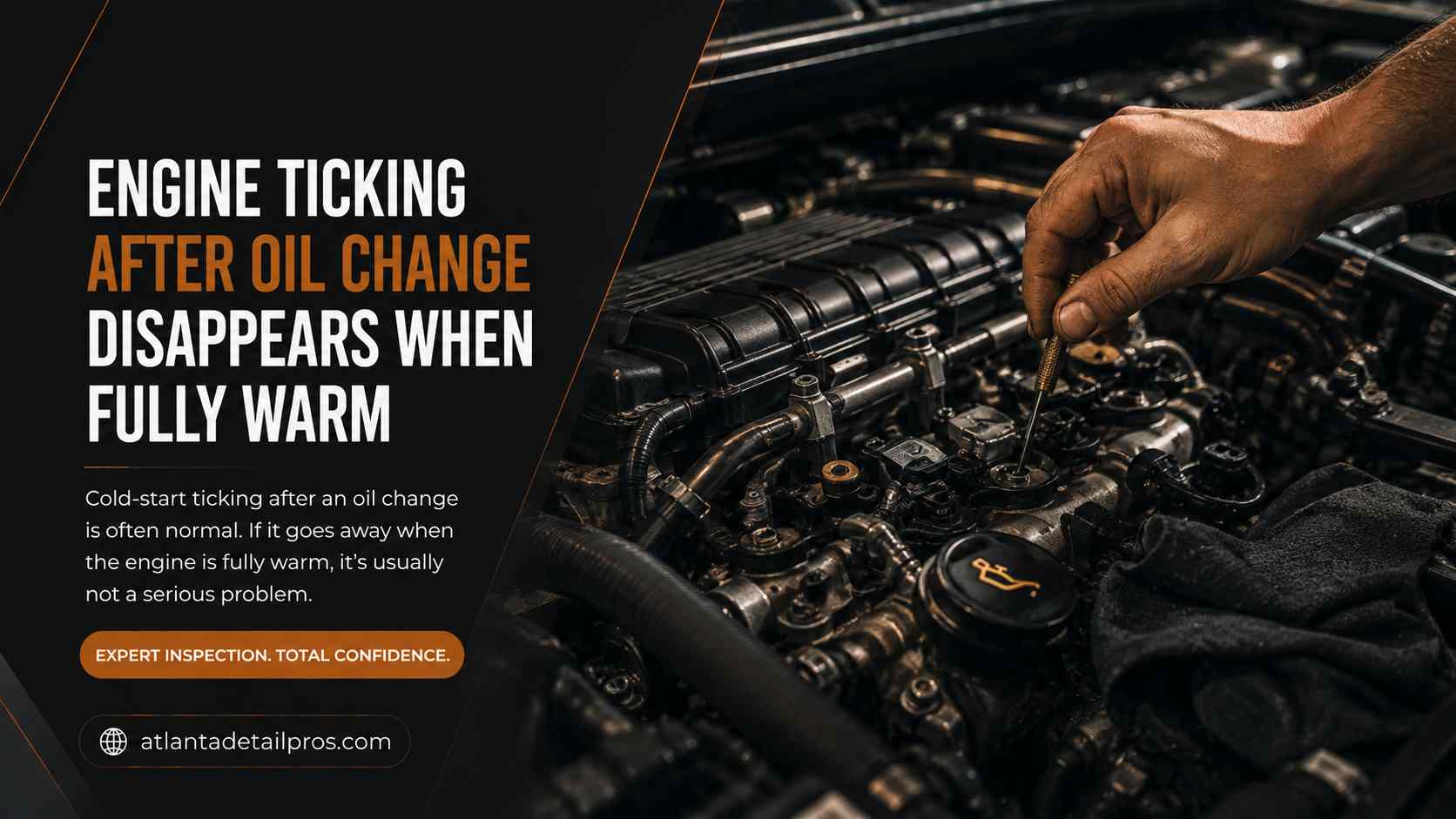
Engine ticking after an oil change that disappears completely when the engine is fully warm is most commonly caused by incorrect oil viscosity: either oil that is too thin and drains out of upper engine components faster than the correct grade, or oil that is too thick and takes longer to circulate to the valve train at cold temperatures: or by a slight air introduction during the oil change that causes brief hydraulic valve lifter noise until the oil fully circulates.
In the majority of cases, this is a temporary condition that resolves within one to five minutes of running and does not indicate engine damage.
What It Means When Engine Ticking Disappears After Warming Up
A ticking sound that occurs when the engine is cold and disappears once it reaches full operating temperature is often related to how engine oil flows. Cold oil is naturally thicker, so it can take slightly longer to circulate through small oil passages and reach components in the valve train.
One common cause is a hydraulic lifter or similar valve-train component that is not fully pressurized immediately after startup. As the engine warms and the oil becomes thinner, oil pressure and circulation can improve, allowing the component to operate more quietly.
Because the issue appeared after an oil change, it is also worth checking whether the correct oil viscosity was used. If the oil is thicker or thinner than what the manufacturer recommends, it can affect how quickly oil reaches certain engine components, particularly during cold starts.
A short-lived ticking noise is generally less concerning if the engine runs smoothly, the oil level is correct, there are no warning lights, and the noise completely disappears after warming up. Still, the sound should not simply be ignored if it is new or noticeably different from the engine’s normal behavior.
If the ticking becomes louder, continues after the engine is fully warm, gets progressively worse, or is accompanied by low oil pressure or other performance problems, have the vehicle inspected. Checking the oil level, oil specification, filter installation, and actual oil pressure can help identify whether the noise is harmless or a sign of an underlying engine problem.
Frequently Asked Questions
Is It Normal for an Engine to Tick After an Oil Change?
A brief tick lasting 10 to 60 seconds after an oil change is normal and results from the time required for oil to travel from the pan through the galleries to the upper valve train. A tick that persists for more than three to five minutes on every cold start after the oil change is not normal and suggests a viscosity mismatch, overfill, or other issue.
Why Does My Engine Only Tick After an Oil Change?
The oil change process drains the crankcase, replaces the filter, and restores oil from a different batch. If the viscosity has changed, the new oil flows differently than the old oil. If the filter was installed dry, there is a brief pressurization delay. If the engine was slightly overfilled, aerated oil is causing lifter noise. All of these are specific to the oil change event.
Can Wrong Oil Cause Engine Ticking?
Yes. Using the wrong viscosity grade is one of the most common causes of post-oil-change ticking. An oil that is too thick for the engine’s specifications takes longer to flow through narrow passages to the valve train at cold temperatures, extending the normal tick period. Always use the manufacturer’s specified grade.
How Long Should Engine Ticking Last After an Oil Change?
Normal post-oil-change ticking from lifter pressurization should stop within 20 to 60 seconds on most engines. A tick that persists for more than three to five minutes, or that appears on multiple consecutive cold starts without improvement, warrants investigation into oil viscosity, oil level, and oil quality.
The Bottom Line
Engine ticking after an oil change that disappears completely when the engine reaches full operating temperature is, in most cases, a temporary condition caused by the time required for new oil to fully pressurize the valve train. If the tick resolves within the first few minutes and does not appear during warm operation, no action is required. Check two things if the tick is longer than normal: the oil level on the dipstick (for overfill) and the oil viscosity on the container (for grade mismatch). Correcting either of these resolves the vast majority of post-oil-change ticking without any further repair.