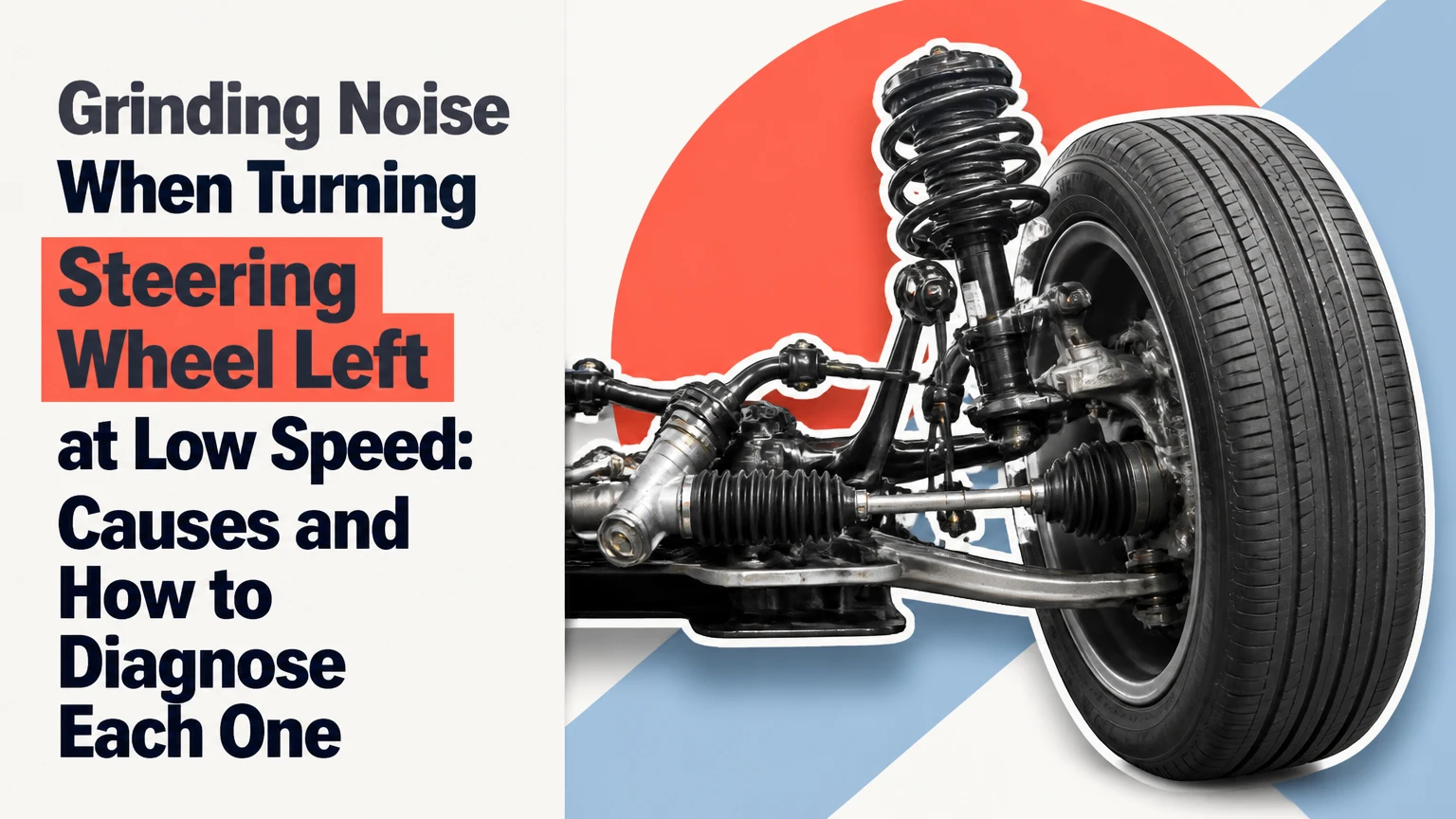
A grinding noise specifically when turning the steering wheel left at low speed can come from the right front wheel bearing (which is loaded during a left turn), the left outer CV joint (which reaches maximum angle during a left turn), the power steering system under maximum demand, or a binding strut bearing plate, and isolating which one requires understanding which component is under the most stress when the wheel is turned left at slow speed.
Low speed is the key qualifier here: it rules out speed-dependent bearing noise and implicates either heavy steering input (power steering system) or a component at maximum steering angle.
The Geometry of a Left Turn and Which Components It Stresses
When you turn the steering wheel left at low speed, several things happen simultaneously. The right front wheel bearing is loaded more heavily as vehicle weight transfers toward the outside of the turn (the right side during a left turn). The left outer CV joint reaches its maximum angle as the left wheel pivots toward the far left. The power steering system reaches near-maximum output pressure to overcome the tire scrub resistance at slow speed. And both strut bearing plates rotate as the entire strut assembly pivots with the wheel.
A grinding noise that appears only during this specific combination (low speed plus left turn) implicates components that are stressed specifically by this combination rather than by driving in general.
Cause 1: Right Front Wheel Bearing
When a vehicle turns left, the weight transfers to the outside of the turn (the right side on a left turn). This loads the right front wheel bearing more heavily. A bearing that has developed roughness or play will grind more audibly under this added radial load. This is counterintuitive to many drivers who assume the noise would come from the wheel on the side of the turn, but bearing noise increases when the bearing is more heavily loaded, which happens on the outside wheel in any turn.
The right front bearing being louder during left turns is a well-established diagnostic pattern. To confirm: at highway speed (where bearing noise is most audible), weave gently left and right. If the grinding noise increases when weaving right (loading the left bearing) or decreases when weaving right (unloading the right bearing), the right front bearing is the cause.
At low speed specifically, the same principle applies but the grinding may be less audible because bearing noise is typically more pronounced at higher speeds. If the grinding at low speed is only during left turns and is accompanied by a mild roaring sound during highway driving that changes with weaving, the right wheel bearing is confirmed.
Urgency: Moderate to High. A wheel bearing in advanced failure can seize, causing a locked wheel. Replace within two to four weeks of initial diagnosis.
Cause 2: Left Outer CV Joint at Maximum Angle
When the steering wheel is turned left, the left front wheel pivots to the left, placing the left outer CV joint at an increasingly acute angle. A worn left outer CV joint typically clicks or pops rather than grinds at this angle, but a severely worn or dry joint (one whose boot has been torn and the grease expelled and contaminated) can produce a grinding sound as the damaged ball bearings move over worn grooves in the joint race under torque load.
Distinction from bearing: CV joint grinding appears specifically when turning left from a stop (during acceleration through the turn) and diminishes when the wheel is returned to center or when the vehicle is coasting without engine torque. Wheel bearing grinding is more consistent and does not specifically require throttle input.
Cause 3: Power Steering Pump or Rack Under Maximum Load
At low speed, the power steering system must provide maximum output to turn the wheels against tire scrub resistance. A power steering pump with low fluid, worn internals, or a failing pressure relief valve can produce a grinding or moaning sound specifically during maximum-demand low-speed turns. This is particularly common when turning to full lock.
The key distinction: power steering noise comes from the front of the engine bay (where the pump is mounted) rather than from the wheel area. It also produces a sound that follows the steering wheel position: it appears as the wheel approaches a certain angle and may peak at full lock. Hydraulic power steering fluid that is low or contaminated produces a foaming that creates a specific grinding or whining sound.
Check: with the engine off, look at the power steering fluid reservoir. Confirm the level is correct and the fluid is not foamy, discolored, or contaminated. Start the engine and listen for where the noise originates: dashboard area (rack) or engine front (pump).
Cause 4: Binding or Worn Strut Bearing Plate
The strut bearing plate (also called the strut mount or top hat) allows the strut to rotate as the steering wheel is turned. The bearing in the plate is a radial ball bearing or a plastic/nylon bearing surface depending on vehicle age. When this bearing wears, corrodes, or loses lubrication, it binds during steering rotation and produces a grinding, crunching, or rough sensation felt through the steering wheel and heard from the top of the wheel well.
Reproduce it: with the engine running and the vehicle stationary, turn the steering wheel slowly from full right to full left. A binding or grinding strut bearing produces the grinding specifically during the slow rotation of the steering with no vehicle motion. The noise is most pronounced near one extreme of the steering travel.
Cause 5: Worn or Dry Ball Joint
The front ball joint allows the steering knuckle to pivot up and down with suspension movement while also allowing steering rotation. A worn lower ball joint can produce a grinding sound under the combined load of low-speed turning and the steering input. Ball joint grinding is typically felt through the chassis and steering wheel and is often accompanied by a clunk over bumps or during steering input.
A ball joint integrity check: with the vehicle on a lift and the suspension hanging, a technician can check for vertical play in the ball joint by levering the wheel. Vertical play in a lower ball joint is cause for replacement.
Cause Diagnosis Table
Cause | Sound Character | Confirmed By | Urgency | Repair Cost |
|---|---|---|---|---|
Right wheel bearing | Grinding; worse loading right side in left turn | Highway weave test: noise changes with direction | High | $150 to $400 |
Left outer CV joint | Grinding or popping; only with throttle + left turn | Disappears without throttle; inspect torn boot | High | $200 to $500 |
Power steering pump/fluid | Moaning or grinding from engine bay, not wheel | Noise from front of engine, not wheel area | Moderate | $0 to $600 |
Strut bearing plate | Crunching at top of wheel well; reproducible stationary | Slow stationary steering reproduces it | Moderate | $150 to $400 per side |
Worn ball joint | Grinding with clunk over bumps | Lift test shows vertical play | High: safety | $150 to $400 |
DIY Diagnosis Sequence
Step 1: Stationary steering wheel test. With the engine running and the vehicle stationary, turn the steering wheel slowly to full left. Note where the grinding starts and whether it is loudest near the top of the wheel well (strut bearing) or from the wheel center area (bearing or CV joint).
Step 2: Remove throttle as a variable. Roll slowly in a parking lot and turn left without applying the gas. If the grinding disappears or greatly diminishes without throttle, the CV joint is contributing (CV joints grind when transmitting torque under angle). If the grinding persists with or without throttle, the wheel bearing or strut bearing is more likely.
Step 3: Highway weave test for bearing. At 40 to 50 mph on a clear road, gently weave the vehicle left and right by a few feet in each direction. Note whether the grinding sound increases when the vehicle body shifts right (which loads the left bearing more) or when it shifts left (loading the right bearing more). The bearing that is loaded when the noise increases is the failing one.
Step 4: Physical inspection. Inspect the left outer CV boot for tears and grease sling. Check for any wheel wobble or roughness when spinning the front wheels by hand with the vehicle on a jack stand. A rough, gritty feeling during hand-spinning of the wheel indicates a failing bearing.
Frequently Asked Questions
Can a wheel alignment cause grinding when turning?
Misalignment can cause tire scrub or unusual wear but does not typically produce a grinding sound on its own. Extreme negative camber can accelerate wheel bearing wear, which then produces grinding. Check alignment if you have had recent suspension work or if the tires show unusual wear patterns, but alignment itself does not directly cause the grinding described here.
Is the grinding dangerous?
A ball joint or wheel bearing in advanced failure is dangerous and should be addressed promptly. A severely worn ball joint can separate, causing immediate loss of control. A seizing wheel bearing can lock the wheel. A worn CV joint is a gradually failing component rather than an immediate safety risk, but a completely failed CV joint on a FWD vehicle renders it undriveable. Strut bearing and power steering causes are less immediately dangerous but should be addressed within a few weeks.
Will the grinding go away if I add power steering fluid?
If the cause is low power steering fluid, yes. If the cause is a wheel bearing, CV joint, or strut bearing, adding power steering fluid will have no effect. Use the stationary steering test and the highway weave test to determine whether the noise comes from the power steering system before adding fluid.
My car has electric power steering and there is no fluid to check. What could cause the grinding?
Electric power steering (EPS) systems have no fluid. Grinding from an EPS system during low-speed turning typically comes from the EPS motor itself (a failing gear in the power assist mechanism) or from the steering column. EPS grinding is relatively uncommon but does occur on higher-mileage vehicles. The noise character is typically more metallic and consistent than a bearing or CV joint grind. A dealer or EPS specialist is needed for EPS mechanism diagnosis.
The Bottom Line
A grinding noise specifically when turning left at low speed is most likely the right wheel bearing (loaded during left turns), the left outer CV joint (at maximum angle during left turns), or a binding strut bearing plate (rotating with steering input). Use the stationary turn test to check the strut bearing, the throttle-removal test to implicate the CV joint, and the highway weave test to identify which bearing is failing. The power steering system is the cause only if the noise clearly comes from the front of the engine bay rather than from a specific wheel. Do not delay on a ball joint or wheel bearing diagnosis: both are safety items.