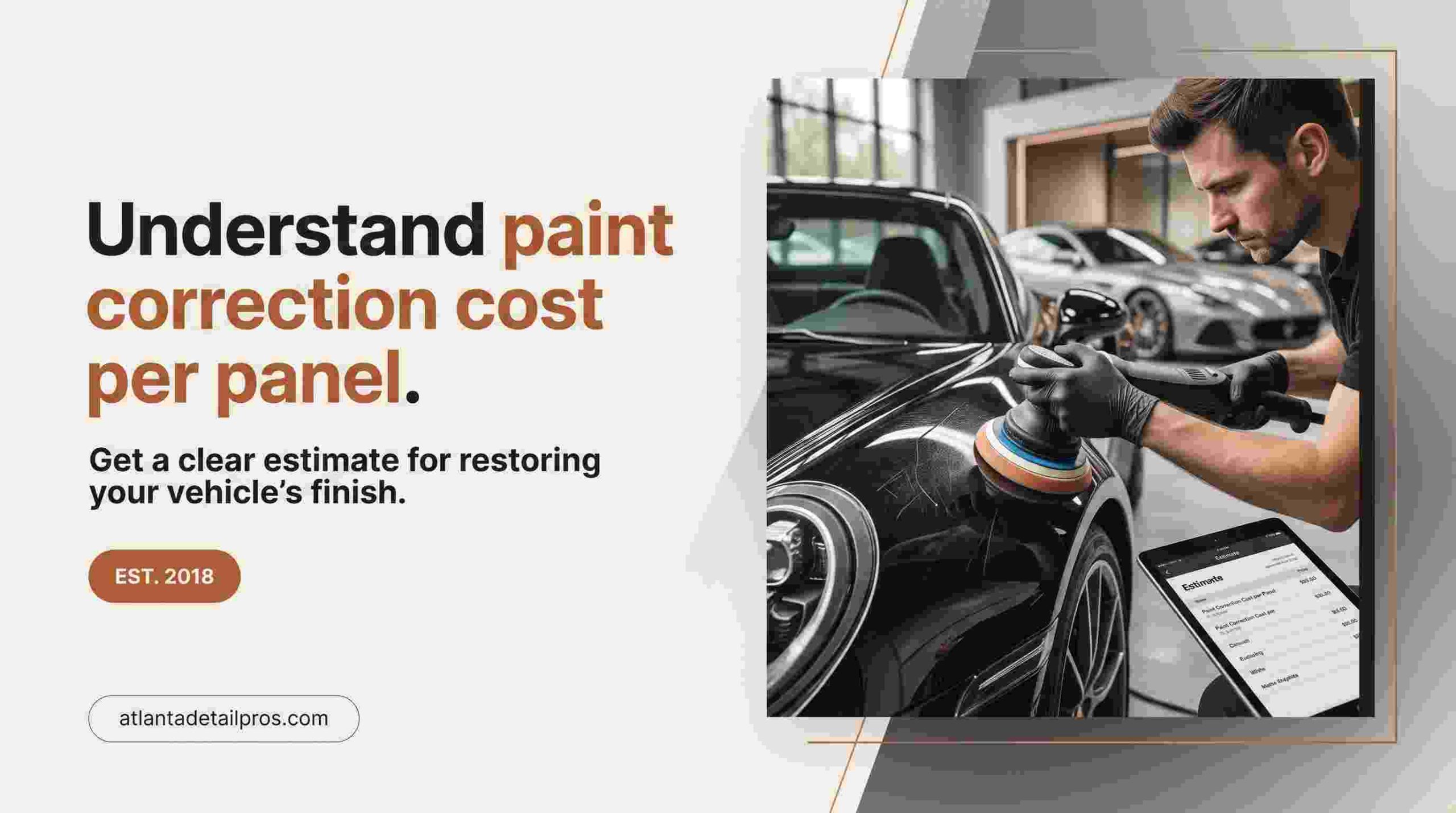
Professional paint correction costs between $30 and $150 per panel depending on the severity of the defects being corrected, the panel size, the number of correction stages the work requires, and whether a ceramic coating application follows the correction. A full-vehicle paint correction on a mid-size sedan ranges from $400 to $2,500 at professional detailing shops, with the wide range reflecting the same variables that drive per-panel pricing. Homeowners and car enthusiasts who understand what drives paint correction pricing can evaluate quotes more accurately, identify whether a specific shop’s pricing reflects the scope of work they actually need, and make better decisions about whether to correct the full vehicle or prioritize specific panels where defects are most visible.
What Paint Correction Actually Involves
Paint correction is the process of removing surface defects from automotive clear coat by polishing the clear coat to a level surface that eliminates scratches, swirl marks, oxidation, and other defects from the field of view. The process uses cutting compounds and polishes of varying abrasiveness applied with a DA polisher or rotary polisher to remove a controlled amount of clear coat from the surface, leveling it to a depth below the scratch or defect floor. The correction result is measured in the percentage of defects removed, with a one-stage correction removing 50 to 70 percent of visible defects and a two or three-stage correction pushing toward 90 to 99 percent removal.
The more correction stages a panel requires, the more passes the polisher makes across the surface, the more compound and polish products are used, and the more labor time the panel consumes. A panel with heavy oxidation and deep swirl marks requires a cutting compound stage, a paint polish stage, and a finishing polish stage to achieve full correction and a glossy final surface. A panel with only light swirl marks from a single type of washing damage may correct completely in a single polish stage. The number of stages required is the primary driver of per-panel cost.
Per-Panel Cost by Panel Size
Smaller panels including mirrors, A-pillars, door sills, and bumper trim sections cost $25 to $50 each at professional shops, reflecting their shorter polishing time despite requiring similar setup, inspection, and protection masking steps as larger panels. Standard panels including individual doors on a mid-size vehicle, front and rear bumper faces, and the hood of a compact car cost $60 to $100 per panel for single-stage correction. Large panels including the hood and roof of a full-size truck or SUV, the entire rear section of a long-wheelbase vehicle, or the full-length door panel on a large pickup cost $80 to $150 per panel for the same single-stage correction.
These per-panel figures apply to single-stage correction on panels with standard light-to-moderate defect levels. Two-stage correction, required when single-stage work does not achieve acceptable defect removal, adds 40 to 70 percent to the per-panel cost. A $80 single-stage panel becomes $110 to $135 for two-stage correction. A three-stage correction on a heavily oxidized or deeply scratched panel can cost 100 to 150 percent above the single-stage price for that panel size.
Cost Factors That Drive Per-Panel Pricing
Paint Hardness
European vehicle manufacturers including BMW, Mercedes-Benz, and Porsche tend to use harder clear coat formulations than Japanese and American manufacturers. Harder clear coat requires more polisher passes and more aggressive compound to achieve the same defect removal rate, increasing labor time per panel. Soft clear coat from some Japanese vehicles corrects rapidly but also requires more careful speed and pressure management to avoid burning the clear coat, which increases the skill requirement even as the time per panel decreases. Professional shops factor paint hardness into their per-panel pricing when they can assess it during an inspection, but this information is not always visible in the initial quote.
Paint Condition and Defect Severity
The defect level on the panel is the largest single variable in per-panel pricing after the number of correction stages. A panel with only light swirl marks from improper washing corrects efficiently in a single stage. A panel with heavy swirl marks, water spot etching, random deep scratches, oxidation across the surface, and paint transfer from a parking lot contact requires multiple compound passes, targeted spot treatment, and additional finishing work that doubles or triples the labor time compared to the light-defect panel of the same size.
Correction Stage Count
A single-stage correction uses one compound or polish product in one pass across the panel surface. A two-stage correction uses a more aggressive compound first, followed by a finer polish to remove the haze left by the compound. A three-stage correction adds a finishing polish stage after the two-stage process for maximum gloss. Each additional stage adds 30 to 60 minutes of labor per panel for a mid-size panel, which at professional labor rates of $40 to $100 per hour translates to $20 to $60 per panel per additional stage.
DIY vs Professional Paint Correction Cost Comparison
A DIY paint correction on a single panel using consumer-grade products costs $30 to $80 in product expenses (DA polisher depreciation, polish products, polishing pads) plus 1 to 3 hours of time per panel for an inexperienced to intermediate-skill enthusiast. Professional correction on the same panel costs $60 to $150 and takes 30 to 90 minutes in professional hands with professional equipment. The labor cost savings from DIY correction are most meaningful across a full-vehicle correction, where professional prices of $1,000 to $2,500 compare favorably against DIY product costs of $200 to $500 plus 15 to 30 hours of personal time.
Paint Correction Cost Reference by Panel and Stage
Panel Type | Single Stage | Two Stage | Three Stage |
|---|---|---|---|
Small panels (mirrors, trim, pillars) | $25 to $50 | $40 to $75 | $55 to $100 |
Standard door (mid-size sedan) | $60 to $90 | $85 to $130 | $110 to $160 |
Bumper (front or rear) | $60 to $100 | $85 to $140 | $110 to $175 |
Hood (compact to mid-size) | $75 to $110 | $105 to $155 | $135 to $195 |
Hood or roof (full-size truck/SUV) | $100 to $150 | $140 to $210 | $180 to $270 |
Full vehicle (mid-size sedan) | $400 to $900 | $700 to $1,400 | $1,000 to $2,000 |
Frequently Asked Questions About Paint Correction Cost Per Panel
Is it worth correcting individual panels or should I do the full vehicle?
Correcting individual high-visibility panels, typically the hood, roof, and driver-side door, makes sense when the rest of the vehicle’s paint is in acceptable condition and the budget does not support full-vehicle correction. The visual improvement on the highest-visibility panels is the most impactful per dollar spent. Full-vehicle correction makes the most sense when the defects are consistent throughout the vehicle, when a ceramic coating will follow the correction (which requires full-vehicle preparation), or when a resale event is motivating the correction and every panel contributes to buyer perception.
What is the difference between paint correction and paint touch-up?
Paint correction addresses clear coat defects including swirl marks, scratches limited to the clear coat layer, oxidation, and water spot etching by polishing the existing clear coat surface to a lower level. Paint touch-up addresses defects that penetrate through the clear coat into the base coat or primer, applying new paint material to restore color coverage at the scratch site. Correction improves the clear coat’s surface quality. Touch-up repairs paint material that is missing. Many scratch repair situations require both: touch-up to fill the missing paint and correction to blend the surrounding clear coat to the repaired area.
How do I know what stage of correction I actually need?
The correction stage needed is determined by the defect severity visible under a raking single-point light held at a shallow angle to the paint surface. Very light swirl marks that appear only in direct sunlight and disappear under general lighting suggest a single-stage need. Moderate swirl marks visible indoors under any concentrated light source suggest two-stage correction. Heavy oxidation, significant random scratching, and deep swirl marks across the full surface suggest three-stage correction for maximum improvement. A professional detailer who inspects the vehicle with a paint depth gauge and a focused light source provides the most accurate staging assessment.
Does paint correction include scratch removal or is that a separate service?
Paint correction includes removal of scratches that are limited to the clear coat layer. A scratch that catches on a fingernail and does not fully clear when you look at it after running a fingernail across it may extend beyond the clear coat into the base coat. Scratches confined to the clear coat correct through the polishing process. Scratches that penetrate the base coat require touch-up paint before correction blends the surrounding clear coat, and this combined scratch repair is typically a separate quoted service with a higher cost than standard correction alone.
Should I get paint correction before or after applying a ceramic coating?
Paint correction must happen before ceramic coating, not after. A ceramic coating bonds to whatever surface condition is present at the time of application and locks that condition in place permanently under the coating. Applying a ceramic coating over swirl marks and surface defects seals those defects under the coating where they remain visible and cannot be corrected without removing the coating first. Full paint correction to the desired quality level, followed by a thorough surface decontamination, provides the clean base that a ceramic coating bonds to and protects at its best quality for the coating’s full service life.
Bottom Line
Single-stage paint correction on a standard mid-size vehicle panel costs $60 to $100 at a professional shop, with two-stage correction adding 40 to 70 percent and three-stage correction adding 100 to 150 percent above the single-stage price for that panel. The correction stage required is the primary cost driver, followed by panel size and paint hardness. Get a per-stage quote rather than a lump-sum quote on your vehicle when requesting estimates, and confirm what percentage of defect removal each stage targets so you can make an informed decision about whether full correction or a single-stage improvement matches your budget and expectations.