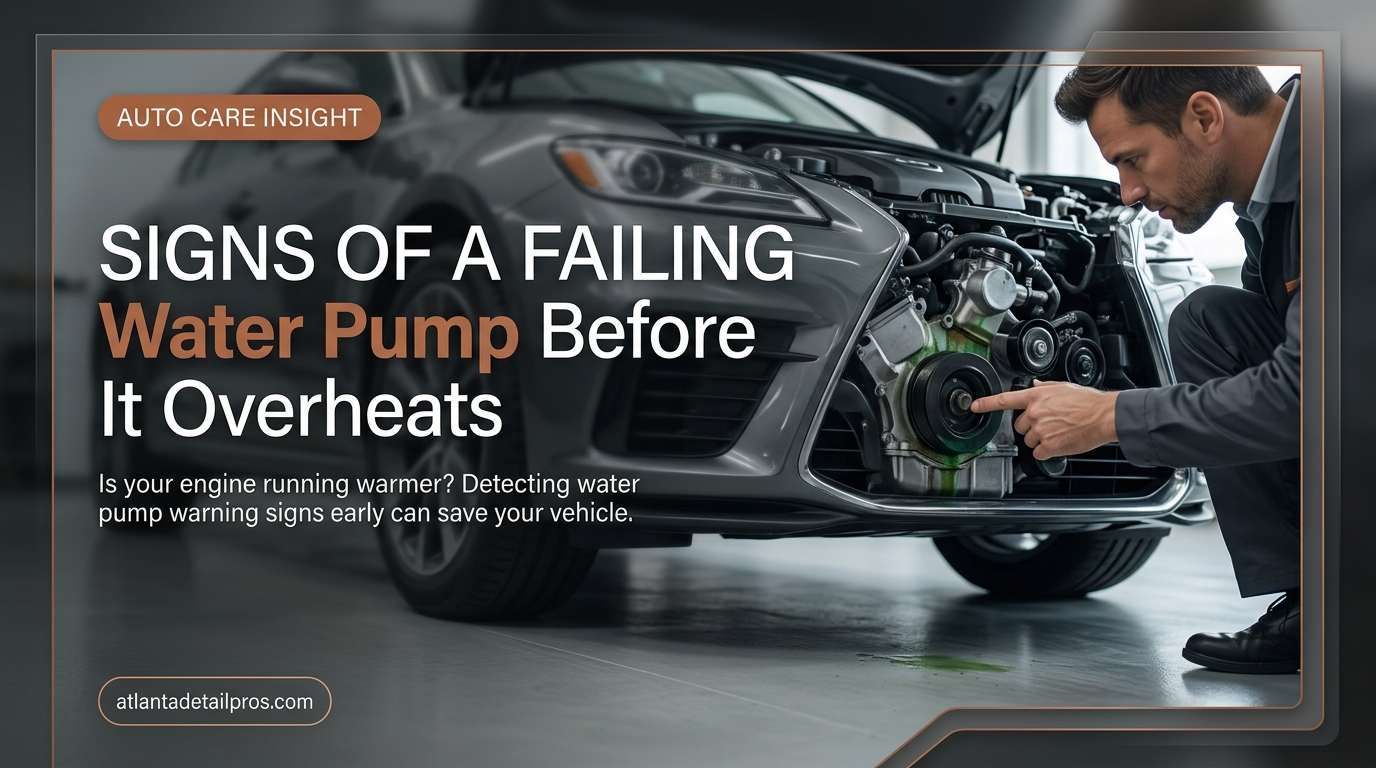
By the time the temperature gauge hits the red zone, the water pump has usually been giving signals for weeks. Most drivers do not catch them because the early signs are subtle: a faint leak near the front of the engine, a slight coolant smell, a bearing noise that blends into engine sound. The damage from ignoring those signals can run into thousands of dollars.
This guide focuses specifically on the pre-overheating window, the signs that appear before the pump fails completely, so you can address the problem at a repair cost measured in hundreds rather than in engine damage measured in thousands.
How a Water Pump Fails and Why the Early Signs Are Easy to Miss
Water pumps fail through two distinct pathways, and each produces different early symptoms. Understanding which failure mode your pump is entering tells you which signs to look for and how much time you have before things become critical.
Bearing Failure: The Mechanical Path
The water pump impeller sits on a shaft supported by a sealed bearing. When that bearing loses its grease and begins to wear, the shaft develops play. Initially the play is microscopic and produces only a faint noise. As the bearing degrades, shaft movement increases, the impeller wobbles, and pumping efficiency drops. The eventual end state is a bearing that seizes entirely, stopping the impeller and leaving the engine with no coolant circulation.
Seal Failure: The Leak Path
The shaft seal prevents coolant from escaping around the pump shaft. When the seal degrades, coolant seeps out through the weep hole, a small intentional drain port on the pump body. Small amounts of weepage are normal wear. Heavy or steady dripping from the weep hole means the seal is failing and coolant loss is beginning. Left unaddressed, coolant loss leads to overheating even if the bearing is still functional.
What Coolant Dripping From the Weep Hole Is Actually Telling You
The weep hole is one of the most misunderstood parts of a water pump. Every pump has one, and its purpose is to drain coolant that has leaked past the seal so it exits externally rather than contaminating the bearing. A few dried crusty deposits around the weep hole are normal on a high-mileage pump. Active dripping, a wet trail of coolant, or a puddle under the front of the engine near the pump are not normal.
To locate the weep hole, look for a small hole in the water pump body between the bearing and the mounting flange. It is often surrounded by dried green, orange, or pink mineral deposits from evaporated coolant. A thin crust of dried residue is acceptable. Wet coolant actively flowing from the weep hole means the seal has reached the point of significant failure and replacement should be scheduled immediately.
Do not apply sealant or block the weep hole. The weep hole is a design feature that alerts you to seal failure. Blocking it causes internal coolant to contaminate the bearing, accelerating failure and eliminating your warning system.
Early Temperature Gauge Behavior That Signals Pump Trouble Before Overheating Starts
The temperature gauge is your most direct feedback tool for water pump health, but most drivers only pay attention when it enters the danger zone. Several pre-overheating gauge patterns indicate reduced coolant flow weeks or months before a full overheat event.
Temperature Gauge Runs Higher Than Usual at Idle
A water pump that is losing impeller efficiency circulates coolant more slowly at low engine speeds. At idle, the pump spins slowly and a marginal pump may not generate enough flow to keep up with engine heat production. You may notice the gauge climbing slightly toward the middle during extended idling in traffic, then dropping back toward normal as you accelerate and the pump spins faster. This RPM-dependent temperature variation is an early pump warning sign.
Heater Output That Weakens at Idle
Hot coolant must circulate through the heater core to produce cabin heat. A pump that is losing efficiency at low RPM fails to push enough hot coolant into the heater circuit. The heater goes cold at a stoplight and returns when you accelerate. This symptom is identical to the low-coolant and air-pocket symptoms, which is why confirming the coolant level is the first diagnostic step. If the coolant level is correct and the heater still goes cold at idle, the pump efficiency is the next suspect.
Noises From the Water Pump Area That Indicate Bearing or Seal Failure
Water pump noise is one of the clearest early warnings, but it requires knowing what to listen for and where to listen. The water pump is typically mounted at the front of the engine, driven by the timing belt or serpentine belt, and sitting near other accessories that also produce noise. Isolating pump noise from belt, pulley, and power steering noise requires a methodical approach.
A Whining or Humming Sound That Changes With RPM
A failing water pump bearing produces a whine or hum that increases in pitch and volume with engine RPM. Unlike a serpentine belt squeal, which appears under load and disappears when the belt gets wet, a pump bearing noise is continuous at a given RPM and does not change when you spray water on the belt. Use the screwdriver stethoscope technique: touch the tip of a long screwdriver to the pump housing and press your ear to the handle. A failing bearing transmits a distinct rough vibration compared to the smooth hum of healthy nearby components.
Coolant Sloshing or Gurgling From the Engine Bay
If coolant level has dropped significantly from seal leakage, air enters the cooling system and produces audible gurgling or sloshing sounds, particularly from the heater core area behind the dashboard. This sound is most noticeable when you accelerate from a stop. It confirms both that coolant has been lost and that an air pocket has formed in the system.
A Visual Inspection of the Water Pump Area Reveals More Than You Think
A five-minute visual inspection with the engine off and cold provides more diagnostic information than most drivers realize. You do not need to remove anything to perform this check.
- Look for coolant residue (white, green, orange, or pink deposits depending on coolant type) on the pump body, particularly around the weep hole and the seal area.
- Inspect the belt or chain that drives the pump. A wet belt indicates coolant is spraying from the pump seal, which also accelerates belt deterioration.
- Grab the pulley or the pump shaft with the engine off and try to wiggle it. Any perceptible play means the bearing has worn beyond acceptable limits.
- Check the area under the front of the engine for a puddle or staining on the ground directly below the pump.
What Happens If You Keep Driving on a Failing Water Pump
The escalation timeline from a weeping pump to engine damage can be compressed or extended depending on how much coolant is being lost and how far the bearing has deteriorated. Understanding the progression helps you gauge urgency.
- Weep hole dripping with normal temperature gauge: weeks to months of warning. Replace the pump at the next convenient opportunity.
- Coolant level dropping between checks with mild temperature fluctuations: days to weeks. Schedule the repair promptly.
- Temperature gauge climbing toward the midpoint at idle, heater going cold at stops: the pump is already significantly compromised. Do not delay.
- Temperature gauge approaching the red zone or fluctuating rapidly: stop driving. The engine is overheating and cylinder head damage may begin within minutes.
If the temperature gauge enters the red zone, pull over immediately and shut off the engine. Do not add cold water to a hot cooling system. Let the engine cool for at least 45 minutes before opening any cooling system cap.
Frequently Asked Questions
What are the early signs of a water pump failing?
The earliest signs are coolant residue or active dripping from the weep hole on the pump body, a whining or humming noise from the front of the engine that increases with RPM, temperature gauge readings slightly higher than normal at idle, and a heater that goes cold when idling but returns when you accelerate. Any of these individually warrants a closer inspection. Multiple signs together mean the pump is near replacement time.
Can I drive with a leaking water pump?
For short distances if the coolant level is being monitored and topped off regularly, yes. For long drives or without monitoring, no. A leaking pump that has drained enough coolant to cause overheating will overheat rapidly under load. Never let the coolant level drop below the MIN line and never ignore a temperature gauge that begins to climb.
How much does water pump replacement cost?
A water pump replacement runs $200 to $500 at an independent shop on most passenger vehicles when the pump is driven by the serpentine belt. On engines where the water pump is driven by the timing belt, shops strongly recommend replacing both at the same time since the labor to access the timing belt covers the pump. A timing belt and water pump combination service runs $500 to $900 on most four-cylinder engines.
What does a bad water pump sound like?
A failing pump bearing produces a whining, humming, or growling noise that increases with engine RPM. It does not change when the serpentine belt gets wet, which distinguishes it from belt noise. A failing shaft seal may produce a hissing sound as pressurized coolant escapes. Gurgling from inside the cabin or dashboard area indicates an air pocket formed as coolant was lost from the pump seal.
The Bottom Line
The early warning window for water pump failure is measured in weeks, not hours, if you know what to look for. Check the weep hole area for coolant residue. Listen for bearing noise at the front of the engine. Watch the temperature gauge at idle in stop-and-go traffic. And if the heater goes cold at stoplights but returns when you accelerate, that is the pump telling you it is losing flow efficiency before anything more serious develops.