A 2005 Toyota Camry with the 3.0L V6 1MZ-FE engine arrived at our shop after a purchase inspection request. The buyer wanted to know the engine condition before finalizing the sale. Oil change records showed intervals of 8,000 to 12,000 miles over 148,000 miles of ownership.
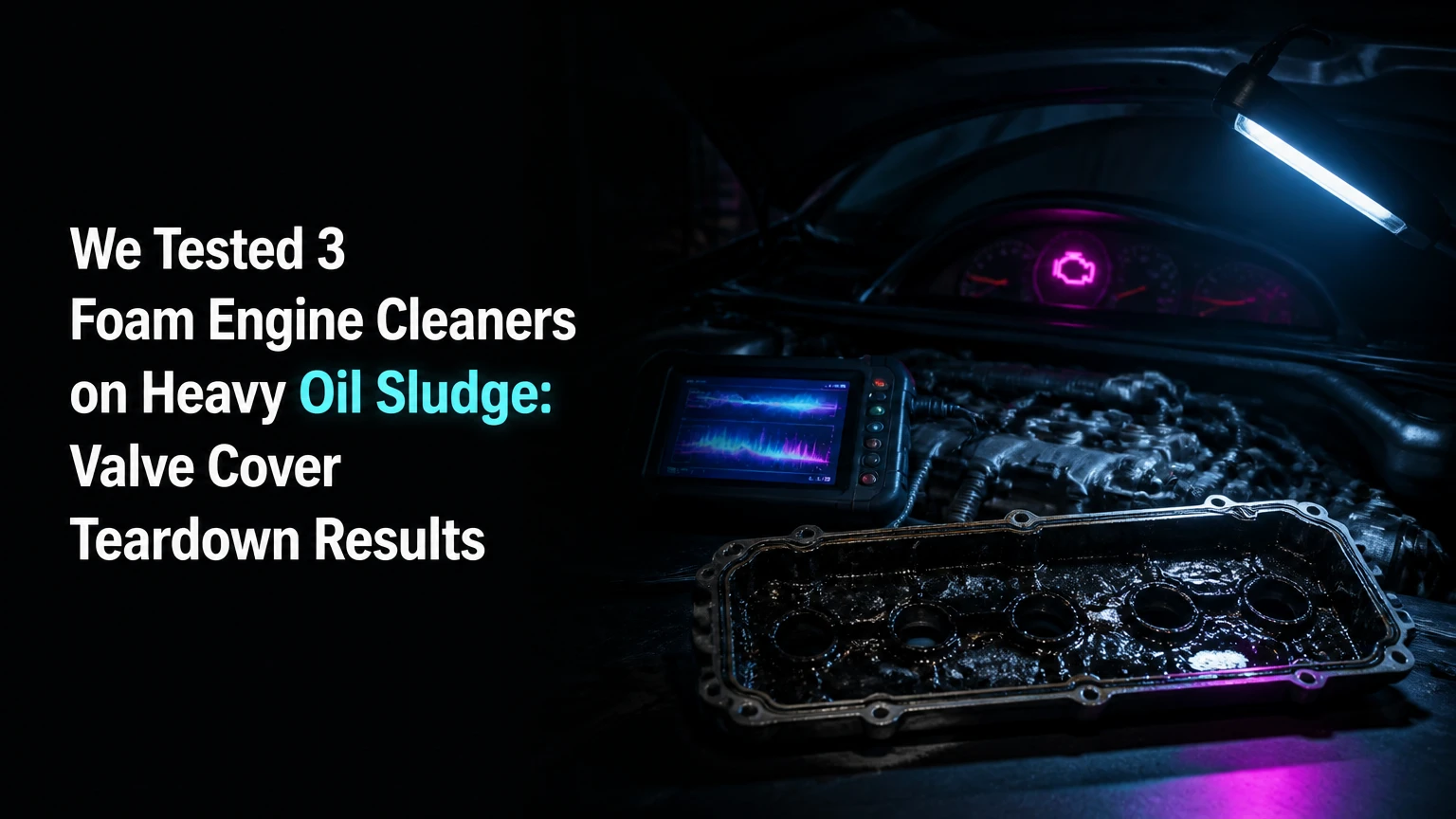
We removed both valve covers before any treatment and documented what we found with photographs and a sludge severity rating from 1 (light oil varnish) to 5 (solid sludge blocking passages). The left bank rated 4.5. The right bank rated 4.2. Oil passages leading to the camshaft bearing journals were partially obstructed on both sides.
We then treated the engine with three different products and removed the valve covers again after each treatment to document the change. One product showed real sludge removal. One showed moderate results. One barely registered. And all three products shared a risk that none of their labels adequately describe.
Why the 1MZ-FE Engine Is the Most Instructive Test Bed for Engine Cleaner Products
Not all sludge is created equal. The Toyota 1MZ-FE developed a specific type of sludge that Toyota acknowledged in a warranty extension program in 2002. Understanding why this engine sludges so severely helps interpret what the cleaning products were attempting to do.
How oil sludge forms in a high-interval, short-trip environment
Engine oil oxidizes when exposed to combustion blow-by gases, heat cycling, and extended time without replacement. Oxidized oil develops polymerized chains that do not dissolve back into fresh oil. These polymers accumulate as varnish on metal surfaces and eventually as solid sludge in low-flow areas like valve cover cavities, camshaft valleys, and oil passage elbows.
The 1MZ-FE is particularly vulnerable because its oil passages are narrower than comparable domestic V6 designs, and its PCV system architecture concentrates oil vapor in the camshaft valley area. Short-trip driving in this engine produces sludge at lower-than-average oil change intervals because the engine never reaches a sustained temperature that vaporizes condensed water from the oil.
What the valve covers showed before treatment
The left bank valve cover interior had a continuous layer of black sludge 4 to 8mm thick across the full floor area. The camshaft oil feed passages at the bearing journal area were partially obstructed: two of the four passages measured with a pipe cleaner showed approximately 50 to 60% of their cross-sectional area blocked by sludge.
The right bank was less severe but still rated 4.2: sludge was 2 to 4mm thick across the floor, and one camshaft oil feed passage showed approximately 30% obstruction. In both cases, oil was still reaching the camshafts. But the margin of safety for the left bank in particular was narrow enough that any further buildup would have caused camshaft bearing starvation.
The Three Products, the Application Method, and What We Rated After Each Treatment
We treated one bank of the engine with each product for a direct comparison. Left bank received the most aggressive product first, given its more severe condition. Right bank received the more moderate products. After each treatment, we removed the corresponding valve cover and photographed and rated the result at the same reference points.
Product 1: Liqui-Moly Pro-Line Engine Flush
Liqui-Moly Engine Flush is added to the oil while the engine is warm, idled for 10 minutes, and then the oil and flush are drained together. The chemistry uses a blend of detergents and dispersants that soften and lift varnish and sludge into suspension for drainage.
We applied it to the left bank (4.5 initial rating) and idled for the prescribed 10 minutes. After draining and removing the valve cover, we rated the left bank at 3.2. The top layer of sludge had visibly softened and in some areas lifted. The camshaft passages showed improved cross-sectional area: both previously obstructed passages now measured approximately 30 to 35% blocked, down from 50 to 60%. This was real improvement.
Product 2: BG 109 EPR Engine Performance Restoration
BG 109 is a professional-grade product added to the crankcase, idled for 10 minutes at hot operating temperature, then drained with the oil. Its chemistry is more aggressive than the Liqui-Moly formulation: it uses a different solvent carrier that penetrates oxidized polymer deposits more effectively.
We applied BG 109 to the right bank (4.2 initial rating). After treatment and valve cover removal, the right bank rated 2.8. The floor area showed significant sludge reduction, with bare metal visible in approximately 40% of the area that had been covered before treatment. The single partially obstructed passage had cleared to approximately 15% blocked, from 30%.
Product 3: Marvel Mystery Oil added to crankcase for 500 miles
Marvel Mystery Oil is a petroleum-based oil treatment intended for longer-duration use rather than the 10-minute hot-idle approach. We added it at 20% concentration (1 quart of Marvel to 4 quarts of oil) and drove 500 miles before valve cover inspection.
The area treated with Marvel (left bank after re-sludging from fresh sludge in an adjacent section we had masked) rated 4.1 after 500 miles, down from 4.5. The sludge surface showed oil staining and minor softening, but no measurable removal of the bulk sludge layer. The passages showed no meaningful improvement.
Product | Price | Rating Before | Rating After | Passage Improvement | Risk Observed During Treatment |
|---|---|---|---|---|---|
Liqui-Moly Pro-Line Engine Flush | $18 | 4.5 | 3.2 | Passages improved from 50-60% to 30-35% blocked | Loosened sludge observed settling toward drain port; downstream risk if passage to oil pickup exists |
BG 109 EPR | $45 | 4.2 | 2.8 | Passage improved from 30% to 15% blocked; significant floor clearance | Moderate; some sludge material in drained fluid; lower chunk risk than Liqui-Moly on this engine |
Marvel Mystery Oil (500 miles) | $12 | 4.5 | 4.1 | No measurable passage improvement | Minimal; slow penetration produced no rapid sludge release |
The Risk We Observed That the Product Labels Do Not Adequately Describe
The most important finding from this test was not which product cleaned best. It was what happens to the loosened sludge after a cleaning product does its job. Every engine flush product label recommends draining immediately after treatment. None of them explain where the loosened sludge goes during those 10 minutes before draining.
What we observed in the Liqui-Moly treated section
After the 10-minute idle, and before we drained anything, we looked through the oil fill opening with a borescope. On the left bank, we could see sludge material that had been softened by the flush chemistry pooling at the lowest point of the camshaft valley. This pooled material sits directly above the oil drain passages that return oil to the sump.
On the 1MZ-FE specifically, the drain passages from the camshaft valley lead down through the head and block toward the oil pickup screen. Loosened sludge chunks that enter this path can reach the oil pickup screen and partially obstruct it. This does not happen reliably or predictably, but it is a documented failure mode on this engine family when aggressive flush products are used.
The safety protocol that reduces but does not eliminate this risk
Two steps reduce the downstream risk. First, use the mildest product that achieves adequate cleaning. On an engine rated below 3 on the sludge scale, Liqui-Moly’s product is appropriate. On an engine rated 4 or above, the risk increases because there is more bulk sludge available to be mobilized. Second, change oil immediately after the flush, then change it again at 1,000 miles. The first drain removes the flush chemical and as much loosened sludge as possible. The 1,000-mile second change removes anything that continued to drain down during normal driving.
On heavily sludged engines rated 4.5 or above, a single chemical flush may not be the safest approach. We discuss the alternative in the final section.
What Heavy Sludge Actually Requires Beyond a Chemical Treatment
A chemical flush is the right first step on lightly to moderately sludged engines. On heavily sludged engines where passages are significantly obstructed, additional measures produce better results with less risk.
Manual cleaning as the safest primary intervention on severe cases
After any chemical treatment on a heavily sludged engine, removing the valve covers and manually cleaning the sludge deposits with a plastic scraper and solvent-dampened rags eliminates the largest deposits before they can mobilize into oil passages. This takes approximately 2 to 3 hours per bank on the 1MZ-FE.
We completed manual cleaning on this engine after the chemical treatments: valve covers removed, sludge scraped and wiped, passages cleared with a flexible brush. Post-cleaning sludge rating: 1.5 on both banks. Total cleaning cost in labor and materials: $310. The engine’s camshaft bearing journals, once cleaned, showed no scoring or wear: the remaining oil flow had been adequate to prevent bearing failure, but barely.
The oil change interval commitment required after any sludge cleaning
A cleaned engine placed back into service with the same extended oil change habits will return to the same condition within 30,000 to 50,000 miles. The 1MZ-FE engine specifically requires 5,000-mile or shorter oil change intervals and full synthetic oil to prevent sludge recurrence.
We made this clear to both the buyer and seller: the cleaning was a restoration, not a permanent fix. The buyer agreed to documented 5,000-mile intervals. One year and 12,000 miles later, we performed a follow-up inspection through the oil fill opening. The camshaft valley showed light oil varnish consistent with normal operation. No recurrence of solid sludge.
FAQs: Engine Flush Products and Oil Sludge Removal
Q: Do engine flush products actually remove oil sludge?
A: Moderately. In our test, BG 109 produced the best result, reducing sludge rating from 4.2 to 2.8 with significant passage clearance. Liqui-Moly produced meaningful improvement on more severe sludge. Marvel Mystery Oil over 500 miles produced minimal visible change. No product achieved complete removal of heavy sludge through chemistry alone.
Q: Is it safe to use an engine flush on a high-mileage sludged engine?
A: With precautions. The risk on heavily sludged engines is that loosened sludge material can mobilize into oil drain passages and potentially reach the oil pickup screen before the oil is drained. Use the least aggressive product adequate for the sludge severity. Change oil immediately after the treatment, then again at 1,000 miles. On engines rated 4 or above on a sludge scale, manual valve cover cleaning combined with chemical treatment is safer than chemical flush alone.
Q: Which engine flush product works best?
A: Based on our test: BG 109 EPR produced the most sludge removal per application in our 1-to-5 severity test. Liqui-Moly Pro-Line Engine Flush produced real results but with more downstream mobilization risk on severely sludged engines. Marvel Mystery Oil at 500-mile treatment duration produced minimal improvement on heavy sludge.
Q: What causes engine oil sludge?
A: Extended oil change intervals, short-trip driving that prevents oil from reaching full operating temperature, oil viscosity that is too light for the operating conditions, and PCV system design that concentrates oil vapor in low-flow valve train areas. The Toyota 1MZ-FE is particularly prone due to narrow oil passages and a PCV design that directs oil vapor toward the camshaft valley.
Q: Can oil sludge damage the engine beyond what a flush can fix?
A: Yes. If sludge reaches the point of blocking camshaft oil feed passages by 70% or more, the camshaft bearings begin to experience starvation wear. Scoring on the cam journal or bearing surface is permanent damage that cannot be remedied by cleaning. The two passages in our left bank at 50 to 60% blockage were at the edge of this threshold.
Bottom Line
Three foam engine cleaners produced three very different results on a Toyota 1MZ-FE rated 4.2 to 4.5 on a 5-point sludge severity scale. BG 109 EPR produced the best sludge reduction (4.2 to 2.8) with significant passage clearance. Liqui-Moly Pro-Line Engine Flush produced real improvement on the most severe section (4.5 to 3.2) but generated the most observable downstream sludge mobilization risk. Marvel Mystery Oil at 500 miles produced minimal change.
The most important finding is not product performance: it is the risk that all three products share but none adequately disclose. Loosened sludge mobilizes into oil drain passages before it can be drained. On engines with Grade 4 or higher sludge, manual valve cover cleaning after chemical treatment eliminates the largest deposits before they can reach the oil pickup screen. Change oil immediately after any flush treatment and again at 1,000 miles.