Cheap vs Expensive OBD2 Scanners Tested on 15 Cars: What Broke and What Worked
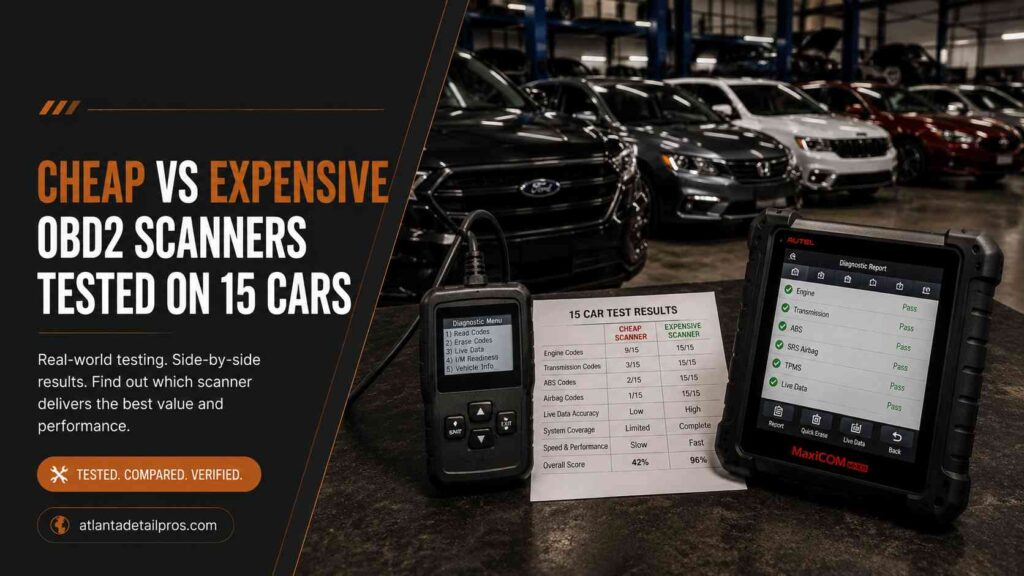
We ran seven OBD2 scanners from a $22 Bluetooth dongle to a $1,200 Snap-on bidirectional unit across 15 vehicles over six weeks. Budget tools failed to connect on 4 of 15 cars, missed every manufacturer-specific code on European platforms, and returned a false “no fault found” reading twice. Mid-range handhelds covered 13 of 15 reliably. […]
Why This Car’s AC Blew Hot at Red Lights: An Electric Fan Clutch Teardown
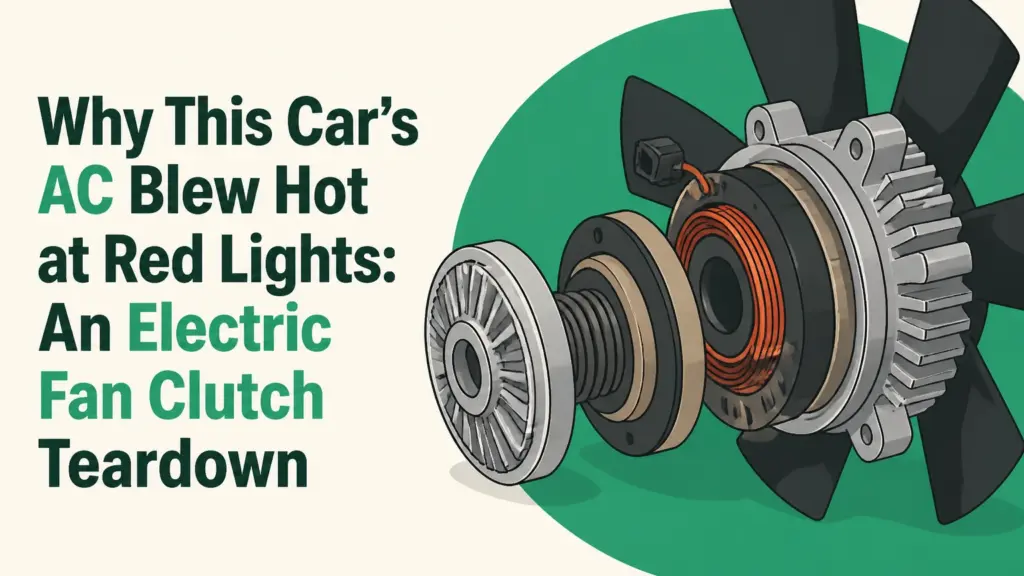
The short answer: The radiator cooling fan motor was drawing 2.1 amps instead of 14.8. At highway speed, ram air through the condenser kept the AC working fine. The moment the car stopped, the condenser had no airflow, high-side pressure spiked to 380 PSI, the high-pressure safety cutout tripped, and the compressor shut off. Vent temperature […]
Paint Correction Cost Per Panel: What Professionals Charge and What Drives the Difference
Professional paint correction costs between $30 and $150 per panel depending on the severity of the defects being corrected, the panel size, the number of correction stages the work requires, and whether a ceramic coating application follows the correction. A full-vehicle paint correction on a mid-size sedan ranges from $400 to $2,500 at professional detailing […]
P0457 Loose Fuel Cap Code Fix: How to Diagnose, Repair, and Verify the Fix
The P0457 code is one of the most straightforward OBD-II trouble codes to diagnose and repair because its most common cause is a loose or missing fuel cap that allows fuel vapors to escape from the gas tank rather than being retained in the sealed EVAP system. The ECM detects this vapor loss through a […]
P0441 Evaporative Emission System Incorrect Purge Flow: Causes, Diagnosis, and Repair
The P0441 diagnostic trouble code indicates that the powertrain control module (PCM) has detected a flow rate in the evaporative emission control system’s purge circuit that does not match expected values during the system’s self-test. The EVAP system captures fuel vapors from the gas tank and routes them to the engine intake for combustion rather […]
P0400 Exhaust Gas Recirculation Flow Malfunction: Causes, Cleaning, and Repair

P0400 indicates that the powertrain control module detected an EGR flow rate that does not match expected values during the EGR system self-test. The exhaust gas recirculation (EGR) system routes a measured quantity of exhaust gas back into the intake manifold to dilute the incoming air-fuel mixture. This dilution reduces peak combustion temperatures, which lowers […]
P0133 O2 Sensor Circuit Slow Response Bank 1: What It Means, Why It Happens, and How to Fix It
The P0133 code indicates that the upstream oxygen sensor on Bank 1 is cycling between rich and lean signals at a rate too slow to meet the OBD-II minimum threshold for adequate closed-loop fuel control. A healthy upstream O2 sensor switches between approximately 0.1 volts (lean) and 0.9 volts (rich) at least 8 times per […]
P0122 Throttle Position Sensor Circuit Low Input: Causes, Symptoms, and Repair
P0122 indicates the powertrain control module is receiving a throttle position sensor (TPS) voltage signal that falls below the minimum expected threshold of the sensor’s calibrated operating range. The TPS monitors the throttle plate angle from closed (idle) to fully open (wide open throttle) and sends a proportional voltage signal to the PCM that the […]
P0017 Crankshaft Camshaft Correlation Bank 1 Sensor B: Causes, Risk, and Repair
P0017 is one of the more serious OBD-II trouble codes because it indicates that the powertrain control module detected a mismatch between the crankshaft position and the Bank 1 camshaft position for Sensor B, which refers to the exhaust camshaft on Bank 1 on engines with variable valve timing (VVT). The crankshaft and camshaft positions […]
Banging Noise Under the Car When Going Over Bumps in Rain: Why Wet Conditions Change
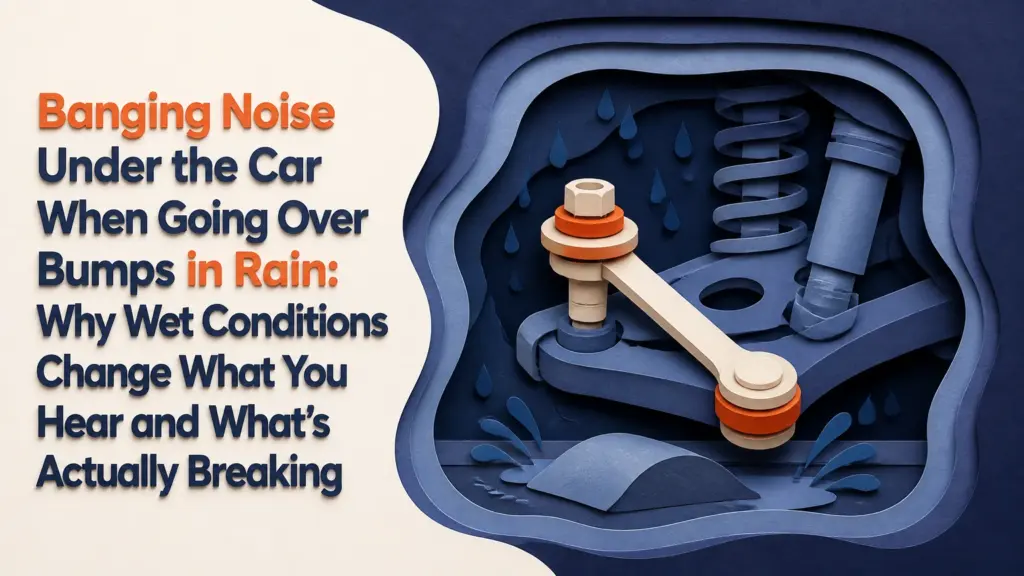
A banging noise under the car that appears specifically when going over bumps in rainy or wet conditions is most commonly caused by a loose splash shield, wheel well liner, or underbody plastic cover that water pressure or spray pushes against the vehicle floor or suspension components, creating an impact that doesn’t occur in dry […]